Джонатан Келлерман - Serpentine
Здесь есть возможность читать онлайн «Джонатан Келлерман - Serpentine» весь текст электронной книги совершенно бесплатно (целиком полную версию без сокращений). В некоторых случаях можно слушать аудио, скачать через торрент в формате fb2 и присутствует краткое содержание. Год выпуска: 2021, Издательство: Random House Publishing Group, Жанр: det_all, на английском языке. Описание произведения, (предисловие) а так же отзывы посетителей доступны на портале библиотеки ЛибКат.
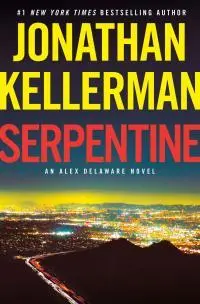
- Название:Serpentine
- Автор:
- Издательство:Random House Publishing Group
- Жанр:
- Год:2021
- ISBN:нет данных
- Рейтинг книги:4 / 5. Голосов: 1
-
Избранное:Добавить в избранное
- Отзывы:
-
Ваша оценка:
Serpentine: краткое содержание, описание и аннотация
Предлагаем к чтению аннотацию, описание, краткое содержание или предисловие (зависит от того, что написал сам автор книги «Serpentine»). Если вы не нашли необходимую информацию о книге — напишите в комментариях, мы постараемся отыскать её.
LAPD homicide lieutenant Milo Sturgis is a master detective. He has a near-perfect solve rate and he's written his own rulebook. Some of those successes—the toughest ones—have involved his best friend, the brilliant psychologist Alex Delaware. But Milo doesn't call Alex in unless cases are "different."
This murder warrants an immediate call: Milo's independence has been compromised as never before, as the department pressures him to cater to the demands of a mogul. A hard-to-fathom, mega-rich young woman obsessed with reopening the coldest of cases: the decades-old death of the mother she never knew.
The facts describe a likely loser: a mysterious woman found with a bullet in her head in a torched Cadillac that has overturned on infamously treacherous Mulholland Drive. No physical evidence, no witnesses, no apparent motive. And a slew of detectives have already worked the case and failed. But as Delaware and Sturgis begin digging, the mist begins to lift. Too many coincidences. Facts turn out to be anything but. And as they soon discover, very real threats lurking in the present.
This is Delaware/Sturgis at their best: traversing the beautiful but forbidding place known as Los Angeles and exhuming the past in order to bring a vicious killer to justice.
Serpentine — читать онлайн бесплатно полную книгу (весь текст) целиком
Ниже представлен текст книги, разбитый по страницам. Система сохранения места последней прочитанной страницы, позволяет с удобством читать онлайн бесплатно книгу «Serpentine», без необходимости каждый раз заново искать на чём Вы остановились. Поставьте закладку, и сможете в любой момент перейти на страницу, на которой закончили чтение.
Интервал:
Закладка:
I said, “Not much of an endorsement.”
She swung around, surprised. As if she’d forgotten I was there.
“No, it’s not, they were adequate. By the book. All that solitude worked out fine, that’s when I really got into drawing. Sitting in my room all day—but this isn’t about me. It’s about Father. Basically, he left me.”
She turned back to Milo.
“After a few months of that, the other change began. All of a sudden he began going out at night, and in the morning, at breakfast, more often than not, there’d be a woman at the table. Then women, plural. Two or three, sitting around nibbling toast. Blondes, he always liked blondes. My mom was a blonde. She was English, fair-skinned, blue-eyed. Bill and Tony’s mother was American and also blond. So there we were in the morning, Father, blondes, and me.”
Milo said, “That musta been jarring.”
“At first. I got used to it.” Pained smile. “I’m good at getting used to things. They were pretty nice to me, I got a lot of ‘Oh, how adorable.’ ‘Isn’t she the sweetest.’ That kind of thing. My nannies didn’t approve, they were old-school, one was French, the other was German. They’d whisk me away as soon as I finished my cereal. Sometimes Father would take the blondes with him, or he’d leave them behind and they’d be gone by the afternoon. Then that started to change and they’d be around for days. Then weeks.”
She fiddled with her hair. “The biggest changes were the ones Father made to himself. He used to have this cute little mustache. Like David Niven—do you know David Niven.”
Milo said, “ The Pink Panther .”
“Sure, there’s that. Also lovely, earlier films like Bonjour Tristesse —I’m a bit of an antiquarian. Anyway, Father’s mustache always amused me. I’d tickle him under the nose and he’d be good-natured about it and pretend to sneeze and I’d just love that. Then all of a sudden he stopped shaving and got all grizzly and then one day he’d trimmed around all the hair and showed up with a rather satanic goatee. Black. Like his hair, he’d begun coloring everything. His attire changed, as well. He’d always been conservative. Suits to work, blazers on the weekend, dress shirt and tie for supper. Now he was wearing brightly colored—okay, garish—silk shirts with buccaneer sleeves, plus tight bell-bottom pants way too young for him and patent-leather shoes with big heels in crazy colors.”
She shivered. “I thought it was ludicrous but of course I’d never say anything. I would catch the nannies raising their eyebrows but they knew better than to insult the boss. And the blondes were all over him. Tony this, Tony that, you’re so cool and out of sight.”
I said, “Trying to be young and hip.”
“Trying far too hard. I found it sad. And confusing. Accepting a caricature of my father. But he must’ve liked the attention because he held on to that look for years. All through my adolescence, you’re with something long enough, you get used to it and I did. The world seemed to be going casual, anyway, so it wasn’t that. And eventually, he toned down—more tasteful casual clothes. But the hair and the beard stayed black.”
Her knuckles blanched around the wheel. “I was a quiet, obedient kid but when I got older—twelve, thirteen—I found myself drawing secret caricatures of him and the blondes. Writing mean-spirited captions. Then I’d immediately shred them and toss them in the trash. That lasted until I was fourteen, fifteen. That’s when his health began giving way. First there were heart issues, then arthritis, he got bowed over and moved more slowly. Basically the aging process, maybe accelerated by fast living. Then, when I was twenty-one—right after my twenty-first birthday, he got cancer. First prostate, which they said was curable, he had surgery and was supposedly cured. But he was never the same—listless, he gained weight. No more blondes, I’m assuming it affected his masculinity. Then, when I was twenty-three, came the stomach cancer, which wasn’t curable. That’s when things got horrific. The pain, wasting away.”
I said, “You’re a young woman and you’re dealing with it.”
“I’d just graduated college and was living at home.” She fussed with her hair some more, twisting, tugging. “I never left, just turned inward, found my own space—internal space. That’s when my stories and my art took off—not that I wouldn’t have traded all of that for Father to get well. But he didn’t. And it drove me creatively—I had to have some kind of escape.”
“Of course.”
“I really did,” she said. “By the time I turned twenty-four, he was terminal— Would you mind if we go back outside? I’m feeling a little closed-in.”
—
We left the Mazda and walked to the rear of the unmarked. Valerie Des Barres, paler by several shades, pretended to study the bifurcated sky. Milo and I studied her. He was back to drumming his thigh.
Her nostrils flared as she inhaled and blew air out audibly. The sound merged with the gentle prod of trees by a brief gust of warm breeze.
She said, “He was on his deathbed, doctors and nurses were coming in and giving him morphine. My brothers had flown in the previous week thinking this was the end. When it wasn’t, they returned to Chicago. I remember thinking, Father disappointed them again.”
I said, “Your brothers thought he’d let them down?”
“Oh, yes. The whole blonde thing offended them profoundly. Whatever respect they’d had for him was gone. Ironically, though, Bill began imitating Father. Or at least that’s how it seems to me.”
Milo said, “He had a harem of his own?”
“No, no.” She laughed. “He just really got into chasing women. He’s been married and divorced four times, I can’t tell you how many girlfriends he’s had. But that’s neither here nor there. Yes, they resented Father but I didn’t—I firmly believe I’m being honest when I say that.”
Her hands folded across her chest. As if realizing the defensiveness that implied, she dropped them quickly, squared her shoulders and stood taller.
Martyr accepting sacrifice.
“So,” she said. “Deathbed scene. It’s a Sunday, the nannies are in church. No doctors around, just one of the nurses the hospice sends by but she’s not there in his room, it’s a huge house, who knows where she is? I’d been sleeping in the anteroom next to his bedroom, wanting to be close in case he needed me. I’d set up my drawing table, so it really wasn’t an imposition. There was no point remaining at his bedside, for the most part he was in and out of consciousness. And when he came to consciousness he just moaned in pain. He was down to skin and bones…so…I just couldn’t look at that all day. So there I am in the next room, sketching away, and I hear him croak my name and I rush in. He wasn’t moaning but I could tell from his face that he was in great pain. I said, ‘Let’s get you some medicine.’ He shook his head. Violently. I wasn’t sure what that meant—some sort of higher-level agony throe or he didn’t want any morphine? I was about to get the nurse when he let out this different—this hoarse noise, almost animalistic, and began waving a hand I thought had been too weak to even move. Beckoning me over. I sat on the edge of his bed and held his other hand. It was so frail and cold…he was breathing shallowly, I’m thinking this is it, I’m going to actually see it. Terrifying. Then all of a sudden he raises himself up and puts his lips close to my ear and frees his hand and clamps it around my arm.”
She touched her right biceps. “I mean clamped. I was amazed at how strong his grip was, his nails were actually biting into my arm but of course I didn’t say anything. He breathed a few times then, clear as day, he uttered the first words he’d spoken in a week.”
Читать дальшеИнтервал:
Закладка:
Похожие книги на «Serpentine»
Представляем Вашему вниманию похожие книги на «Serpentine» списком для выбора. Мы отобрали схожую по названию и смыслу литературу в надежде предоставить читателям больше вариантов отыскать новые, интересные, ещё непрочитанные произведения.









Обсуждение, отзывы о книге «Serpentine» и просто собственные мнения читателей. Оставьте ваши комментарии, напишите, что Вы думаете о произведении, его смысле или главных героях. Укажите что конкретно понравилось, а что нет, и почему Вы так считаете.