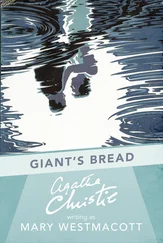
Mary Westmacott - Giant's Bread
Здесь есть возможность читать онлайн «Mary Westmacott - Giant's Bread» весь текст электронной книги совершенно бесплатно (целиком полную версию без сокращений). В некоторых случаях можно слушать аудио, скачать через торрент в формате fb2 и присутствует краткое содержание. Город: London, Год выпуска: 2013, ISBN: 2013, Издательство: HarperCollins Publishers, Жанр: Старинная литература, на английском языке. Описание произведения, (предисловие) а так же отзывы посетителей доступны на портале библиотеки ЛибКат.
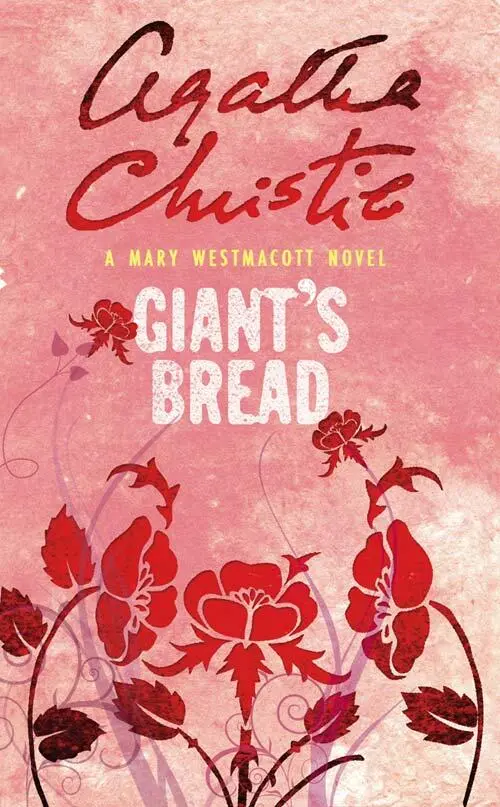
- Название:Giant's Bread
- Автор:
- Издательство:HarperCollins Publishers
- Жанр:
- Год:2013
- Город:London
- ISBN:9780007535002
- Рейтинг книги:3 / 5. Голосов: 1
-
Избранное:Добавить в избранное
- Отзывы:
-
Ваша оценка:
Giant's Bread: краткое содержание, описание и аннотация
Предлагаем к чтению аннотацию, описание, краткое содержание или предисловие (зависит от того, что написал сам автор книги «Giant's Bread»). Если вы не нашли необходимую информацию о книге — напишите в комментариях, мы постараемся отыскать её.
Giant's Bread — читать онлайн бесплатно полную книгу (весь текст) целиком
Ниже представлен текст книги, разбитый по страницам. Система сохранения места последней прочитанной страницы, позволяет с удобством читать онлайн бесплатно книгу «Giant's Bread», без необходимости каждый раз заново искать на чём Вы остановились. Поставьте закладку, и сможете в любой момент перейти на страницу, на которой закончили чтение.
Интервал:
Закладка:
‘I don’t say you mightn’t have done this. Seeing you had the exact thing that was wanted, you might have said to me – in a whisper, that is – “Is this what is needed, Sister?” And I would have taken them from you and handed them to Doctor. No one could have objected to that.’
You got tired of the word ‘Doctor’. Every remark Sister made was punctuated with it, even when speaking to him.
‘Yes, Doctor.’ ‘102 this morning, Doctor.’ ‘I don’t think so, Doctor.’ ‘Pardon, Doctor? I didn’t quite catch.’ ‘Nurse, hold the towel for Doctor’s hands.’
And you held the towel meekly, standing like a glorified towel horse. And Doctor, having wiped his sacred hands, flung the towel on the floor where you meekly picked it up. You poured water for Doctor, you handed soap to Doctor, and finally you received the command:
‘Nurse, open the door for Doctor.’
‘And what I’m afraid is, we shan’t be able to grow out of it afterwards,’ said Phillis Deacon wrathfully. ‘I shall never feel the same about doctors again. Even the scrubbiest little doctors I shall be subservient to, and when they come to dine, I shall find myself rushing to open the door for them. I know I shall.’
There was a great freemasonry in the hospital. Class distinctions were a thing of the past. The dean’s daughter, the butcher’s daughter, Mrs Manfred, who was the wife of a draper’s assistant, Phillis Deacon who was the daughter of a baronet, they all called each other by their surnames and shared the common interest of ‘What would there be for supper, and would it go round?’ Undoubtedly there was cheating. Gladys Potts, the giggler, was discovered to go down early and surreptitiously to filch an extra piece of bread and butter or an unfair helping of rice.
‘You know,’ said Phillis Deacon. ‘I do sympathize with servants now. One always thinks they mind so much about their food – and here are we getting just the same. It’s having nothing else to look forward to. I could have cried when the scrambled eggs didn’t go round last night.’
‘They oughtn’t to have scrambled eggs,’ said Mary Cardner angrily. ‘The eggs ought to be separate, poached or boiled. Scrambled gives too much opportunity to unscrupulous people.’
And she looked with significance at Gladys Potts, who giggled nervously and moved away.
‘That girl’s a slacker,’ said Phillis Deacon. ‘She’s always got something else to do when it’s screens. And she sucks up to Sister. It doesn’t matter with Westhaven. Westhaven’s fair. But she flattered little Carr till she got all the soft jobs.’
Little Potts was unpopular. Strenuous efforts were made to force her to do the more disagreeable work sometimes, but Potts was wily. Only the resourceful Deacon was a match for her.
There were also the jealousies amongst the doctors themselves. Naturally they all wanted the more interesting surgical cases. The allotting of cases to different wards gave rise to feeling.
Nell soon knew all the doctors and their various attributes. There was Doctor Lang, tall, untidy, slouching, with long nervous fingers. He was the cleverest surgeon of the lot. He had a sarcastic tongue, and was ruthless in his treatments, but he was clever. All the sisters adored him.
Then there was Doctor Wilbraham who had the fashionable practice of Wiltsbury. A big florid man, genial in temper when things went well, and the manners of a spoilt child when he was put out. If he was tired and cross he was unnecessarily rough and Nell hated him.
There was Doctor Meadows, a quiet efficient GP. He was content not to do operations and he gave every case unfailing attention. He always spoke politely to the VADs and omitted to throw towels on the floor.
Then there was Doctor Bury who was not supposed to be much good and who was himself convinced that he knew everything. He was always wishing to try extraordinary new methods, and he never continued one treatment for more than a couple of days. If one of his patients died, it was the fashion to say: ‘Do you wonder with Doctor Bury?’
Then there was young Doctor Keen, who had been invalided home from the front. He was little more than a medical student, but he was full of importance. He even demeaned himself to chat with the VADs, explaining the importance of an operation that had just taken place. Nell said to Sister Westhaven: ‘I didn’t know Doctor Keen was operating. I thought it was Doctor Lang.’ Sister replied grimly: ‘Doctor Keen held the leg. That’s all.’
Operations had been a nightmare to Nell at first. At the first one she attended, the floor rose at her, and a nurse led her out. She hardly dared to face Sister, but Sister was unexpectedly kind.
‘It’s partly the lack of air and the smell of the ether, Nurse,’ she said kindly. ‘Go into a short one next. You’ll get used to it.’
Next time Nell felt faint, but did not have to go out, the time after she felt sick only, and the time after that she didn’t feel sick at all.
Once or twice she was lent to help the theatre nurse clear up the operating theatre after an unusually big op. The place was like a shambles, blood everywhere. The theatre nurse was only eighteen, a determined slip of a thing. She owned to Nell that she had hated it at first.
‘The very first op. was a leg,’ she said. ‘Amputation. And Sister went off afterwards and left me to clear up, and I had to take the leg down to the furnace myself. It was awful.’
On her days out Nell went to tea with friends. Some of them were kindly old ladies and sentimentalized over her and told her she was splendid.
‘You don’t work on Sundays, do you, dear? Really? Oh, but that isn’t right. Sunday should be a day of rest.’
Nell pointed out gently that the soldiers had to be washed and fed on Sundays just as much as any other day, and the old ladies admitted this but seemed to think that the matter should have been better organized. They were also very distressed at Nell’s having to walk home alone at midnight.
Others were even more difficult.
‘I hear these hospital nurses give themselves great airs, ordering everyone about. I shouldn’t stand that kind of thing myself. I am willing to do anything I can to help in this dreadful war, but impertinence I will not stand. I told Mrs Curtis so, and she agreed it would be better for me not to do hospital work.’
To these ladies Nell made no reply at all.
The rumour of ‘the Russians’ was sweeping through England at this time. Everyone had seen them – or if not actually seen them, their cook’s second cousin had, which was practically the same thing. The rumour died hard – it was so pleasing and so exciting.
A very old lady who came to the hospital took Nell aside.
‘My dear,’ she said, ‘don’t believe that story. It’s true, but not in the way we think.’
Nell looked inquiringly at her.
‘Eggs!’ said the old lady in a poignant whisper. ‘Russian eggs! Several millions of them – to keep us from starving …’
Nell wrote all these things to Vernon. She felt terribly cut off from him. His letters were naturally terse and constrained and he seemed to dislike the idea of her working in hospital. He urged her again and again to go to London – enjoy herself …
How queer men were, Nell thought. They didn’t seem to understand. She would hate to be one of the ‘Keeping themselves bright for the Boys’ brigade. How soon you drifted apart when you were doing different things! She couldn’t share Vernon’s life and he couldn’t share hers.
The first agony of parting when she had felt sure he would be killed was over. She had fallen into the routine of wives. Four months had passed and he hadn’t been even wounded. He wouldn’t be. Everything was all right.
Читать дальшеИнтервал:
Закладка:
Похожие книги на «Giant's Bread»
Представляем Вашему вниманию похожие книги на «Giant's Bread» списком для выбора. Мы отобрали схожую по названию и смыслу литературу в надежде предоставить читателям больше вариантов отыскать новые, интересные, ещё непрочитанные произведения.
![Fredrik Backman - Britt-Marie Was Here [Britt-Marie var här]](/books/61260/fredrik-backman-britt-marie-was-here-britt-thumb.webp)







Обсуждение, отзывы о книге «Giant's Bread» и просто собственные мнения читателей. Оставьте ваши комментарии, напишите, что Вы думаете о произведении, его смысле или главных героях. Укажите что конкретно понравилось, а что нет, и почему Вы так считаете.