Mary Westmacott - Giant's Bread
Здесь есть возможность читать онлайн «Mary Westmacott - Giant's Bread» весь текст электронной книги совершенно бесплатно (целиком полную версию без сокращений). В некоторых случаях можно слушать аудио, скачать через торрент в формате fb2 и присутствует краткое содержание. Город: London, Год выпуска: 2013, ISBN: 2013, Издательство: HarperCollins Publishers, Жанр: Старинная литература, на английском языке. Описание произведения, (предисловие) а так же отзывы посетителей доступны на портале библиотеки ЛибКат.
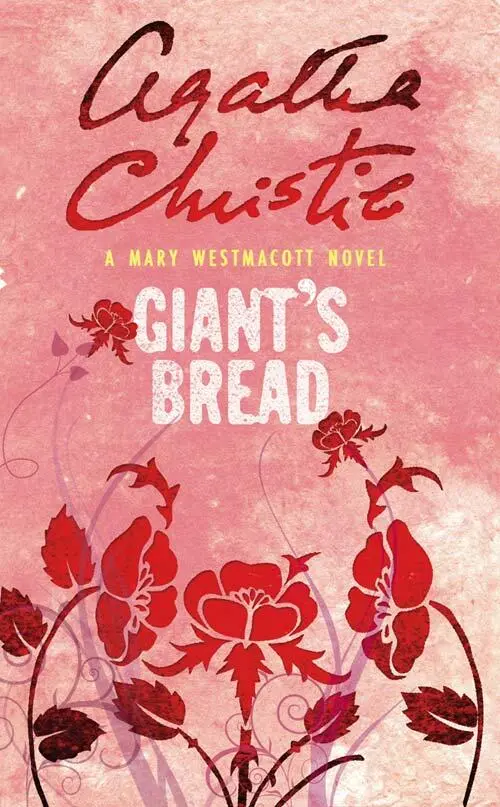
- Название:Giant's Bread
- Автор:
- Издательство:HarperCollins Publishers
- Жанр:
- Год:2013
- Город:London
- ISBN:9780007535002
- Рейтинг книги:3 / 5. Голосов: 1
-
Избранное:Добавить в избранное
- Отзывы:
-
Ваша оценка:
Giant's Bread: краткое содержание, описание и аннотация
Предлагаем к чтению аннотацию, описание, краткое содержание или предисловие (зависит от того, что написал сам автор книги «Giant's Bread»). Если вы не нашли необходимую информацию о книге — напишите в комментариях, мы постараемся отыскать её.
Giant's Bread — читать онлайн бесплатно полную книгу (весь текст) целиком
Ниже представлен текст книги, разбитый по страницам. Система сохранения места последней прочитанной страницы, позволяет с удобством читать онлайн бесплатно книгу «Giant's Bread», без необходимости каждый раз заново искать на чём Вы остановились. Поставьте закладку, и сможете в любой момент перейти на страницу, на которой закончили чтение.
Интервал:
Закладка:
A diminutive scout conducted her down steps, through a kind of gloomy crypt where an elderly lady in Red Cross uniform sat surrounded with bales of hospital shirts, wearing several shawls and shivering a good deal, then along stoneflagged passages, and finally into a gloomy underground chamber where she was received by Miss Curtain, the chief of the ward maids, a tall thin lady with a face like a dreaming duchess and charming gentle manners.
Nell was instructed in her duties which were simple enough to understand. They entailed hard work, but no difficulty. A certain area of stone passages and steps to scrub. Then the nurses’ tea to lay, wait on, and finally clear away. Then the ward maids had their own tea. Then the same routine for supper.
Nell soon got the hang of things. The salient points of the new life were, one, war with the kitchen, two, the difficulty of providing the sisters with the right kind of tea.
There was a long table where the VAD nurses sat, pouring down in a stream, frantically hungry, and always the food seemed to fail before the last three were seated. You then applied to the kitchen through a tube and got a biting rejoinder. The right amount of bread and butter had been sent up, three pieces for each. Somebody must have eaten more than their share. Loud disclaimers from the VADs. They chatted to each other amiably and freely, addressing each other by their surnames.
‘I didn’t eat your slice of bread, Jones. I wouldn’t do such a mean thing!’ ‘They always send it up wrong.’ ‘Look here, Catford’s got to have something to eat. She’s got an op. in half an hour.’ ‘Hurry up, Bulgy (an affectionate nickname, this) we’ve got all those mackintoshes to scrub.’
Very different the behaviour at the sisters’ table at the other side of the room. Conversation there went on genteelly in frosty whispers. Before each sister was a small brown pot of tea. It was Nell’s business to know exactly how strong each sister liked it. It was never a question of how weak! To bring ‘washy’ tea to a sister was to fall from grace for ever.
The whispers went on incessantly.
‘I said to her: “Naturally the surgical cases receive the first attention.”’ ‘I only passed the remark, so to speak.’ ‘Pushing herself forward. Always the same thing.’ ‘Would you believe it, she forgot to hold the towel for the doctor’s hands.’ ‘I said to Doctor this morning …’ ‘I passed the remark to Nurse …’
Again and again that one phrase recurred. ‘I passed the remark.’ Nell grew to listen for it. When she approached the table, the whispers became lower and the sisters looked at her suspiciously. Their conversation was secretive and shrouded in dignity. With enormous formality, they offered each other tea.
‘Some of mine, Sister Westhaven? There’s plenty in the pot.’ ‘Would you oblige me with the sugar, Sister Carr?’ ‘Pardon me.’
Nell had just begun to realize the hospital atmosphere, the feuds, the jealousies, the cabals, and the hundred and one undercurrents, when she was promoted to the ward, one of the nurses having gone sick.
She had a row of twelve beds to attend to, mostly surgical cases. Her companion was Gladys Potts, a small giggling creature, intelligent but lazy. The ward was under the charge of Sister Westhaven, a tall thin acid woman with a look of permanent disapproval. Nell’s heart sank when she saw her, but later she congratulated herself. Sister Westhaven was far the pleasantest nurse in the hospital to work under.
There were five sisters in all. Sister Carr, round and good-tempered looking. The men liked her and she giggled and joked with them a good deal, and was then late over her dressings and hurried over them. She called the VADs ‘dear’, and patted them affectionately but her temper was uncertain. She herself was so unpunctual that everything went wrong and the ‘dear’ was blamed for it. She was maddening to work under.
Sister Barnes was impossible. Everyone said so. She ranted and scolded from morning to night. She hated VADs and let them know it. ‘I’ll teach them to come here thinking they know everything,’ was her constant declaration. Apart from her biting sarcasm, she was a good nurse, and some of the girls liked working under her in spite of her lashing tongue.
Sister Dunlop was a dug-out. She was kindly and placid, but thoroughly lazy. She drank a great deal of tea and did as little work as possible.
Sister Norris was theatre sister. She was competent at her job, rouged her lips and was cattish to her underlings.
Sister Westhaven was by far the best nurse in the hospital. She was enthusiastic over work and was a good judge of those under her. If they showed promise she was reasonably amiable to them. If she judged them fools they led a miserable life.
On the fourth day, she said to Nell:
‘I thought you weren’t worth much at first, Nurse. But you’ve got a good lot of work in you.’
So much imbued by now was Nell by the hospital spirit that she went home in the seventh heaven.
Little by little she sank into the hospital rut. At first she had suffered a heartrending pang at the sight of the wounded. The first dressing of wounds at which she assisted was almost more than she could bear. Those who ‘Longed to nurse’ usually brought a certain amount of emotionalism to the task. But they were soon purged of it. Blood, wounds, suffering were everyday matters.
Nell was popular with the men. In the slack hour after tea, she wrote letters for them, fetched books she thought they would like from the shelves at the end of the ward, heard stories of their families and sweethearts. She became in common with the other nurses zealous to defend them from the cruelties and stupidities of the would-be kind.
On visitors’ days streams of elderly ladies arrived. They sat down by beds and did their best to ‘cheer our brave soldier’.
Certain things were conventions. ‘You’re longing to get back, I suppose?’ And ‘Yes, M’am,’ was always the answer given. Descriptions were sought of the Angels at Mons.
There were also concerts. Some were well organized and were thoroughly enjoyed. Others –! They were summed up by the nurse on the next row to Nell, Phillis Deacon.
‘Anybody who thinks they can sing, but has never been allowed to by their families, has got their chance now!’
There were also clergymen. Never, Nell thought, had she seen so many clergymen. One or two were appreciated. They were fine men, with sympathy and understanding, and they knew the right things to say and did not stress the religious side of their duties unduly. But there were many others.
‘Nurse.’
Nell paused in a hurried progress along the ward, having just been told sharply by Sister: ‘Nurse, your beds are crooked. No. 7’s sticking out.’
‘Yes.’
‘Couldn’t you wash me now, Nurse?’
Nell stared at the unusual request.
‘It’s not nearly half-past seven.’
‘It’s the parson. He’s at me to be confirmed. He’s coming in now.’
Nell took pity on him. The Reverend Canon Edgerton found his prospective convert barred from him by screens and basins of water.
‘Thank yer, Nurse,’ said the patient hoarsely. ‘It seems a bit hard to go on nagging at a feller when he can’t get away from yer, doesn’t it?’
Washing – interminable washing. The patients were washed, the ward was washed, and at every hour of the day there were mackintoshes to scrub.
And eternal tidiness.
‘Nurse – your beds. The bedclothes are hanging down on No. 9. No. 2 has pushed his bed sideways. What will Doctor think?’
Doctor – Doctor – Doctor. Morning, noon and night, Doctor! Doctor was a god. For a mere VAD to speak to Doctor was lese-majesty and brought down the vials of wrath on your head from Sister. Some of the VADs offended innocently. They were Wiltsbury girls and they knew the doctors – knew them as ordinary human beings. They said good morning blithely. Soon they knew better – knew they had been guilty of that awful sin ‘pushing yourself forward’. Mary Cardner ‘pushed herself forward’. Doctor asked for some scissors and unthinkingly, she handed him the pair she wore. Sister explained her crime to her at length. She ended thus:
Читать дальшеИнтервал:
Закладка:
Похожие книги на «Giant's Bread»
Представляем Вашему вниманию похожие книги на «Giant's Bread» списком для выбора. Мы отобрали схожую по названию и смыслу литературу в надежде предоставить читателям больше вариантов отыскать новые, интересные, ещё непрочитанные произведения.
![Fredrik Backman - Britt-Marie Was Here [Britt-Marie var här]](/books/61260/fredrik-backman-britt-marie-was-here-britt-thumb.webp)










Обсуждение, отзывы о книге «Giant's Bread» и просто собственные мнения читателей. Оставьте ваши комментарии, напишите, что Вы думаете о произведении, его смысле или главных героях. Укажите что конкретно понравилось, а что нет, и почему Вы так считаете.