Megan Hall - Dear Bully
Здесь есть возможность читать онлайн «Megan Hall - Dear Bully» весь текст электронной книги совершенно бесплатно (целиком полную версию без сокращений). В некоторых случаях можно слушать аудио, скачать через торрент в формате fb2 и присутствует краткое содержание. Жанр: Старинная литература, на английском языке. Описание произведения, (предисловие) а так же отзывы посетителей доступны на портале библиотеки ЛибКат.
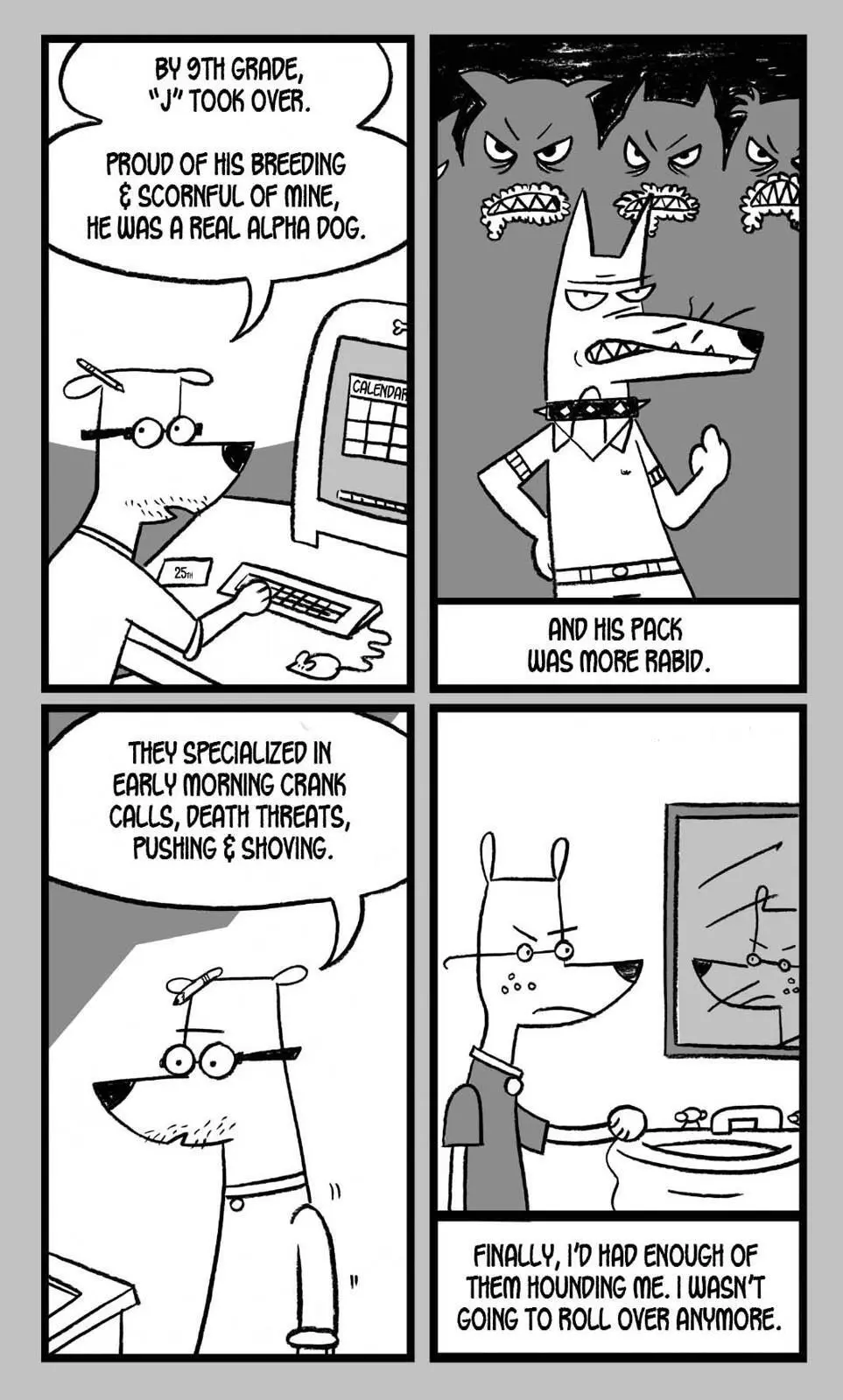
- Название:Dear Bully
- Автор:
- Жанр:
- Год:неизвестен
- ISBN:нет данных
- Рейтинг книги:4 / 5. Голосов: 1
-
Избранное:Добавить в избранное
- Отзывы:
-
Ваша оценка:
Dear Bully: краткое содержание, описание и аннотация
Предлагаем к чтению аннотацию, описание, краткое содержание или предисловие (зависит от того, что написал сам автор книги «Dear Bully»). Если вы не нашли необходимую информацию о книге — напишите в комментариях, мы постараемся отыскать её.
Dear Bully — читать онлайн бесплатно полную книгу (весь текст) целиком
Ниже представлен текст книги, разбитый по страницам. Система сохранения места последней прочитанной страницы, позволяет с удобством читать онлайн бесплатно книгу «Dear Bully», без необходимости каждый раз заново искать на чём Вы остановились. Поставьте закладку, и сможете в любой момент перейти на страницу, на которой закончили чтение.
Интервал:
Закладка:
This girl may not even know it, but she has perfected the art of making you feel as if everything you do, everything you say, and especially everything you don’t say is under her scrutiny, and wrong.
You are not good at comebacks. This isn’t something that will ever change, by the way, even twenty years down the road. The words that were nowhere near the tip of your tongue at the critical moment begin to haunt you. They keep you up at night. You lie in bed, replaying the dialogue that left you speechless earlier that day. The way this girl kept pressing you to talk about why you weren’t going to the school dance—in front of the boy you wish had asked you.
Here’s the difference: In your mind, you’re wearing cooler clothes. You visualize every detail, down to the way your socks are scrunched (this is Texas, after all). Your cheeks don’t turn bright red and your voice doesn’t shake and you don’t spit out a lame and unconvincing excuse about your grandparents coming into town. In your mind, you say something funny, really funny, that makes the boy who was pretending not to hear your conversation laugh out loud. Also, it shuts the girl up. For a change.
The fantasy of a perfect conversation becomes a nightly ritual. You don’t know it yet, but this is the beginning of your career as a writer. And this girl—the one you cannot stand—planted the seed in you. In your imagination, you are the smartest, funniest version of yourself. You are inventing the person you want to practice being, and she’s brilliant. So brilliant someone should write a book about her.
You grow up a little bit. Some things change and some don’t. The girl stops handing out those little blue copies of the New Testament, but she still makes you tongue-tied most of the time. At least the cute boy from gym class doesn’t do that anymore. It’s easy to say the thing that makes him laugh. Another dance is coming up. You have a date.
Years later, you leave home. In college, you meet people who remind you of this girl. The difference is you don’t let them get under your skin. All those nights, all those scenes you played out in your head—it’s as if they have given you wings. You’ve even started writing a few of them down. Before you know it, you’ve written a book. You call it The Betrayal of Natalie Hargrove .
It Gets Better
Now
by Amy Reed
No.
Look.
I am not the timid little thing you remember. These are not the hallways that you owned. This is not the place where things worked backward, where feral children ruled the world.
You remember the girl who played possum. She went limp and you knew how to bend her, your puppet, your perfect soft thing. But maybe one day her muscles tensed. She opened her eyes and she saw you trying to hide in the shadows. But it was day, and you were exposed. It was day, and light favors goodness. She could see through the place where a heart should have been. She could see through you, and those veils and mirrors you thought indestructible ripped and shattered into a million pieces.
You remember. This was the day she stopped playing dead.
Was this it? Was this the thing that broke you, the insult that turned you rabid? Was she too much life for you to smother?
You tried. The way something rabid tries.
Now.
There are years and miles and heartbeats between us. There is a big, beautiful world and you are not in it. You live in a small place, and it is not here. It is the only place that will take you—locked away, dark. You are fighting the walls, thrashing around and trying to gain power. But you are the small one now. You are the tiny speck of a thing. You are a ghost, and ghosts are not solid. They are not flesh, not a thing that breathes, not my heart beating.
This is.
Take a good look at my life now, my heart beating. This is the world I have built and it is my own. This breath, this blood, this music—all mine. This is how things grow, how they reach toward the sun. You can have that little speck of yesterday, the place where ghosts roam, that broken, rotten thing. I do not need it anymore. There is tomorrow, and another tomorrow after that. There is today, and it is not yours.
Now.
Look at everything around me so solid. This is light, my beautiful thing. These are my hands and here are the things they touch. This is what gentle looks like. These are my eyes, wide and trusting. Look, my hands are not fists. They are open. This is what brave looks like.
Yes.
There are people with hearts all around me. Not holes. Not empty places to see through. Yes. Solid. I am reaching for them and they are reaching, too. Look. Light. This is love and it is stronger than you.
Standing Tall
by Dawn Metcalf
It started in kindergarten.
I was tall. Taller than all the kids in my class, taller than most kids in the next grade; in a few years, I’d be taller than my teachers, but at five years old, I was long haired, shy, gangly, and, above all, tall.
There was a boy who was not tall. Let’s call him Dickie. Dickie was the smallest boy in our class and I was the tallest girl. That was all it took.
Dickie would torment me. He’d hit me with blocks. He’d poke me with pencils. He’d call me names I didn’t understand and when I’d tattle to the teacher, she’d tell me to sit down. I had made one or two new friends when I’d transferred to this new school, but most often I’d sit by myself on the edge of the blacktop during recess and read a book. Dickie, however, would not leave me alone. He led a group of boys and girls. He’d dare them to tag me as they ran by or surround my spot by the crab apple tree and call me nasty names. I’d try to ignore them, tightening my arms and legs and keeping an eye on my book as the words started to swim. When I’d had enough, I’d stand up all of a sudden and the kids would scatter, squealing. I remember the look on Dickie’s face—he was joyously terrified.
Then I’d sit down and go back to reading.
Later, I’d run home crying.
This pattern continued throughout elementary and middle school. The name-calling became smoother, delivered with a sneer. The poking with pencils graduated to elbowing. The taggish slaps became a snatch to snap a bra strap that wasn’t even there—it set the tone for my days at school: Middle School Hell.
Now I was taller than the principal, wearing glasses and braces and there was nowhere to hide.
I no longer cried. I was tired and hated school and would fantasize loudly to all my friends about how my family was going to move and I was going to get out of this stupid town before the end of the year. (When my father didn’t accept the offer to move to Seattle, I was crushed.) I had to face it: I was stuck until high school graduation—thirteen years of Dickie.
I was eleven years old and five foot eight. I joined the basketball team. My job was to stand in the middle of the court with my arms raised, preventing most kids from even seeing the net. I was a wall, which pretty much describes my entire middle school experience: I stood there and I took it. Day after day. Year after year. But secretly I wanted—just once—to set aside my parents’ hippie values of Love and Peace and Togetherness on Earth and grab any of these yappy little dogs by the scruffs of their necks and . . . but that wasn’t very Zen. Instead, I swallowed it down and wrote novels at home.
I entered high school at five nine and age fourteen and it was heaven because it was tall. It was the eighties, a loud, colorful time of big hair and high-heeled boots, and I didn’t feel anything out of the ordinary anymore because I learned something new in high school: sarcasm was street cred. Innuendo was my shield and dry wit my sword. Add my family’s patented humor and I soon had a group of friends who didn’t mind that I was taller than them. There were even two guys, Jay and Marcus, who were taller than me! We could have entire conversations over the heads of our classmates while walking down the hall, although I’d grown used to placing my left foot forward, slumping my shoulders slightly, and tilting my chin down to speak. It never occurred to me to notice how tall someone was (or wasn’t) or how heavy they were (or weren’t); I think I’d purposefully gone blind to such differences, shaping my eyes to level the playing field. I was surprised by photos that showed my friends were all so much shorter than me. They never seemed that way in real life. We all felt equal.
Читать дальшеИнтервал:
Закладка:
Похожие книги на «Dear Bully»
Представляем Вашему вниманию похожие книги на «Dear Bully» списком для выбора. Мы отобрали схожую по названию и смыслу литературу в надежде предоставить читателям больше вариантов отыскать новые, интересные, ещё непрочитанные произведения.











Обсуждение, отзывы о книге «Dear Bully» и просто собственные мнения читателей. Оставьте ваши комментарии, напишите, что Вы думаете о произведении, его смысле или главных героях. Укажите что конкретно понравилось, а что нет, и почему Вы так считаете.