Megan Hall - Dear Bully
Здесь есть возможность читать онлайн «Megan Hall - Dear Bully» весь текст электронной книги совершенно бесплатно (целиком полную версию без сокращений). В некоторых случаях можно слушать аудио, скачать через торрент в формате fb2 и присутствует краткое содержание. Жанр: Старинная литература, на английском языке. Описание произведения, (предисловие) а так же отзывы посетителей доступны на портале библиотеки ЛибКат.
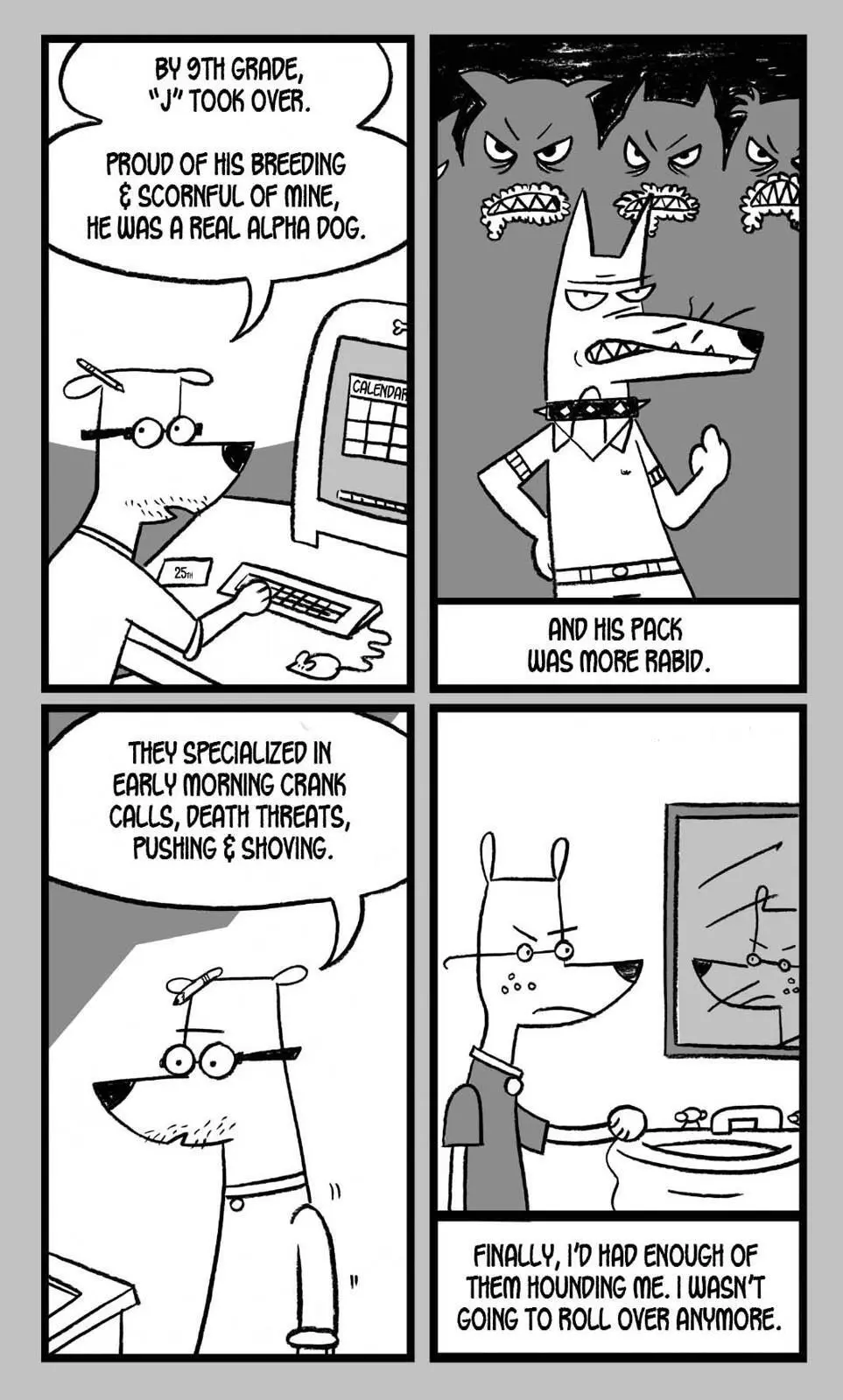
- Название:Dear Bully
- Автор:
- Жанр:
- Год:неизвестен
- ISBN:нет данных
- Рейтинг книги:4 / 5. Голосов: 1
-
Избранное:Добавить в избранное
- Отзывы:
-
Ваша оценка:
Dear Bully: краткое содержание, описание и аннотация
Предлагаем к чтению аннотацию, описание, краткое содержание или предисловие (зависит от того, что написал сам автор книги «Dear Bully»). Если вы не нашли необходимую информацию о книге — напишите в комментариях, мы постараемся отыскать её.
Dear Bully — читать онлайн бесплатно полную книгу (весь текст) целиком
Ниже представлен текст книги, разбитый по страницам. Система сохранения места последней прочитанной страницы, позволяет с удобством читать онлайн бесплатно книгу «Dear Bully», без необходимости каждый раз заново искать на чём Вы остановились. Поставьте закладку, и сможете в любой момент перейти на страницу, на которой закончили чтение.
Интервал:
Закладка:
I’ll admit the comment threw me. Obviously, I’d never been on a book tour before, much less a prepublication tour, and had little idea of what to expect. To be more accurate, I’d tried to keep myself free from expectations. Doing so allowed me to enjoy the process much more than if I had obsessed over everything like I usually do.
The downside of walking around open to the world, free from expectation, is that it involves taking one’s armor off. All writers have armor. Armor is required gear for anyone who willfully engages in a career path fraught with rejection, public criticism, or, worse, obscurity. I actually think my armor is pretty tough, battle hardened by far too many years trying and failing to “break in.” But like any other writer’s, it is patchy and cobbled together out of spare parts, rife with weak spots that could let deadly, near-mortal wounds pass through. Regardless, I’d left it home.
You’d think after writing a book about dead kids, and dead kids falling in love with living kids and vice versa, that I’d have been a little more battle ready. I may officially be an author of young adult books, but I’d grown up thinking I would be a horror author, and so I read all the introductions to great horror novels and anthologies. These were usually autobiographical in nature, and almost invariably the intros had some anecdote about the social awkwardness of being a horror author. I gathered that it was weird enough being a “normal” author (World to author: What is it you really do?), but horror authors, it seemed, dealt with another level of bizarre social awkwardness entirely. Some of their experiences I read about included having their books banned, getting ostracized by the local PTA at their children’s schools, being accosted constantly by armchair psychoanalysts, or—one of my favorites—fielding questions like “Ever et raw meat?” (one posed to Mr. Stephen King, who has many such anecdotes). A horror author clearly had to deal with a segment of the public that was less than adoring and, in many cases, downright hostile. Maybe I should have done more to guard myself against such hostility.
There was a pause as I took note of the woman’s posture, her tone, the glint in her eyes. She wanted to fight. Did I? Am I the guy who writes about dead kids? A hundred responses, mostly defensive, many belligerent, sprang to my mind. Responses about judging books by covers and did you actually read the book or do you actually read any books and much, much worse. As a writer, you don’t get to tell someone the meaning of what they just read. That’s the job of the book itself. You can, however, talk about what informed the writing, what your mood was, and what was going on in your head when you were writing the story.
The initial idea for Generation Dead came from some newsmagazine show I’d seen on violence in schools. According to the program, it was becoming all the rage in schools across America to videotape planned fights or random acts of violence and put them up on YouTube for the entire world to enjoy. The show ran a number of the actual clips of young people hurting other young people. One of the clips featured a little boy in a coat that was too big for him waiting for the bus to arrive. A much larger boy ran into the frame and punched the smaller boy in the face, dropping him to the pavement. The little boy sat, alone and crying, bleeding from his nose and mouth.
We’ve all got our horror pressure points. That was mine. That’s what I wrote about.
Well, really I wrote a love story. That’s what it says on the dedication page, anyway: For Kim, a love story. The back cover copy of the book promises love and romance and those topics are what, presumably, the marketing efforts will highlight. And if you ask me, I will tell you I wrote a love story. It just happens to be a love story with zombies. Teenage zombies.
But the damaged boy crying on the pavement is in the book, too, as are the damaged boys that attacked and filmed him. You won’t see them as you see Tommy, the living-impaired boy who falls for Phoebe, the traditionally biotic girl who notices that Tommy is different from all the other boys in her class in more ways than the obvious one. The YouTube victim and his assailants aren’t physical characters in the book, but they are there lurking somewhere under the surface of the story.
I think the zombies were my brain’s (my braaaaaiiiiiin’s!) way of coping with what to me was a truly horrific subject. Cthulhu scares me. Dracula is creepy, and I fear the Rough Beast slouching toward Bethlehem, but the idea (no, not the idea, the reality) of a kid injuring another kid for no other reason than the entertainment value he assumes to be inherent in the act absolutely horrifies me. The zombies allowed me to inject humor into a subject matter that, if I dwelled on it for too long, would put me in the deepest blue funk imaginable. The zombies helped me cope.
And zombies are, of course, wicked cool.
I wrote a story that thrilled me and gripped me emotionally. Generation Dead made me laugh, it made me sad, and it scared me. Writing about love and death and zombies and being young and never growing old taught me so much. I wrote about things that were important to me, and while I may not have known what I was trying to do when I started, by the time I finished I had a very clear sense of what I’d written and what I was trying to do as a writer. And I care very deeply about those kids—the kids on YouTube and the kids in my book. My dead kids are not “dead kids” in the sense that the tight-lipped woman was implying.
Which brings us back to Danny’s First Critic. She taught me something. She taught me that I’m better off without the armor, because no matter how much I fortify it, no matter how well oiled the plates are, and no matter how tightly I weave the chain links, there’s no way it can really protect me. An arrow can always slip through; a swung club could always bruise. And that’s okay, really, because it is as much a part of my job to feel as it is to make others feel.
I’m glad I’d left the armor at home. If I’d prepared for battle, I don’t think I would have answered her in quite the same way, and I don’t think my answer, in turn, would have made her grim expression soften. I don’t think she would have done what she did next, which was pick up the advanced reader copy of the book and add it to the considerable pile she had already amassed. She didn’t go as far as to have me sign it, but she took the book.
“No,” I’d told her, “I’m the guy who writes about kids who’re trying to live.”
The Seed
by Lauren Kate
There is a girl in your seventh-grade class. She is not exceptionally pretty. She isn’t rich or all that great of a singer. She is no more or less popular than you. You are friends with each other’s friends, but you are not friends.
There are meaner girls than this one. Your school is teeming with them. Down every hallway lurk bigger snobs and scarier gossips. And yet, for some reason, ever since your elementary school and this girl’s elementary school flowed together into one great big middle school, this is the girl who makes you feel the most uncomfortable in your skin.
In the mornings, she and her friends stand outside the cul-de-sac where the bus drops off, handing out religious pamphlets. When you don’t take one—and you never take one—she is the girl who always asks, loudly enough for the whole bus full of kids to hear, why you want to burn in hell for all eternity. This is the worst, but not the last, of it. In gym, she flirts with the boys you have crushes on. In English, your favorite class, she challenges the things you say about the reading assignment to the point where you are dumbstruck, even though you know the answer. On the rare occasions when you and your friends are being mean girls—once, at a slumber party, after the first girl fell asleep, you and your friends soaked her extra underwear and put it in the freezer—this girl rolls over in her sleeping bag and catches you, singles you out, makes you feel worse than your own mother did when she heard about the incident.
Читать дальшеИнтервал:
Закладка:
Похожие книги на «Dear Bully»
Представляем Вашему вниманию похожие книги на «Dear Bully» списком для выбора. Мы отобрали схожую по названию и смыслу литературу в надежде предоставить читателям больше вариантов отыскать новые, интересные, ещё непрочитанные произведения.



Обсуждение, отзывы о книге «Dear Bully» и просто собственные мнения читателей. Оставьте ваши комментарии, напишите, что Вы думаете о произведении, его смысле или главных героях. Укажите что конкретно понравилось, а что нет, и почему Вы так считаете.