Richard Patterson - Conviction
Здесь есть возможность читать онлайн «Richard Patterson - Conviction» весь текст электронной книги совершенно бесплатно (целиком полную версию без сокращений). В некоторых случаях можно слушать аудио, скачать через торрент в формате fb2 и присутствует краткое содержание. Жанр: Старинная литература, на английском языке. Описание произведения, (предисловие) а так же отзывы посетителей доступны на портале библиотеки ЛибКат.
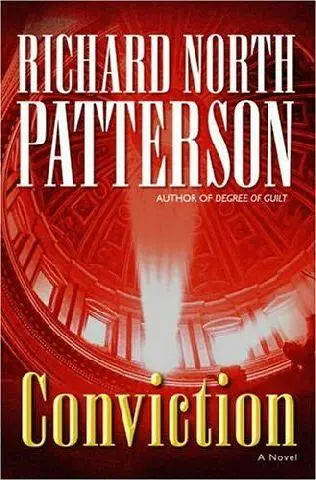
- Название:Conviction
- Автор:
- Жанр:
- Год:неизвестен
- ISBN:нет данных
- Рейтинг книги:3 / 5. Голосов: 1
-
Избранное:Добавить в избранное
- Отзывы:
-
Ваша оценка:
Conviction: краткое содержание, описание и аннотация
Предлагаем к чтению аннотацию, описание, краткое содержание или предисловие (зависит от того, что написал сам автор книги «Conviction»). Если вы не нашли необходимую информацию о книге — напишите в комментариях, мы постараемся отыскать её.
Conviction — читать онлайн бесплатно полную книгу (весь текст) целиком
Ниже представлен текст книги, разбитый по страницам. Система сохранения места последней прочитанной страницы, позволяет с удобством читать онлайн бесплатно книгу «Conviction», без необходимости каждый раз заново искать на чём Вы остановились. Поставьте закладку, и сможете в любой момент перейти на страницу, на которой закончили чтение.
Интервал:
Закладка:
Her daughter, whom Terri had thought was sleeping, studied her as if she were a stranger. The clinical coolness in Elena's eyes cut through Terri like a knife.
"I thought you were asleep," Terri managed to say.
"How would you know?" the girl inquired coldly. "You didn't come to my room."
"It was late, Elena. I didn't want to wake you."
Elena ignored this. Walking to the desk, she picked up a note card with Terri's futile scratchings, scanning it with narrow eyes.
"I'm writing out my argument," Terri said. "If we don't win tomorrow, a man's going to die."
"No," Elena answered tersely. "A creep is going to die."
Terri expelled a breath. "You don't know him."
"I knew my father," Elena answered. "If you weren't my mother, would you have been his lawyer? Or maybe you would be anyhow."
Terri felt too heartsick to respond. Silently, she shook her head, less in answer than in a vain wish to banish all she felt. "You can't even look at me," she heard Elena say, and then realized that she was staring at her note cards through a film of dampness.
At length, she gazed up at her daughter. "I don't understand what your father did to you," she said softly. "I don't want to. But I understand what happened to this man, and I don't think it's right for us to kill him."
Elena folded her arms. "You think that about everyone. That's all your life's about."
What my life is about, Terri wanted to say, is too complicated for you to know. And so is Rennell Price's. But she could not explain her own childhood, the painful duality of wishing her father dead and yet knowing how defenseless a child could be against the damage inflicted by those who, themselves, had once been damaged children.
"Elena," she said quietly, "I don't think we can ever know enough about someone to execute him. I don't think we're that wise, or that fair. I don't even think we're wise enough to keep from killing innocent men.
"This man could be innocent. I think he is, that another man was the one who killed Thuy Sen. How can I know that and not do everything in my power to save him?"
Elena's eyelids fluttered. "Because maybe he did it, Mama. Maybe he'll do it again."
Once more, Terri thought of Eddie Fleet. She stood by instinct, reaching out to embrace her daughter. "Don't touch me," the girl said fiercely and fled the room.
SEVENTEEN
SIX HOURS LATER, ON THE MORNING THAT THEY WOULD SEEK leave from the Ninth Circuit to file Rennell's appeal, Chris and Terri sat with Carlo at their sun-splashed breakfast table. They were tired and subdued—by this afternoon, if the Ninth Circuit turned them down, Rennell's legal battle would be over. And still their internal disagreements lingered.
Sipping coffee, Chris gazed at Terri across the table. "We've agreed to argue everything, I know. But how we sequence our request to be heard is still important. Unless we win on the narrowest, least-controversial issues, we may have extended Rennell's life without saving it."
Meticulously, Terri spread strawberry jam across her toast, making sure to cover every corner. "What's your suggestion?"
"Atkins is a new case, and no one—not the California courts, not the legislature—has set out any standards for defining what retardation is. That's our best argument, I think. It's like Rennell Price lost the lottery."
"But all retardation buys him," Carlo interposed, "is a lifetime in prison. Innocence is his ticket out."
"True. But spelling out who Rennell is should create some sympathy, even if the Court doesn't buy that he's retarded. Then we segue into innocence having implanted the idea of a guy who couldn't defend himself and begin to hammer home that he had a lawyer who didn't defend him either. That's the perfect setup for arguing that Rennell's conviction is a frame job, with Rennell the perfect dupe for Eddie Fleet." Again Chris looked at Terri, speaking more softly. "You don't want to win on freestanding innocence—that's like a red flag for the Supreme Court, begging for a reversal. When you make your pitch on that, remind the panel that it doesn't need to go there if it fits this within AEDPA by finding Yancey James incompetent. Blair Montgomery needs to take Judge Sanders with him, and Sanders is a prudent man."
Terri considered this. "Reading judges," she remarked to Carlo, "is about as much of a science as reading the entrails of a goat. But I think Chris is right about this one—we need to make it as easy for Sanders as we can. As long as we try everything to keep Rennell alive."
Carlo glanced at his father, who still contemplated Terri with a look of faint misgiving. "If we can help it," he said finally, "I don't ever want to see the inside of the United States Supreme Court. Unless, of course, we've lost."
* * *
At one o'clock, Terri, Chris, and Carlo faced Larry Pell and Janice Terrell across a conference table in the State Office Building in San Francisco, a speaker box between them. From the beginning, Judge Sanders, silent during the first emergency proceeding, dominated this one.
"Tell me about Atkins," he demanded of Terri. "What's the essence of your argument on retardation?"
She glanced at Chris. "That Rennell Price is retarded," she answered. "Most important, that neither the State Supreme Court nor Judge Bond gave us any idea of why they ruled otherwise, or what their standards for determining retardation are. The State can't execute this man in a vacuum—"
"All right," Sanders interjected brusquely. "Mr. Pell?"
Pell gathered his thoughts. "Mr. Price's lawyer proposed standards," Pell argued, "as did we. Two courts were unpersuaded that he met them—"
"Based on what?" Judge Montgomery interjected dryly. "Are you suggesting that our proper role is divination? Or did those courts owe us—and more important, Mr. Price—some elucidation of their reasoning prior to his execution?"
Behind the fingers curled to his lips, Chris smiled faintly. With unusual bluntness, Pell answered, "What the California Supreme Court owed Mr. Price is due consideration of his claims, followed by a ruling. AEDPA requires that the federal courts respect that ruling absent a clear showing of error, which Judge Bond did. This Court should do the same—"
"What about innocence?" Sanders cut in. "In his papers, Mr. Price says quite plainly that—regardless of whether his counsel was ineffective—he's entitled to a new trial, or even his freedom, based on his brother's confession. Is that the law?"
"Absolutely not," Pell replied with real vehemence. "Under AEDPA, it is not this Court's role to conduct a second trial but to determine whether the original trial was fair. And it was."
"What say you to that, Ms. Paget?"
Terri read the warning in Chris's eyes. "Are we deciding, Your Honor, whether a fifteen-year-old trial was good enough to justify the wrong results—in which case, it's permissible to execute a man who now appears to be innocent? Or is it this Court's duty, when faced with compelling new evidence of a condemned man's innocence, to consider whether it is still appropriate to execute him—"
"What about AEDPA?" Sanders interjected sharply. "It's very clear that its wording sets forth a precondition to considering new evidence of innocence—that the original trial denied Mr. Price a constitutional right, such as the effective assistance of counsel."
"Let me pose a hypothetical," Terri replied. "Suppose this Court was absolutely certain that new evidence showed Rennell Price to be innocent but that Mr. Pell insisted the Court ignore that evidence unless Mr. James's deficiencies kept Rennell's innocence from coming to light at the original trial. I do not believe that AEDPA can—or should—be read to require execution of the innocent—"
"That's not this case," Sanders retorted. "Your client's innocence is hardly certain."
Читать дальшеИнтервал:
Закладка:
Похожие книги на «Conviction»
Представляем Вашему вниманию похожие книги на «Conviction» списком для выбора. Мы отобрали схожую по названию и смыслу литературу в надежде предоставить читателям больше вариантов отыскать новые, интересные, ещё непрочитанные произведения.








Обсуждение, отзывы о книге «Conviction» и просто собственные мнения читателей. Оставьте ваши комментарии, напишите, что Вы думаете о произведении, его смысле или главных героях. Укажите что конкретно понравилось, а что нет, и почему Вы так считаете.