Richard Patterson - Conviction
Здесь есть возможность читать онлайн «Richard Patterson - Conviction» весь текст электронной книги совершенно бесплатно (целиком полную версию без сокращений). В некоторых случаях можно слушать аудио, скачать через торрент в формате fb2 и присутствует краткое содержание. Жанр: Старинная литература, на английском языке. Описание произведения, (предисловие) а так же отзывы посетителей доступны на портале библиотеки ЛибКат.
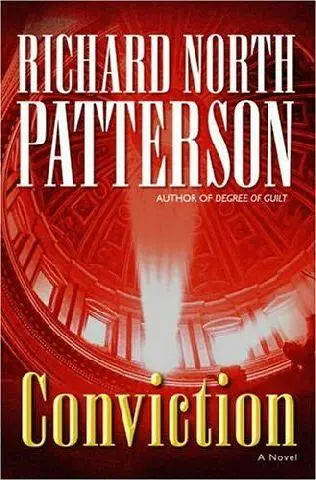
- Название:Conviction
- Автор:
- Жанр:
- Год:неизвестен
- ISBN:нет данных
- Рейтинг книги:3 / 5. Голосов: 1
-
Избранное:Добавить в избранное
- Отзывы:
-
Ваша оценка:
Conviction: краткое содержание, описание и аннотация
Предлагаем к чтению аннотацию, описание, краткое содержание или предисловие (зависит от того, что написал сам автор книги «Conviction»). Если вы не нашли необходимую информацию о книге — напишите в комментариях, мы постараемся отыскать её.
Conviction — читать онлайн бесплатно полную книгу (весь текст) целиком
Ниже представлен текст книги, разбитый по страницам. Система сохранения места последней прочитанной страницы, позволяет с удобством читать онлайн бесплатно книгу «Conviction», без необходимости каждый раз заново искать на чём Вы остановились. Поставьте закладку, и сможете в любой момент перейти на страницу, на которой закончили чтение.
Интервал:
Закладка:
At the desk inside, a somewhat chatty guard—happy to be working outside the prison walls, Carlo assumed—waited while they filled out a visitor form before shooing them through security. Carlo stripped off his belt and shoes and watch and passed through a metal detector; retrieving them, he emerged from the building with Terri to find himself inside San Quentin State Prison.
To his right were mock Tudor homes, housing for prison staff; ahead, looming above the sprawling stucco prison, was a tower manned by guards with rifles. To the left was death row, next to a ventilator shaft jutting from the prison's roof.
Terri followed his gaze. "The gas chamber," she told him. "It's still available for occupancy. But lethal injection's now the death of choice."
"Who decides?"
"Rennell." Her tone was clipped. "A bullet in the brain seems more humane than either. But that's too up close and personal."
They passed through a second security station with a guardhouse and metal detector. Beyond that a neatly tended square of grass surrounded a marker engraved with the names of murdered prison guards. "You mentioned gangs?" Carlo said. "You'd think they'd keep a pretty tight lid on this place."
"They do. But somehow the folks inside come up with knives and makeshift weapons. And there's still an underground economy: people making 'pruno'—alcohol fermented from fruit—or getting drugs, maybe through employees gone bad. There's everything from weed to crack and black tar heroin." Stopping at an iron gate, the entry to death row, Terri added, "As for gangs, it's a veritable United Nations. You've got the Bloods, the Crips, the Skinheads, the Aryan Brotherhood, the Mexican Mafia, and the North and South Mexicans. There's even alliances: at the moment, the North Mexicans and the Bloods are united against the South Mexicans and, of all people, the Aryans. Go figure. I guess it's a case of self-protection over principle."
"What about our guys?"
"They're just survivors." She paused. "I've never met Payton. But I hear he's spent the last fifteen years becoming a real badass—abs of steel, two hundred push-ups at a crack. He's made himself mean enough to live, and maybe for Rennell to live, too."
The gate buzzed open. Inside a cramped space a guard in a plastic booth took their visitor forms. Then they passed through a door composed of iron bars into the visiting area.
It was as Terri had described it—two parallel rows of Plexiglas booths encased in wire. One row had views of the bay through high windows; the second, which did not, included "Visitors' Booth 4." The guard opened its metal doors and locked them inside.
"Too bad," Terri remarked. "Rennell likes the view. But this way he'll focus better."
As they settled in two plastic chairs on one side of the small wooden table, Carlo prepared himself to meet his new client. "Building a relationship," he remembered Terri saying, "is the only way to pose hard questions and deal with hard subjects—like abuse. And we need to prepare Rennell to meet with Tony Lane." Then she had paused, and her green-flecked eyes had become more distant. "We also have to prepare him to die. That's not a job for strangers."
At the entry to the row of booths, Carlo saw a large black man with his hands shackled behind his back, flanked by two guards in bulletproof vests. "Rennell," Terri said softly.
Silent, Carlo watched them approach.
Briefly, Terri touched his arm. "Just remember this: as long as we're in this cage, and no matter what we think, there's never a reason to doubt Rennell's innocence. Never give him one. Not in your words, or your expression—for you to help him, he has to believe in you. No matter what."
How, Carlo wondered, could she control her thoughts with such discipline, or even believe she could? Then the guard opened the cage, and Rennell stepped inside.
The guard locked the door behind him. Rennell stood over them, an otherworldly gaze dulling his large brown eyes. His wrists thrust backward through a slot in the door, as though schooled by habit. Then the guard unsnapped the cuffs.
Rennell flinched. "Hi, Rennell," Terri said. "It's good to see you."
* * *
In the next few moments, Carlo tried to absorb as much about Rennell Price as his senses allowed.
The big man settled across from them with painful deliberation, as though he had to think hard about the act of sitting. Carlo flashed on his maternal grandfather after his first stroke; Carlo Carelli had never again trusted his body, and to move his hand, or take a step, had seemed a willful act of memory. But this man's face, younger than his years, lacked all emotion—except that his gaze was so fixed on Terri that Carlo felt invisible.
"This is Carlo," she told Rennell. "My stepson. He's also a lawyer, and he's going to help us."
Smiling, Carlo held out his hand. It took Rennell a few seconds to grasp it, his grip as lifeless as his fleeting look at Carlo.
"How's your television working?" Terri asked. "Okay, I hope."
"Good."
The deep voice conveyed far less emotion than the word. "How's Hawkman doing?" she asked.
Rennell's brief glance at Carlo conveyed discomfort with his presence, perhaps distrust. "Good. Like I told you. But mostly same is same."
That much, Carlo believed. "What else have you been up to?" Terri asked.
Still Rennell did not look at Carlo. "I've started making a book," he said in an oddly stubborn tone. "Of my life."
Carlo heard this as a kind of narcissism, reminding him of an odd fact recalled by his father: that Lee Harvey Oswald's mother had once proposed to write a book entitled "A Mother's Place in History." But perhaps, Carlo amended, beneath this was a sad hope that his life mattered to anyone at all.
"What kind of book?" Terri asked.
"With pictures, for Grandma. Next time I want you to bring a camera."
The demand, both childish and peremptory, bemused Carlo further. He found nothing in Rennell's eyes to give him any clues as to whether his client suffered from a poverty of thought, feeling, or both.
"She wants to come see you," Terri said in a sympathetic voice. "But she's way too sick."
For the first time, Rennell's expression became probing. "Is she dead?"
Terri shook her head. "No," she answered softly. "Just old and sad and worried for you."
Rennell laughed softly. "Worry," he said. "Like she always done."
Carlo could not tell whether he heard disdain or merely fact. But Terri nodded her understanding. "That's because she loves you." She cocked her head, eyes expressing curiosity. "What else do you remember about her?"
"Chicken dinners."
What about the time she lost her house for you? Carlo wondered. But Terri smiled. "Did Payton like those, too?"
"Guess so."
"How's he doing, by the way?"
Rennell shrugged. "He say follow the rules and you be all right."
"Sounds like good advice, Rennell."
"Guess so." His stubborn tone returned. "Long as Payton be here, they don't give me no trouble in the yard."
At this, Carlo glanced at Terri: Payton's execution date was twenty-five days away, and his lawyers now had little hope—whatever else, no one believed Payton Price to be retarded.
"He say they going to kill him," Rennell continued softly. "Say he in a race with Grandma for the grave. Won't see him in the yard no more, he say. I got to keep my head down when he be gone."
Terri considered him. "When you were kids," she ventured, "I guess Payton looked after you."
For the first time, Rennell seemed to smile, the slightest change in his eyes, and at the corners of his mouth. "Yeah, he done that. Took me to school, maybe sometimes to the store."
"What else did he do?"
Rennell's eyes clouded. "Sometimes, if things was bad, he'd take me out to hide."
Читать дальшеИнтервал:
Закладка:
Похожие книги на «Conviction»
Представляем Вашему вниманию похожие книги на «Conviction» списком для выбора. Мы отобрали схожую по названию и смыслу литературу в надежде предоставить читателям больше вариантов отыскать новые, интересные, ещё непрочитанные произведения.










Обсуждение, отзывы о книге «Conviction» и просто собственные мнения читателей. Оставьте ваши комментарии, напишите, что Вы думаете о произведении, его смысле или главных героях. Укажите что конкретно понравилось, а что нет, и почему Вы так считаете.