Richard Patterson - Conviction
Здесь есть возможность читать онлайн «Richard Patterson - Conviction» весь текст электронной книги совершенно бесплатно (целиком полную версию без сокращений). В некоторых случаях можно слушать аудио, скачать через торрент в формате fb2 и присутствует краткое содержание. Жанр: Старинная литература, на английском языке. Описание произведения, (предисловие) а так же отзывы посетителей доступны на портале библиотеки ЛибКат.
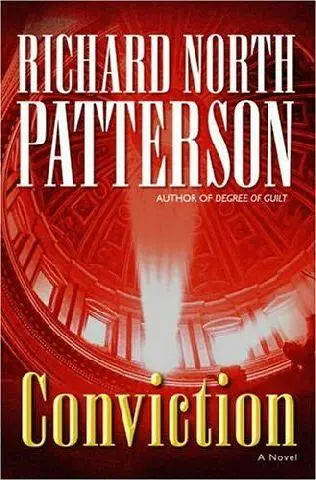
- Название:Conviction
- Автор:
- Жанр:
- Год:неизвестен
- ISBN:нет данных
- Рейтинг книги:3 / 5. Голосов: 1
-
Избранное:Добавить в избранное
- Отзывы:
-
Ваша оценка:
Conviction: краткое содержание, описание и аннотация
Предлагаем к чтению аннотацию, описание, краткое содержание или предисловие (зависит от того, что написал сам автор книги «Conviction»). Если вы не нашли необходимую информацию о книге — напишите в комментариях, мы постараемся отыскать её.
Conviction — читать онлайн бесплатно полную книгу (весь текст) целиком
Ниже представлен текст книги, разбитый по страницам. Система сохранения места последней прочитанной страницы, позволяет с удобством читать онлайн бесплатно книгу «Conviction», без необходимости каждый раз заново искать на чём Вы остановились. Поставьте закладку, и сможете в любой момент перейти на страницу, на которой закончили чтение.
Интервал:
Закладка:
This book also required me to understand the investigation and prosecution of a capital case from beginning to end. It was my great good fortune to meet or speak with some of the most capable experts around: Drew Edmondson, Attorney General of Oklahoma and President of the National Association of Attorneys General (NAAG); San Francisco (and now San Mateo) Assistant District Attorney Al Giannini, who has never lost a homicide prosecution; California Assistant Attorney General Dane Gilette, a specialist in postconviction litigation; the legendary San Francisco homicide inspector Napoleon Hendrix; and Dr. Boyd Stephens, San Francisco's nationally renowned medical examiner. Officers Shaughan Ryan, Jimmy Aherne, and Tim Fowler took me for a ride-along in the Bayview District, and taught me some fascinating lessons in policing a difficult area. Thanks, too, to Lynne Ross of NAAG, who helped me in several important ways. I also received advice on the finer points of criminology and forensics from Dr. Peter Burnett. And I'm particularly grateful to Jayne Hawkins and Kate Lowenstein for sharing the perspectives of those who have lost a family member.
As I have noted, the law of capital punishment is bedeviled by complexity. Many thanks to those lawyers who shared their knowledge of the law, and of the system: Stuart Banner, Jim Liebman, and Stephen Shatz. I am also grateful to those who have recently dealt with these issues as clerks of the California Supreme Court, the United States District Court, the Ninth Circuit Court of Appeals, or the United States Supreme Court: Julie Bibb Davis, Veronica Gushin, George Kolombatovich, Stacey Leyton, Valerie Mark, Deirdre Von Dornum, and Claudia Willner.
The Supreme Court is an institution to itself, as powerful as it is secluded. I owe whatever success I enjoyed in rendering the environment of my imaginary Supreme Court case to Kathy Arberg and Ed Turner, of the Supreme Court clerk's office, and the legal scholars and practitioners Dean David Burcham, Walter Dellinger, Jon Hacker, Edward Lazarus, Richard Lazarus, Jeremy Maltby, and Mark Tushnet. And special thanks to Linda Greenhouse for sharing her observations of the Court.
I am also deeply grateful to those who gave me their differing perspectives as judges: Judge Thelton Henderson of the United States District Court, Judges William Fletcher and Alex Kozinski of the United States Court of Appeals for the Ninth Circuit, and especially, Judge Stephen Reinhardt, also of the Ninth Circuit. Another valuable perspective came from those who have made opposing the death penalty as advocates a central part of their lives: Richard Dieter of Death Penalty Information Center; Elizabeth Dahl, Joseph Onek, Barbara Reed, and Virginia Sloan of the Constitution Project, and Lance Lindsey of Death Penalty Focus. The prisoners' rights advocate Steve Fama imparted his unique insight into the day-to-day life of inmates at San Quentin. But there was no experience more piercing than my interview with Marvin Pete Walker, now Shaka Nantambu, concerning his existence as a death row prisoner facing the prospect of execution.
I also benefited from the following reading:
Books and Treatises
Books
Ellis, James W. Mental Retardation and the Death Penalty: A Guide to State Legislative Issues. Albuquerque: University of New Mexico School of Law, 2002.
Lazarus, Edward. Closed Chambers: The First Eyewitness Account of the Epic Struggles Inside the Supreme Court. New York: Crown, 1998.
Liebman, James, et al. A Broken System: Error Rates in Capital Cases, 19731995. 2000. The Justice Project. http://justice.policy.net/jreport.
———. A Broken System, Part II: Why There Is So Much Error in Capital Cases, and What Can Be Done About It. 2002. The Justice Project. http://justice.policy.net/jreport.
Rehnquist, William H. The Supreme Court. New York: Knopf, 2001.
Turow, Scott. Ultimate Punishment: A Lawyer's Reflections on Dealing with the Death Penalty. New York: Farrar, Straus & Giroux, 2003.
Articles
Bandes, Susan. "Simple Murder: A comment on the legality of executing the innocent." Buffalo Law Review 44 (1996): 501.
Blume, John, and David Voisin. "An Introduction to Federal Habeas Corpus Practice and Procedure." South Carolina Law Review 47 (1996): 271.
Bright, Stephen. "Political Attacks on the Judiciary: Can justice be done amid efforts to intimidate and remove judges from office for unpopular decisions?" Judicature 80 (1997): 165.
———. "Counsel for the Poor: The death sentence not for the worst crime but for the worst lawyer." Yale Law Review 103 (1994): 1835.
Leno, Mark. "The Ultimate Price: Is the death penalty California's best interest?" San Francisco Chronicle. January 28, 2003. p. A17.
Liebman, James S. "The Overproduction of Death." Columbia Law Review 100 (2000): 2030.
Reinhardt, Stephen. "The Anatomy of an Execution: Fairness vs. Process." New York Law Review 74 (1999): 313.
Schatz, Stephen F., and Nina Rivkind. "The California Death Penalty Scheme: Requiem for Furman." New York Law Review 72 (1997): 1283.
Talbot, Margaret. "The Executioner's I.Q. Test." The New York Times Magazine. June 29, 2003. p. 30.
Will, George F. "Innocent on Death Row." The Washington Post. April 6, 2000. p. A23.
Finally, I want to thank those who read and commented on the manuscript: Laurie Patterson, Fred Hill, Alison Porter Thomas, Cheryl Mills, and Philip Rotner; and my editors, Linda Marrow and Dan Menaker. And then there are the two publishers to whom this book is dedicated, who have steadfastly supported my belief that popular fiction can address controversial legal, political, and social issues: Gina Centrello, President and Publisher of the Random House Publishing Group, and Nancy Miller, Editor in Chief of Ballantine Books.
In concluding, I understand that writing about capital punishment will arouse a number of emotions in my readers, not all of them admiring. So, as always, I want to be very clear—those who helped me are not responsible for the narrative, or any of the often conflicting views expressed therein, let alone any errors of fact or interpretation. One person conceived and wrote this book; any fault is mine alone.
Thanks, as always, for bearing with me.
RICHARD NORTH PATTERSON
Martha's Vineyard
April 2004
ABOUT THE AUTHOR
RICHARD NORTH PATTERSON's twelve prior novels include eight consecutive international bestsellers, all greeted by critical acclaim—for example, comparing his Protect and Defend with novels such as Allen Drury's Advise and Consent and Gore Vidal's Lincoln. Formerly a trial lawyer, Mr. Patterson served as the SEC's liaison to the Watergate Special Prosecutor and is now on the boards of several Washington-based advocacy groups dealing with gun violence, political reform, and reproductive rights. He lives on Martha's Vineyard.
ALSO BY RICHARD NORTH PATTERSON
Balance of Power
Protect and Defend
Dark Lady
No Safe Place
Silent Witness
The Final Judgment
Eyes of a Child
Degree of Guilt
Private Screening
Escape the Night
The Outside Man
The Lasko Tangent
Although the case law discussed in these pages is real, Conviction is a work of fiction, and names, characters, places, and incidents are the products of the author's imagination or are used fictitiously. Any resemblance to actual events, locales, or persons, living or dead, is entirely coincidental.
Copyright Š 2005 by Richard North Patterson
All rights reserved under International and Pan-American Copyright Conventions. Published in the United States by Random House, an imprint of The Random House Publishing Group, a division of Random House, Inc., New York, and simultaneously in Canada by Random House of Canada Limited, Toronto.
Читать дальшеИнтервал:
Закладка:
Похожие книги на «Conviction»
Представляем Вашему вниманию похожие книги на «Conviction» списком для выбора. Мы отобрали схожую по названию и смыслу литературу в надежде предоставить читателям больше вариантов отыскать новые, интересные, ещё непрочитанные произведения.








Обсуждение, отзывы о книге «Conviction» и просто собственные мнения читателей. Оставьте ваши комментарии, напишите, что Вы думаете о произведении, его смысле или главных героях. Укажите что конкретно понравилось, а что нет, и почему Вы так считаете.