Andrew Vachss - Safe House
Здесь есть возможность читать онлайн «Andrew Vachss - Safe House» весь текст электронной книги совершенно бесплатно (целиком полную версию без сокращений). В некоторых случаях можно слушать аудио, скачать через торрент в формате fb2 и присутствует краткое содержание. Жанр: Старинная литература, на английском языке. Описание произведения, (предисловие) а так же отзывы посетителей доступны на портале библиотеки ЛибКат.
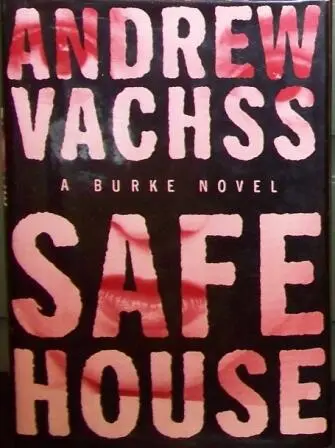
- Название:Safe House
- Автор:
- Жанр:
- Год:неизвестен
- ISBN:нет данных
- Рейтинг книги:5 / 5. Голосов: 1
-
Избранное:Добавить в избранное
- Отзывы:
-
Ваша оценка:
Safe House: краткое содержание, описание и аннотация
Предлагаем к чтению аннотацию, описание, краткое содержание или предисловие (зависит от того, что написал сам автор книги «Safe House»). Если вы не нашли необходимую информацию о книге — напишите в комментариях, мы постараемся отыскать её.
Safe House — читать онлайн бесплатно полную книгу (весь текст) целиком
Ниже представлен текст книги, разбитый по страницам. Система сохранения места последней прочитанной страницы, позволяет с удобством читать онлайн бесплатно книгу «Safe House», без необходимости каждый раз заново искать на чём Вы остановились. Поставьте закладку, и сможете в любой момент перейти на страницу, на которой закончили чтение.
Интервал:
Закладка:
She tapped Max’s shoulder, nodded her head, grinned as he tossed the four of clubs on the four of hearts, building eights against the one he held in his hand instead of just taking one four with another. I slapped the deuce of spades on top of his build, against the ten of diamonds I held. I knew Max didn’t hold any tens—the other three had already been played. The diamond card is the Big Ten in casino—the only one worth two points. The deuce of spades was another point card. . . . A lovely score. Max scowled. Mama’s face indicated that the whole thing was his own fault.
The pay phone in the back rang. I looked at my watch—it was just past two in the morning. Mama got up, walked to the back, grabbed the receiver, said something . . . listened. Then she came back to our booth.
“Girl. Name Vyra.”
“Tell her I’m not here,” I said.
Mama nodded, nothing on her face.
Iwent back to my office, let Pansy use her roof, watched some early-morning TV with her after she polished off a quart of some stuff Mama put together—mostly beef chunks in oyster sauce.
Then I slept.
Once I got up, I started rolling. Spent the next twenty-four checking on leads, just in case Pryce went for what I was going to offer him. But the paths were too twisted—I couldn’t pipeline down to a core truth strong enough to bank on. The White Night underground is a poisonous brew, fed by rumors and driven by psychos. American-born Nazis working as mercenaries in Croatia, slaughtering Serbs, cleansing the ethnic cleansers, the whole operation set up by fascist groups in Germany who had fond World War II memories of the Croats helping out; a range war between two Hitler-loving crews—mostly a talk war over the shortwave bands—one leader saying the head of the rival crew was gay, that guy saying his opposite number was a crypto-Jew; the tax resisters and the do-it-yourself litigation clubs; virulent anti-Semites calling themselves the true Israelites; one-member fascist organizations blindly cyber-groping with anti-IRA skinheads in England and transplanted American biker gangs in Denmark. . . all riddled with undercover agents and free-lance informants and ready-to-roll rats.
Not a network, threads. Some of them as unanchored as the lunatics who tried to grab on and pull themselves up to the Fourth Reich. Just outside Chicago, one of those deadly defectives gunned down a plastic surgeon, convinced the doctor was giving non-whites an “Aryan” look. Maybe he was following the footprints of the white supremacist on the coast who blew away a beautician years ago because he heard she was bleaching Jewess hair.
More Führers than storm troopers, sure. But any one of them strong enough to lift a suitcase can level a building now.
The reason the media never gets it right is that the media lives on spokesman interviews, and nobody could ever speak for that collection. How do you speak for a congregation that screams the Holocaust never happened while it prays for it to happen again? You think if you assembled a hundred rapists they’d all tell you they rape for the same reason? “Their rap don’t mean crap, honeyboy,” the Prof had told me once. “Their trail always tells the tale.” On the prison yard, a hundred years ago. I was full of questions then.
I’ve been dealing with the hyper-whites for years, selling and scamming. They’ve got no loyalty, so they’re easy. But mining their ranks for truth is like looking for a congressman’s ethics.
But I asked around anyway. Working the edges, careful like always. Keeping a flat face as they flashed their self-awarded decorations, tattoos: the “88”—for “Heil Hitler,” the eighth letter of the alphabet being “H,” borrowed from the way the bikers used to wear the number “13” on their denims . . . “M” for “marijuana.” And the spiderwebs on their elbows, meaning they killed for the race . . . although most of them upgraded any two-bit assault to that status. Skinhead sheep with red laces on their Doc Martens and Iron Crosses around their necks, certain they were the vanguard to Valhalla. A Mafia don’s omertà, an emir’s jihad, or a Führer’s race war, it’s always the same—only the congregation sees the prison cells or catches the bullets, never the preachers.
I heard all about how only the NRA was standing up to ZOG—Zionist Occupation Government in Nazi-speak—and how gun control was just the prelude to registration of all citizens. Saw enough copies of The Turner Diaries in grungy furnished rooms to crack a best-seller list. Tapped into some of the fax chains. Read the luno-newsletters. Listened to the Ballad of Ruby Ridge and what really happened at Waco. Heard a half-dozen different accounts of why the Swiss banks kept looted Jewish gold in their vaults all these years, waiting for that cable from Paraguay to release the assets. And how Hitler was ordained, a minister of Jehovah, sent by God to punish the Jews for killing His son. Watched self-proclaimed “constitutionalists” applauding more marches through Skokie, this time on the Internet. Even sat with a Mossad agent the Mole brought me to, an Arabic-looking man with pianist’s hands and slot-machine eyes.
I listened to it all. But when it came to anyone named Lothar operating in New York, I drew a handful of blanks.
“Ialways wore clothes when I was a child,” Crystal Beth said. She was lying on the mattress on her belly, nude, smoking one of her hand-rolled cigarettes, candle-flicker shadows dancing over the perfect parabolic curve of her bottom before disappearing into the blackness around her thick thighs.
I didn’t say anything, watching her.
“A lot of the kids didn’t,” she said. “On the Farm. That’s what we called it mostly, the Farm. Their parents thought children should be free, not have to wear clothing until they were older. My mother didn’t believe in that.”
“Were there fights about it?” I asked her.
“Fights? Nobody fought. It was a commune, but it wasn’t a government commune. There were no laws from on high, that isn’t the way we did it. A parent could raise a child any way they wanted.”
“Could they hit their kids?”
“You mean like spank them?”
“Whatever you call it.”
“Burke,” she said softly. “What’s the matter?”
“Nothing’s the matter. I was just making conversation.”
“Your face . . . Oh, you’re going to think I’m a ditz.”
“You’re losing me,” I told her.
“Come over here, okay? Just lie down next to me for a minute.”
I did that.
She stubbed out her cigarette, rolled over on her side to look at me. “Your aura changed,” she said. “Please don’t laugh. It’s not some New Age thing. People do have auras. Not everyone. At least not powerful ones, ones that you can see. Do you think that’s crazy?”
“No,” I said, not lying. Martial artists call it ki. They don’t talk about seeing it, just feeling it, but it’s really the same: a force field. When I was young, before I learned to make my temper go the same place as my pain, when the rage in me built high enough I could move people out of a room without saying anything. A long time later, when Max explained it to me, he used his hands to indicate waves coming off me. I don’t know where Max got his knowledge, but it wasn’t from books. And it wasn’t new.
The only thing is, ki doesn’t work on everyone. Some people aren’t tuned to the signal. That’s why a street punk will try you when a pro would give you a pass.
“When you asked about . . . hitting children, your aura turned . . . ”
“Dark?”
“No. It’s always dark. This was like . . . Did you ever see heat lightning? It doesn’t make a sound, just kind of . . . flashes?”
Читать дальшеИнтервал:
Закладка:
Похожие книги на «Safe House»
Представляем Вашему вниманию похожие книги на «Safe House» списком для выбора. Мы отобрали схожую по названию и смыслу литературу в надежде предоставить читателям больше вариантов отыскать новые, интересные, ещё непрочитанные произведения.








Обсуждение, отзывы о книге «Safe House» и просто собственные мнения читателей. Оставьте ваши комментарии, напишите, что Вы думаете о произведении, его смысле или главных героях. Укажите что конкретно понравилось, а что нет, и почему Вы так считаете.