Andrew Vachss - Safe House
Здесь есть возможность читать онлайн «Andrew Vachss - Safe House» весь текст электронной книги совершенно бесплатно (целиком полную версию без сокращений). В некоторых случаях можно слушать аудио, скачать через торрент в формате fb2 и присутствует краткое содержание. Жанр: Старинная литература, на английском языке. Описание произведения, (предисловие) а так же отзывы посетителей доступны на портале библиотеки ЛибКат.
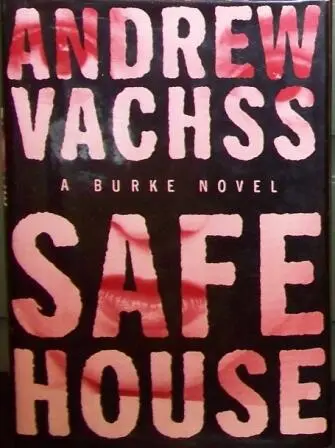
- Название:Safe House
- Автор:
- Жанр:
- Год:неизвестен
- ISBN:нет данных
- Рейтинг книги:5 / 5. Голосов: 1
-
Избранное:Добавить в избранное
- Отзывы:
-
Ваша оценка:
Safe House: краткое содержание, описание и аннотация
Предлагаем к чтению аннотацию, описание, краткое содержание или предисловие (зависит от того, что написал сам автор книги «Safe House»). Если вы не нашли необходимую информацию о книге — напишите в комментариях, мы постараемся отыскать её.
Safe House — читать онлайн бесплатно полную книгу (весь текст) целиком
Ниже представлен текст книги, разбитый по страницам. Система сохранения места последней прочитанной страницы, позволяет с удобством читать онлайн бесплатно книгу «Safe House», без необходимости каждый раз заново искать на чём Вы остановились. Поставьте закладку, и сможете в любой момент перейти на страницу, на которой закончили чтение.
Интервал:
Закладка:
“Who knows what that was really about,” Wolfe said to me, leaning on the Plymouth’s hood, smoking one of my cigarettes, the rottweiler sitting next to her, calm now. “They could have been after anything from a hassle to a rape. There’s something about being in a car that gives punks courage.”
“It isn’t the car,” I told her. “It’s the gang. And a woman alone.”
“I guess.”
“And don’t call it courage,” I said. “Your dog, he’s the one with the balls.”
“Don’t remind me,” Wolfe chuckled, reaching in her pocket and pulling out a disgusting-looking length of what looked like dark-red sinew. The rottie watched it, eyes narrowed in. But he didn’t move a muscle. “Bruiser, okay!” Wolfe said, handing it over. The beast immediately snatched it, lay down, grasped the prize in his front paws and started tearing into it. The sounds he made would have scared a forest ranger.
“What is that you gave him?” I asked her.
“It’s a dried beef tendon,” she said. “One of his favorites. Next to fresh pineapple. But I can’t carry that around with me.”
“Well, he earned it,” I said. “I never saw a dog that big move so fast. He ever bite anybody?”
“Sure,” Wolfe said, grinning at the stupid question.
I hefted the tire iron, feeling foolish. I don’t carry a gun anymore. Don’t keep one in the car either. It’s got nothing to do with search warrants or being an ex-con. I’m just . . . careful. Ever since I tried to kill my childhood and killed a child instead.
“I don’t know what’s going down with this Pryce guy,” I lied, playing the flashlight over the photograph Wolfe had. It was him all right. “Maybe nothing. I’ll let you know.”
“Either way,” she said, pulling a promise with the words.
“Either way,” I agreed.
Irolled the Plymouth onto the highway, merging with the traffic, blending back in. A lot of stops to make that day, but I couldn’t really get started until the comic shops opened. The rest of what I needed for Herk was already stashed in the trunk.
Which is where Pryce could end up if he played me wrong.
It was after dark by the time I got back from meeting with Hercules. When I cruised by Mama’s, the white-dragon tapestry was in the front window. All clear.
But as soon as I came out of the kitchen into the main room I knew something was up. Mama wasn’t at her register—she was on her feet, hands on hips, waiting for something. Max was sitting at one of the tables, eyes closed the way he gets just before he has to work, a violence machine with its battery on trickle-charge.
At another table, three young Orientals, all dressed in identical black leather dusters and red silk shirts buttoned to the neck. They were all razor-built, with long glossy black hair and delicate features. They didn’t look like brothers, but the tribal relationship was stamped deep . . . the kind of deep only the crucible creates.
And in a booth, an elderly Chinese woman, bird-faced and stick-thin, wrapped in a heavy dark-green shawl, eyes aimed at the floor.
Mama gestured for me to come over to my booth. She sat down across from me. No soup this time.
“Tigers have her nephew,” she said, voice low-pitched, head cocked slightly to indicate the old woman. “He owe big money. Thirty thousand.”
I didn’t need a translator. The nephew was an illegal, smuggled in by one of the gang operations that supply so much of the cheap labor in Chinatown. The family back home picks the youngest, strongest one to go first. When that one works off the debt in the sweatshops, they can send another.
That’s one of the reasons you see guys making a couple of bucks an hour off the books get so deep into gambling. Their families back home encourage it, especially those relatives far down in the next-to-go chain. It’s the only way to pay off the transporters quick. In the sweatshops, thirty grand would take a decade, minimum.
“Kuan Li old friend. From home. Everything set, okay?” Then she told me the plan.
The squat Chinese who opened the door had a cop’s nightstick in his right hand, the leather thong wrapped around his wrist. The brutish expression on his face didn’t change until he saw that the three young men in their matching black coats also had matching black semi-autos, each one aimed at a different part of his body, as professional as it gets. He moved his hands away from his sides, the nightstick dangling loose and useless, eyes only on me.
One of the young men stayed with him, the other two came along as I moved down a passage so narrow it was more like a tunnel than a hall.
The basement was divided into wire-mesh cages, Bowery flophousestyle. Maybe thirty, forty illegals slept there. One toilet, one shower—just a rusty nozzle poking out of the wall with a drain underneath. A hundred bucks a month apiece. Overheated from human cargo, it stank like the hold of a slave ship.
I swept my eye through the cages. Third from left, lowest tier, Mama had said. Her description of the nephew was photo-perfect. I pointed at his face. One of the young men showed him his pistol, said something to him in bad-accent Cantonese. The nephew said something back. The gunman chopped at his face with the pistol. The nephew came along, hands at his sides, head down.
We walked out into the afternoon. The gunman shoved the nephew into the back seat of a Chinatown war wagon, an old Buick four-door sedan with welded-up fake plates. The other two piled in right behind him. The car took off. The squat doorman poked his head outside. Max came up behind him and did something to his neck. The doorman crumpled to the ground. I stepped into a fog-gray Lincoln that had pulled to the curb. One of Mama’s cooks was at the wheel.
The street vibrated the way it always did, no change.
“Not like old ways,” Mama told me back in the restaurant. “Tigers not with the Tongs. Nephew go someplace else, they never find.”
“They’re supposed to think I had a beef with him, hired those other guys to take him out of there?”
“Yes, maybe think so.” Mama shrugged.
“Won’t the Tigers look for their money from the guys who took him?”
“What guys?” Mama smiled.
“The Chinese guys. The young ones in the jackets.”
“Not Chinese,” Mama said. “Cambodia. How old you think?”
“Twenty, twenty-five?”
“Fifteen,” Mama said. “Oldest, fifteen. Khmer not kill, Tigers not kill either.”
“Jesus. They’re operating down here now too?”
“Sure,” Mama said.
Iplayed cards with Max until early the next morning. We used to play gin rummy, a life-sentence game we’d started years ago—keeping score, but agreeing that we wouldn’t settle up until we both crossed over. Figuring that, if it was divided up like people say it is, we’d both end up on the same side of the line.
Max had owed me a fortune until he’d tapped into that perfect vein of gold all gamblers dream of—the Prime Roll. It only lasted a few hours, but Max was unbelievably unbeatable. Every card fell for him. He was a rampaging tsunami—I was a balsa-wood beach house. I survived, but I was barely on the plus side when the wave passed. Ever since, he’d refused to return to gin, knowing he’d never see a run like that again in life. So we switched to casino. He doesn’t play that game any better, and I had his debt back into six figures.
Mama continued to monitor just about every hand in her self-appointed role as Max’s adviser. She was lousy at it. Even worse than at gin—at least she knew how to play gin, casino was a total mystery to her. Mama speaks a half-dozen languages, including math, but any form of gambling got her blood up and made her forget the odds, so she never indulged. Didn’t mind helping Max out, though.
Читать дальшеИнтервал:
Закладка:
Похожие книги на «Safe House»
Представляем Вашему вниманию похожие книги на «Safe House» списком для выбора. Мы отобрали схожую по названию и смыслу литературу в надежде предоставить читателям больше вариантов отыскать новые, интересные, ещё непрочитанные произведения.








Обсуждение, отзывы о книге «Safe House» и просто собственные мнения читателей. Оставьте ваши комментарии, напишите, что Вы думаете о произведении, его смысле или главных героях. Укажите что конкретно понравилось, а что нет, и почему Вы так считаете.