Thomas Perry - Vanishing Act
Здесь есть возможность читать онлайн «Thomas Perry - Vanishing Act» весь текст электронной книги совершенно бесплатно (целиком полную версию без сокращений). В некоторых случаях можно слушать аудио, скачать через торрент в формате fb2 и присутствует краткое содержание. Жанр: Старинная литература, на английском языке. Описание произведения, (предисловие) а так же отзывы посетителей доступны на портале библиотеки ЛибКат.
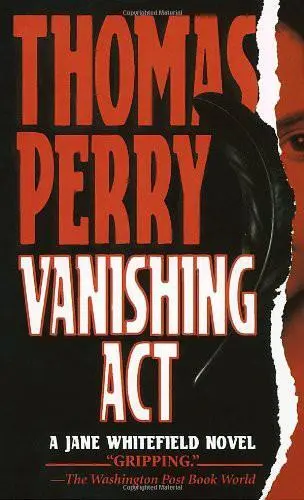
- Название:Vanishing Act
- Автор:
- Жанр:
- Год:неизвестен
- ISBN:нет данных
- Рейтинг книги:4 / 5. Голосов: 1
-
Избранное:Добавить в избранное
- Отзывы:
-
Ваша оценка:
Vanishing Act: краткое содержание, описание и аннотация
Предлагаем к чтению аннотацию, описание, краткое содержание или предисловие (зависит от того, что написал сам автор книги «Vanishing Act»). Если вы не нашли необходимую информацию о книге — напишите в комментариях, мы постараемся отыскать её.
--The New York Times
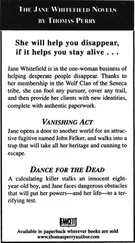
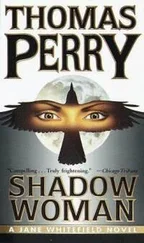
Jane Whitefield is a Native American guide who leads people out of the wilderness--not the tree-filled variety but the kind created by enemies who want you dead. She is in the one-woman business of helping the desperate disappear. Thanks to her membership in the Wolf Clan of the Seneca tribe, she can fool any pursuer, cover any trail, and then provide her clients with new identities, complete with authentic paperwork. Jane knows all the tricks, ancient and modern; in fact, she has invented several of them herself.
So she is only mildly surprised to find an intruder waiting for her when she returns home one day. An ex-cop suspected of embezzling, John Felker wants Jane to do for him what she did for his buddy Harry Kemple: make him vanish. But as Jane opens a door out of the world for Felker, she walks into a trap that will take all her heritage and cunning to escape....
"Thomas Perry keeps pulling fresh ideas and original characters out of thin air. The strong-willed heroine he introduces in Vanishing Act rates as one of his most singular creations."
--The New York Times Book Review
ONE THRILLER THAT MUST BE READ . . . . Perry has created his most complex and compelling protagonist."
--San Francisco Examiner
Vanishing Act — читать онлайн бесплатно полную книгу (весь текст) целиком
Ниже представлен текст книги, разбитый по страницам. Система сохранения места последней прочитанной страницы, позволяет с удобством читать онлайн бесплатно книгу «Vanishing Act», без необходимости каждый раз заново искать на чём Вы остановились. Поставьте закладку, и сможете в любой момент перейти на страницу, на которой закончили чтение.
Интервал:
Закладка:
"Yes, we had an affair," she said, "since that’s the bush you’re beating around. But I’m being logical. He ran into trouble, but he knows the reason he got out was because I risked my life for him. He was carrying a lot of money, and some people would get suspicious of anybody who knew it. But I didn’t even let him spend any of it. I put up all the expenses. And he came to me; I didn’t look for him."
"What do you want to do?"
"How can I know?"
Jake walked along, looking around him instead of at her. "There are only a couple of really strong possibilities. One is, they found him and killed him before he got here." She caught him watching her for a reaction. "In that case, there wouldn’t be much to do, would there? They’d be long gone."
"I hope your other possibility beats that one."
"You said he used to be a policeman?"
"Yes," she said. "Eight years."
"Is it possible that he hasn’t quite gotten over it? Bear with me now. Suppose he stopped and picked up a paper and read about this fellow getting killed, just like you did. This Harry was some kind of friend, right? Or at least somebody who had done him a favor ..."
"Jake!" she gasped. She stopped and gave him a quick hug. "You did it. That’s right. It’s true. I talked to him for hours, endlessly. I was trying to tell him that he couldn’t afford to act like a cop anymore, figuring things out and then going off to do something about it. Even while I was saying it, I could see there was something in the back of his eyes, some door back there that closed. He was protecting something. And now I know. He didn’t have any other way to see things."
"So he just might have gone on south to Santa Barbara."
"Might have? I’m telling you, I’m sure that’s exactly what he would do. He’s thinking like a cop. He never stopped thinking that way, because he didn’t know how. He read, or heard on the radio, that Harry was murdered in Santa Barbara. He owed his life to Harry, and the people who killed Harry are also after him. He’s down at the scene of the crime trying to figure out who they are."
"Unless something happened on the way here."
"But that’s what’s been bothering me all along. The four men killed Lewis Feng and deciphered his list. Then what did they do? They went right away to Santa Barbara and killed Harry. That’s not a guess. We know they did because Harry’s dead. Meanwhile, John was driving from Vancouver to Medford. How could they find him unless they were actually following him? They couldn’t and they weren’t following him."
"How do we know that?"
"Because John left right after I did. First they had to break in at Lew Feng’s, kill him, and find his list. Harry was obviously the priority because they got him. Even if they found both names and addresses right away and split up, two to get Harry and two to get John, he would have at the very least an hour’s head start—fifty miles. He would be in one of thousands of little cars driving the five hundred miles down the coast, so they couldn’t have gotten him on the road."
"Some other way? It must be a nine- or ten-hour drive. A motel?"
"It’s the same problem. They would have to stop at every hotel or motel for five hundred miles and look for a car they’d never seen before. They never could have found him. They could have murdered Harry in Santa Barbara and still have flown here in time to surprise John, but they didn’t. John hasn’t been here, but neither has anyone else."
"How do you know that?"
"The lady across the hall has a baby, so she’s here during working hours and would have heard them. She heard me walking up the hall—one woman, not four two-hundred-pound men. Everybody else in the complex is here at night. When those men tried to sneak into my house, they had to break a window to do it, didn’t they?"
"Yeah," he said. "I guess they did."
"Well, they didn’t break any windows here or jimmy a door or anything else."
"No, they didn’t." He waited and watched her.
She avoided his eyes and craned her neck to look up and down the street. "Did you happen to see a pay phone on your rambles? This doesn’t look like a street where cabs cruise for passengers."
20
As the plane turned to come in over the Santa Barbara airport, Jane looked down and tried to imagine Harry living here. She had been here once before, when she had left a client in Los Angeles and wanted to spend a few days out of sight. It was a beautiful, quiet place, but there was something about it that had never seemed quite right to her —like a graveyard with flowers that grew in too lush and luxuriant not to be a sign of a haunting.
It was a place where lots of people had died for no reason at all. Father Junipero Serra stopped here in the 1780s and founded a mission for the Chumash Indians. The Chumash had lived along the coast and done a little fishing in the kelp beds and a lot of gathering in the tidal pools, and hunted in the hills that ran along the coast a couple of miles inland. It had been an easy, unchanging life, and they hadn’t prepared themselves for the arrival of the Europeans by generations of fighting as the Iroquois had. They were easily enslaved, and forced to build stone buildings and aqueducts and work in the fields for the priests. She had seen virtually all that was left of the Chumash years ago: a cave in the hills painted with mystical figures and a few intricate baskets behind glass in the little museum up the road from the mission. The coast of California was a sad place for Indians: Chumash, Gabrieleno, Cupeno, Tataviam, Luiseno, Costanoan, Miwok, Ipa, Salinan, Esselen—all either exterminated by 1900 or down to 1 percent of the 300,000 people the priests had counted when they took their first inventory of souls.
Jane had brought Harry to Lew Feng, walked out of the shop, and taken the next flight out of Vancouver. She had insisted that she never be told where Lew Feng sent him. She had not wanted to have that piece of information in her mind, waiting to come out as soon as somebody inflicted enough pain. But Santa Barbara should have been a shrewd place for Lew Feng to put Harry. If she had known, she would have agreed with it. There were lots of people in their fifties and sixties wandering around town doing nothing. They played golf, walked on the beaches, and sauntered around State Street looking in store windows. It was the sort of town where all you needed was the money to pay the rent and a dull, plausible story that would explain why you had chosen to pay it there. To the sort of people who were looking for Harry, Santa Barbara would have been invisible, just another cluster of exits on the freeway up the coast.
Jake noticed the change in Jane as they walked to the car-rental desk at the airport. Until now she had been held in a rigid immobility by the simple fact that airplanes traveled faster than girls did, but now she was eager, ready to move. She was very good at standing there, the young woman waiting for old grandpops to rent the car, but her eyes were always in motion, never settling on anything for more than a second or two.
As soon as he had the keys, she picked up her bag and set off. She took the keys out of his hand without speaking and got in on the driver’s side. She maneuvered the car along Sandspit Road to the freeway and took it through the town to the Salinas Street exit, then swung up the first street. "Why is it called Ocean View?" Jake asked. All he could see was tall apartment buildings and long, skinny palm trees.
"It’s California real estate language," she said. "If it’s called a view or vista of something, it means it’s not near it."
"But view means you can see it. I can’t see it."
"You could if you were eighty feet tall. They’re not responsible for your shortcomings. Ninety-two. That must be it up there. The big white building on the left."
Читать дальшеИнтервал:
Закладка:
Похожие книги на «Vanishing Act»
Представляем Вашему вниманию похожие книги на «Vanishing Act» списком для выбора. Мы отобрали схожую по названию и смыслу литературу в надежде предоставить читателям больше вариантов отыскать новые, интересные, ещё непрочитанные произведения.


Обсуждение, отзывы о книге «Vanishing Act» и просто собственные мнения читателей. Оставьте ваши комментарии, напишите, что Вы думаете о произведении, его смысле или главных героях. Укажите что конкретно понравилось, а что нет, и почему Вы так считаете.