Thomas Perry - The Face-Changers
Здесь есть возможность читать онлайн «Thomas Perry - The Face-Changers» весь текст электронной книги совершенно бесплатно (целиком полную версию без сокращений). В некоторых случаях можно слушать аудио, скачать через торрент в формате fb2 и присутствует краткое содержание. Жанр: Старинная литература, на английском языке. Описание произведения, (предисловие) а так же отзывы посетителей доступны на портале библиотеки ЛибКат.
- Название:The Face-Changers
- Автор:
- Жанр:
- Год:неизвестен
- ISBN:нет данных
- Рейтинг книги:5 / 5. Голосов: 1
-
Избранное:Добавить в избранное
- Отзывы:
-
Ваша оценка:
The Face-Changers: краткое содержание, описание и аннотация
Предлагаем к чтению аннотацию, описание, краткое содержание или предисловие (зависит от того, что написал сам автор книги «The Face-Changers»). Если вы не нашли необходимую информацию о книге — напишите в комментариях, мы постараемся отыскать её.
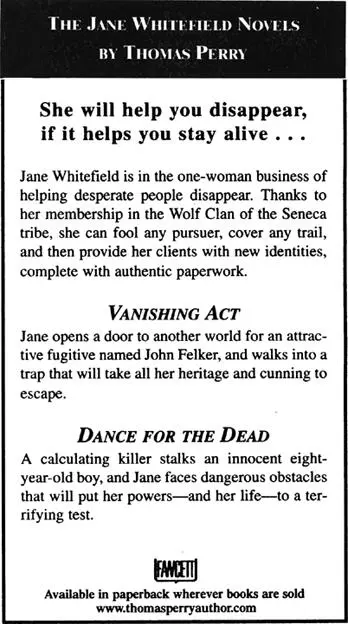
From the Paperback edition.
The Face-Changers — читать онлайн бесплатно полную книгу (весь текст) целиком
Ниже представлен текст книги, разбитый по страницам. Система сохранения места последней прочитанной страницы, позволяет с удобством читать онлайн бесплатно книгу «The Face-Changers», без необходимости каждый раз заново искать на чём Вы остановились. Поставьте закладку, и сможете в любой момент перейти на страницу, на которой закончили чтение.
Интервал:
Закладка:
Jane tried to decide whether her uneasiness was pronounced enough to make her turn off the highway onto another route. She studied the headlights in her rearview mirror for a few seconds. The car was still staying back a set distance—maybe a thousand feet on the long dark stretches and half that when she approached a town. It had done nothing suspicious, and that could be what was making her suspicious. Carey would have said she was driving like an old lady, but she had her reasons. What were theirs?
After eleven, on an open country road in good weather, people got careless, drove too fast, got impatient waiting for a safe place to pass. The driver of the car behind her never did those things.
Her tires made a new sound as she crossed a little bridge over Conewango Creek. She glanced over the rail at the quick flash of black water. If she remembered the route correctly, the road would cross the creek at least twice more. “Conewango” meant “in the rapids.” The rapids were south of here, where there had once been a village. It was just before Warren, Pennsylvania, where the creek emptied into the Allegheny River. Tonight the stream seemed higher and faster than the last time she had been here. It had been a rainy summer.
She supposed it had always been a rainy summer. The Old People had a vast repertoire of procedures and medicines for success in war and love and curing disease and stopping whirlwinds, but she had never heard of one for making rain. They used to thank the Thunderers once a year for the plentiful supply. When European visitors of a literate sort visited Nundawaonoga in those days, they had all written descriptions of miles of fields growing tall with corn, bean vines twining up the stalks and squash beneath.
Jane stared at the empty blackness ahead, but a growing glare began to sear her eyes. The car behind her was coming up fast, and the driver had switched on his high-beam headlights. She tilted her mirror to keep the light out of her eyes and watched the car in the side mirrors. If he was trying to tell her he wanted to pass, she would be glad. But first she had to be sure.
She hugged the right side of the road and slowed down to let the car slip by safely. Then she watched. The car kept coming, moving a bit faster now.
Finally it swung into the left lane, and as it came abreast she turned her head over her left shoulder to look behind the glare of the headlights at the driver. She saw his head in silhouette, but all she could make out was that it didn’t have the long hair of a woman, and it wasn’t wearing a hat. The car glided forward and everything changed and came into focus at once.
A second head popped up from the passenger seat, the window started to come down, and she saw the face.
Jane stamped on the brake pedal, then turned the wheel to the left, toward the other car. She had predicted the other driver’s reaction correctly. He was alarmed by the sudden swerve and the squeal of tires. His foot touched his brake pedal for an instant, but then he realized he had miscalculated: if she wanted to ram him, then he wanted distance. His foot jammed down on the accelerator, and he shot forward again.
Jane saw her hood slip behind the other car’s trunk, missing it by inches, then keep turning. She concentrated on gauging the spin of her car. For two full seconds it was in its own motion and out of her control, the rear end swinging around with a shriek of friction. Her seat belt tightened around her hips and chest and she heard her purse slap against the inside of the passenger door and fall to the floor.
Finally, when it seemed as though the car could not do anything but keep spinning, the tires caught, the brakes held, and it came to a stop, rocking violently once, twice, but not tipping over.
Jane looked over the seat. Dahlman had his arms and legs spread, gripping the door handle with one hand and clawing the fabric of the back seat with the other, his face set in an open-mouthed breathless grimace. She found the white line on the pavement leading into her door, saw the bright taillights of the other car still diminishing at high speed, and regained her sense of direction. She straightened the car and began to accelerate northward, the way they had come.
“Who are they?” gasped Dahlman. “Police?”
“No such luck,” said Jane. She watched the rearview mirror as she added speed. “It’s the two men we saw outside the hospital.” The other car was still going south, but then the taillights came on bright They were stopping.
“How?”
“Maybe they were at the airport when I rented the car. Maybe anything. We’re in trouble.”
“What do we do?”
“Run.”
She stared in the mirror just as she entered the first curve, and the mirror showed a flash of the white side of the other car turning around to come after them, and then she could see only the empty darkness of the trees beside the curve. She tried to remember in reverse order all of the sights that had floated past her window on the way south. Whatever she did, it had to be soon.
Her speedometer said fifty, sixty, seventy. At eighty-five, the big car was harder to keep on the right side of the white line, and each bump seemed to make it rise into the air and come down with a bone-jarring bounce. She knew she was putting some distance between them and the white car, but two men who had planned to walk into a hospital full of cops and shoot a patient who was already in custody probably had an optimistic view of the nature of risk. The fact that they were following her would add to their safety. All they had to do was get her taillights in view and keep them there. Any obstacle in the road might kill Jane and Dahlman, but the white car would have plenty of time to stop.
She said to Dahlman, “How are you feeling?”
“Rotten, but fortunately I was asleep when it happened, so I woke up on the floor and didn’t see enough to give me a heart attack.”
“I’m afraid we have to do something. If you’re not up to this, tell me now and we won’t try.”
“I know what you’re thinking, and the answer is no.”
“What am I thinking?”
“You’ve disarmed them. You have their guns, and they have nothing. You want to arrange an ambush and shoot them. I won’t permit that. I’ll let you off somewhere with the guns, and drive on by myself.”
Jane fought her way through competing thoughts, each in its own way important, but distracting. She had left the guns in Jake’s car, because she had been trying to get on an airplane. Dahlman wasn’t very observant, but he was unexpectedly brave. He wanted to take all of the risk on himself and let her escape—a completely impractical idea. He also had been lucky enough to live in the world all this time without learning anything about criminal behavior. The pistols those men had been carrying at the hospital were throwaways: ones they could use on him, then drop in a trash can before they walked out. If they had not left others in their car, they would never have come after him now.
Dahlman was naive and overconfident and insistent about matters he knew nothing about, but Jane supposed she should have felt glad. A man who would not use a gun to protect himself in a situation like this could be called many things, but he was certainly no murderer. Circumstances had presented her with the proof that she might have gotten around to wishing for later. Carey had been right about Dahlman, but it wouldn’t matter unless she could keep him alive.
“You’re wrong about nearly everything, but we have less than a minute for talk, so I’ll do all of it. Those men aren’t unarmed, so don’t give them a target. Just do as I say.”
“What’s your plan?”
“To have you do as I say.”
“I thought I had an option. What if I can’t do this?”
Читать дальшеИнтервал:
Закладка:
Похожие книги на «The Face-Changers»
Представляем Вашему вниманию похожие книги на «The Face-Changers» списком для выбора. Мы отобрали схожую по названию и смыслу литературу в надежде предоставить читателям больше вариантов отыскать новые, интересные, ещё непрочитанные произведения.

Обсуждение, отзывы о книге «The Face-Changers» и просто собственные мнения читателей. Оставьте ваши комментарии, напишите, что Вы думаете о произведении, его смысле или главных героях. Укажите что конкретно понравилось, а что нет, и почему Вы так считаете.