Berry, Steve - the Third Secret
Здесь есть возможность читать онлайн «Berry, Steve - the Third Secret» весь текст электронной книги совершенно бесплатно (целиком полную версию без сокращений). В некоторых случаях можно слушать аудио, скачать через торрент в формате fb2 и присутствует краткое содержание. Жанр: Старинная литература, на английском языке. Описание произведения, (предисловие) а так же отзывы посетителей доступны на портале библиотеки ЛибКат.
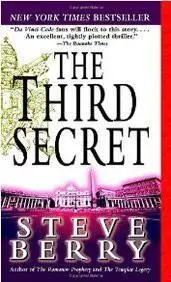
- Название:the Third Secret
- Автор:
- Жанр:
- Год:неизвестен
- ISBN:нет данных
- Рейтинг книги:3 / 5. Голосов: 1
-
Избранное:Добавить в избранное
- Отзывы:
-
Ваша оценка:
the Third Secret: краткое содержание, описание и аннотация
Предлагаем к чтению аннотацию, описание, краткое содержание или предисловие (зависит от того, что написал сам автор книги «the Third Secret»). Если вы не нашли необходимую информацию о книге — напишите в комментариях, мы постараемся отыскать её.
the Third Secret — читать онлайн бесплатно полную книгу (весь текст) целиком
Ниже представлен текст книги, разбитый по страницам. Система сохранения места последней прочитанной страницы, позволяет с удобством читать онлайн бесплатно книгу «the Third Secret», без необходимости каждый раз заново искать на чём Вы остановились. Поставьте закладку, и сможете в любой момент перейти на страницу, на которой закончили чтение.
Интервал:
Закладка:
He sat at the desk and switched on his computer for a final time. He needed to check any e-mail messages and prepare instructions for his successor. Over the past week his deputies had handled everything, and he saw that most of his messages could wait until after the conclave. Depending on who was elected pope, he might be needed for a week or so after the conclave to ease the transition. But if Valendrea secured the throne, Paolo Ambrosi would almost certainly be the next papal secretary and Michener’s Vatican credentials would be immediately revoked, his services no longer required. Which would be fine by him. He would do nothing to help Ambrosi.
He continued to scroll down the list of e-mails, checking each one, then deleting. A few he saved, tagging a short note for the staff. Three were condolences from bishops who were friends, and he sent back a short reply. Maybe one of them could use an aide? But he dismissed the thought. He wasn’t going to do that again. What had Katerina said in Bucharest? Is your life to be in the service of others? Perhaps if he devoted himself to something like the cause Father Tibor had deemed important, Clement XV’s soul might be granted salvation. His sacrifice could be penance for his friend’s shortcoming.
And that thought made him feel better.
The pope’s upcoming Christmas schedule appeared on the screen. The itinerary had been transmitted to Castle Gandolfo for review and bore Clement’s initials, signifying approval. It called for the pope to celebrate the traditional Christmas Eve Mass in St. Peter’s, then deliver his yuletide message the following day from the balcony. Michener noted the time of the return e-mail from Castle Gandolfo. Ten fifteen A.M., Saturday. That was about when he’d arrived back in Rome from Bucharest, long before he and Clement first talked. And even longer before Clement learned of Father Tibor’s murder. Strange that a suicidal pontiff had taken the time to review a schedule he had no intention of keeping.
Michener scrolled down to the last e-mail message and noticed no identification tag. Occasionally he received anonymous messages from people who somehow managed to learn his Web address. Most were harmless devotions from folks who wanted their pope to know they cared.
He double-clicked on the entry and saw that the transmission emanated from Castle Gandolfo, dated last evening. Time received, eleven fifty-six P.M.
By now, Colin, you’re aware of what I have done. I don’t expect you to understand. Just know that the Virgin returned and told me my time had come. Father Tibor was with Her. I waited for Her to take me, but She said I must end my life through my own hand. Father Tibor said it was my duty, the penance for disobedience, and that all would be clear later. I wondered about my soul, but was told the Lord was waiting. I have for too long ignored heaven. I will not this time. You have asked me repeatedly what is wrong. I will tell you. In 1978 Valendrea removed from the Riserva part of the Virgin’s third message from Fatima. Only five people know what was originally in that box. Four of them—Sister Lucia, John XXIII, Paul VI, and Father Tibor—are gone. Only Valendrea remains. Of course, he will deny everything and the words you are reading will be deemed the ramblings of a man who took his own life. But know that when John Paul read the third secret and released it to the world, he was not privy to the entire message. It is for you to set things right. Go to Medjugorje. It is vital. Not only for me, but for the Church. Consider it a last request from a friend.
I am sure the Church is preparing for my funeral. Ngovi will do his duty well. Please, do with my body as you please. Pomp and ceremony do not make the pious. For me, though, I would prefer the sanctity of Bamberg, that lovely city by the river, and the cathedral I so loved. My only regret is that I did not see its beauty one last time. Perhaps, though, my legacy could still be there. But I shall leave that conclusion to others. God stay with you, Colin, and know that I loved you dearly, as a father loves his son.
A suicide note, plain and simple, written by a troubled man who was apparently delusional. The supreme pontiff of the Roman Catholic Church was saying that the Virgin Mary told him to kill himself. But the part about Valendrea and the third secret was interesting. Could he give the information credence? He wondered if Ngovi should be apprised, but concluded that the fewer who knew about this message, the better. Clement’s body was now embalmed, his fluids consigned to flames, and the cause of death would never be known. The words glaring back at him from the screen were nothing but confirmation that perhaps the late pontiff had been mentally ill.
Not to mention obsessed.
Clement again had urged him to go to Bosnia. He’d not planned on following through with that request. What was the point? He still carried the letter signed by Clement addressed to a seer, but the authority sanctioning that order now emanated from the camerlengo and the Sacred College. There was no way Alberto Valendrea was going to allow him a jaunt through Bosnia looking for Marian secrets. That would be an appeasement to a pope he openly despised. Not to mention official permission for any trip would require the cardinals being collectively informed about Father Tibor, papal apparitions, and Clement’s obsession with the third secret of Fatima. The number of questions generated by those revelations would be staggering. Clement’s reputation was too precious to risk. Bad enough four men knew of a papal suicide. He certainly wasn’t going to be the one who actually impugned the memory of a great man. Yet Ngovi might still need to read Clement’s last words. He recalled what Clement had urged at Turin. Maurice Ngovi is the closest thing to me you will ever have. Remember that in the days ahead.
He printed a hard copy.
Then erased the file and switched off the machine.
THIRTY-FOUR
MONDAY, NOVEMBER 27
11:00 A.M.
Michener entered the Vatican through St. Peter’s Square, following a throng of visitors who’d just streamed off buses. He’d vacated his apartment in the Apostolic Palace ten days ago, just before Clement XV’s funeral. He was still credentialed with a security pass but, after tending to this last administrative matter, his duties to the Holy See would officially end.
Cardinal Ngovi had asked him to stay in Rome until the conclave convened. He’d even suggested that he join his staff at the Congregation for Catholic Education, but could not promise a position past the conclave. Ngovi’s Vatican assignment ended with Clement’s death as well, and the camerlengo had already said that if Valendrea achieved the papacy he would return to Africa.
Clement’s funeral had been a simple affair, held outdoors in front of the restored exterior of St. Peter’s Basilica. A million people had crowded the piazza, the flame of a single candle beside the coffin battered by a steady breeze. Michener had not sat with the princes of the Church, where he might have been if things had developed differently. Instead he took his place among the staff who had served their pope faithfully for thirty-four months. More than a hundred heads of state had attended, the entire ceremony transmitted live by television and radio around the world.
Ngovi did not preside. Instead, he delegated the speaking assignments to other cardinals. A shrewd move, actually, one that would surely endear the chosen men to the camerlengo. Maybe not enough to guarantee a conclave vote, but certainly enough to cultivate a willing listener.
Not surprisingly, none of the assignments went to Valendrea, and justifying that omission was easy. The secretary of state focused on the Holy See’s foreign relations during the interregnum. All his attention was on external matters, the task of praising Clement and bidding the pontiff farewell traditionally left to others. Valendrea had taken his duty to heart and been a fixture in the press over the past two weeks, interviewed by every major news organization in the world, the Tuscan’s words sparse and carefully chosen.
Читать дальшеИнтервал:
Закладка:
Похожие книги на «the Third Secret»
Представляем Вашему вниманию похожие книги на «the Third Secret» списком для выбора. Мы отобрали схожую по названию и смыслу литературу в надежде предоставить читателям больше вариантов отыскать новые, интересные, ещё непрочитанные произведения.







Обсуждение, отзывы о книге «the Third Secret» и просто собственные мнения читателей. Оставьте ваши комментарии, напишите, что Вы думаете о произведении, его смысле или главных героях. Укажите что конкретно понравилось, а что нет, и почему Вы так считаете.