Armageddon - Leon Uris
Здесь есть возможность читать онлайн «Armageddon - Leon Uris» весь текст электронной книги совершенно бесплатно (целиком полную версию без сокращений). В некоторых случаях можно слушать аудио, скачать через торрент в формате fb2 и присутствует краткое содержание. Жанр: Старинная литература, на английском языке. Описание произведения, (предисловие) а так же отзывы посетителей доступны на портале библиотеки ЛибКат.

- Название:Leon Uris
- Автор:
- Жанр:
- Год:неизвестен
- ISBN:нет данных
- Рейтинг книги:4 / 5. Голосов: 1
-
Избранное:Добавить в избранное
- Отзывы:
-
Ваша оценка:
Leon Uris: краткое содержание, описание и аннотация
Предлагаем к чтению аннотацию, описание, краткое содержание или предисловие (зависит от того, что написал сам автор книги «Leon Uris»). Если вы не нашли необходимую информацию о книге — напишите в комментариях, мы постараемся отыскать её.
Leon Uris — читать онлайн бесплатно полную книгу (весь текст) целиком
Ниже представлен текст книги, разбитый по страницам. Система сохранения места последней прочитанной страницы, позволяет с удобством читать онлайн бесплатно книгу «Leon Uris», без необходимости каждый раз заново искать на чём Вы остановились. Поставьте закладку, и сможете в любой момент перейти на страницу, на которой закончили чтение.
Интервал:
Закладка:
Hirsch struck back immediately. “In all candor Comrade Colonel, this continued rape can only diminish the stature of the Red Army regardless of the provocations. Both Marx and Lenin have pointed out that in order for us to successfully carry out world revolution we must first have the support of a socialist German working class.”
“The German working class will be rebuilt after every vestige of the Nazi is purged from him.”
“But, Comrade Colonel, I raise the question of whether our soldiers are discriminating between Nazis and non-Nazis in their ... er ... sport. Certainly the rape of a ten-year-old girl will do nothing to induce the Germans to accept the Soviet way of life.”
“There are bound to be a few mistakes,” Igor answered weakly.
“A few hundred thousand is more like it. Colonel Karlovy, I dare this conversation with you out of mutual love of the Soviet Union. I have begged Comrade Wöhlman to speak to Azov. The fact of the matter is that Wöhlman at times appears to be more intent on pleasing the commissars and keeping in their good graces than he is of representing the new Germany. If these abuses are allowed to continue it must end in earning the everlasting hatred of the German people and it must sow the seeds of a war of revenge. You are a hero of the Soviet Union in a position to exert pressure. Many Red Army officers are disgusted with the events in Berlin.”
Igor was now terribly uncomfortable. They had emerged from the forest and were moving toward the wreckage of central Berlin. Igor knew nothing could stop the rape and looting except orders from Azov. Acts of “individualism” was just the type of thing that killed half the officer corps off during the purges. “Comrade Hirsch, many things you have said to me could bring you grave consequences. For this time alone, I will forget you ever opened your mouth.”
Heinrich Hirsch stared at Igor. There was no more to be said. They reached the Brandenburg Gate, where the red flag hung limply atop the monument to former German victories, and crossed beneath to the Unter Den Linden. The avenue of former grandeur was perhaps the most horrible in all of Berlin with its massive gutted shells. Hirsch asked to be let out.
“I’m sorry I spoke to you, Colonel Karlovy,” he said. “I was gravely mistaken. I thought you were different.”
Igor, smarting from the last remark, watched Hirsch go off. He gripped the wheel of the car tightly ... damned bastard!
He was wearing thin with the whole mess in Berlin. And now, this business of stripping toilets. What the hell, political decisions were not handed down for discussion. As one who was trained in the days of the purges, Igor knew how to go into mental vacuums. The officers’ training created situations to compel the men to inform on each other. Spying was an accepted way of life. One had to be careful not to form lasting friendships for he could never tell when the most innocent complaint would be twisted against him. Spying kept minds alert and prevented cliques of military deviationists from forming.
Despite this conditioning Igor Karlovy was reachable. There were memories to haunt him. Always at a time like this the ghost and the voice of Peter Egorov was heard. He drove back to his house, forgetting his work, locking his door behind him, drinking quickly to drown out the memory of Peter.
He lay on his bed and the sweat began to form in cold beads. Damn you Peter Egorov! Damn you! Why did you do it? Will you leave me in peace! You know you were a fool ... you know that.
More vodka ... yes, more vodka to burn away the memory.
Lieutenant Peter Egorov and Feodor Guchkov were the favorites of Colonel Karlovy. All of the young engineers looked to Igor as their idol during the siege of Leningrad.
His ingenuity, bravery, and bravado had become legend. What was more, Colonel Karlovy was not a party member. Things in his command were relaxed. Members of his immediate staff were like family. What a hell of a time they had, the three of them. Loving, fighting, and drinking. Igor, Feodor, and Peter Egorov.
What a brilliant young officer Peter was! A superb engineer with endless talents for improvising, particularly in keeping up factory production. So bright was Peter that those factories in his immediate command even increased production in the middle of the siege.
Peter had a Cossack’s lust for life. Perhaps that is why Igor, a Cossack himself, was drawn to the younger man. He had all the attributes ... he sang like a nightingale or fought like a tiger as the occasion demanded. He loved women and women loved him.
When the siege was broken and the lines rolled westward, Igor was borrowed from the Red Air Force and promoted as chief engineer of the entire front. Peter and Feodor came along on his staff. Throughout the offenses of 1944 and 1945 the engineers moved with the armies through the Baltics, White Russia, and into Poland, erecting bridges, blowing up other bridges, repairing ports, laying airstrips, demolishing unsafe buildings, cutting roads, repairing rails.
The White Russian Front rolled up to the gates of Warsaw and halted on the east bank of the Vistula River in the industrial suburb of Praga. After Praga was cleared a queer edict came down from the top not to pursue the Germans across the river into Warsaw.
At first the field commanders were told that the entire front had to regroup and resupply. Later the word was passed down that there was an uprising inside Warsaw by “military adventurers” representing the imperialist London Polish Group. Although these explanations were hazy, officers of the Red Army were conditioned too well to inquire further. They could, nevertheless, see the destruction of Warsaw just across the river with their naked eyes.
Days wore on that brought counterrumors that Nazi panzer divisions were being allowed to reduce Warsaw to the ground and that civilians were being massacred.
In the meanwhile a Moscow-trained People’s Committee for Free and Democratic Poland had been installed in Lublin, to the south. The Red Army could feel the anger and resentment of the Polish population. Igor smelled the rage of the Poles; he knew such things from his own childhood. The Lublin committee was apparently having a difficult time convincing the Poles that the Soviet Union had truly liberated them.
One night during the second week of the fighting in Warsaw Peter Egorov came to Igor’s quarters.
“Many of us are fed up with the butchering of the people in Warsaw,” he said. “We know we have the strength to cross the river and help them.”
“Calm down, Peter. It is unfortunate that a few civilians are caught in the middle. You know that this Polish Home Army is nothing more than a fascist tool.”
“For God’s sake, Colonel! They are Poles fighting for Poland against Nazis!”
“Be careful how you talk, Peter.”
“I’ve been careful how I’ve talked all my life. For once I want to shout out what is in my heart Colonel ... listen to me ... there are other officers who feel as I do. Among us we can organize several hundred troops. We plan to lay down a bridge upstream and bring over weapons to the defenders and stay on and fight. With you, Igor Karlovy, leading us, five thousand troops will cross behind you. Believe me, Colonel... this is the way to go out.”
For an instant Igor’s heart was seized with the fire!
“Imagine. If the Red Army came to the rescue of Warsaw then the Poles would know we are their liberators instead of their captors,” Peter cried.
Peter was a Ukrainian and a Pole. Igor had long ago sensed the dangerous trait of “nationalism” in him; it had lain dormant, but began seething beneath the surface. Now, as they stood opposite Warsaw, it exploded.
“I will forget you spoke to me, Peter, and I suggest you forget your madness.”
Читать дальшеИнтервал:
Закладка:
Похожие книги на «Leon Uris»
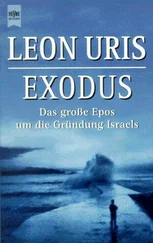
Представляем Вашему вниманию похожие книги на «Leon Uris» списком для выбора. Мы отобрали схожую по названию и смыслу литературу в надежде предоставить читателям больше вариантов отыскать новые, интересные, ещё непрочитанные произведения.








Обсуждение, отзывы о книге «Leon Uris» и просто собственные мнения читателей. Оставьте ваши комментарии, напишите, что Вы думаете о произведении, его смысле или главных героях. Укажите что конкретно понравилось, а что нет, и почему Вы так считаете.