Jonathan Dunn - The Forgotten King
Здесь есть возможность читать онлайн «Jonathan Dunn - The Forgotten King» весь текст электронной книги совершенно бесплатно (целиком полную версию без сокращений). В некоторых случаях можно слушать аудио, скачать через торрент в формате fb2 и присутствует краткое содержание. Жанр: Старинная литература, на английском языке. Описание произведения, (предисловие) а так же отзывы посетителей доступны на портале библиотеки ЛибКат.
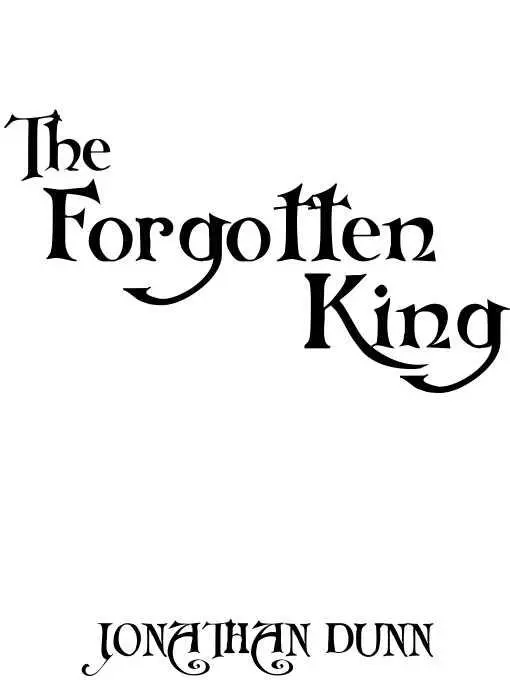
- Название:The Forgotten King
- Автор:
- Жанр:
- Год:неизвестен
- ISBN:нет данных
- Рейтинг книги:4 / 5. Голосов: 1
-
Избранное:Добавить в избранное
- Отзывы:
-
Ваша оценка:
The Forgotten King: краткое содержание, описание и аннотация
Предлагаем к чтению аннотацию, описание, краткое содержание или предисловие (зависит от того, что написал сам автор книги «The Forgotten King»). Если вы не нашли необходимую информацию о книге — напишите в комментариях, мы постараемся отыскать её.
The Forgotten King ebook is a history of the Dark Ages, of the forgotten ages that followed the fall of Rome. Civilization did not collapse with the Roman empire, however, but grew again on an island nation off the coast of Europe. It was called Atilta, a land of ancient forests and great, maritime capitals. At this time, it was at war with itself as its people fought for freedom. Yet the freedoms they desired were contradictory: some longed to overthrow their tyrannical king, others their tyrannical God. It was a fight of forest against city, and nature against civilization; of man against beast, and beast against God. But whom was the victor? For the island of Atilta is no longer to be found. Yet its history remains, embedded into the myths and legends of an exiled people. This is its story. This is the history of The Forgotten King.
The Forgotten King — читать онлайн бесплатно полную книгу (весь текст) целиком
Ниже представлен текст книги, разбитый по страницам. Система сохранения места последней прочитанной страницы, позволяет с удобством читать онлайн бесплатно книгу «The Forgotten King», без необходимости каждый раз заново искать на чём Вы остановились. Поставьте закладку, и сможете в любой момент перейти на страницу, на которой закончили чтение.
Интервал:
Закладка:
“Then we go,” said the brown Fardy, and he extended his arms as if to open the door. But before he could, the air was filled with a shrill scream from the bridge beyond. It was followed by a screaming laugh and a whipping sound, then by voices too faint to be intelligible. The three brothers looked to each other for an instant, then kicked open the door and stormed onto the bridge with their swords drawn.
“The devil!” cried the black Fardy. “We have come, fair Celestine, and will not leave you to your torturers! Forward brothers, forward, and let us end the curse of Saxony forever!”
Chapter 61
“Celestine!” Alfonzo whispered in the darkness of the temple ruins, “Celestine, will you not have a thought for yourself? If not for yourself, than for me; for I am weak.”
“Yet I will not be persuaded, and do not play with the winds if you will not be rustled by them. She is my sister. I must go to her. It is not my choice to make.”
“When so many have died to free you, would you return yourself voluntarily to Gylain’s power? Think what he would do, in his anger.”
“You misjudge him, Alfonzo. He had chances, but did not take them; for if he is evil, he is not cruel.”
Alfonzo looked to the ruins around him and then to the darkness of the encircling forest. “You say he is not cruel? What is not felt is easily forgotten, perhaps, but what of your father and myself? Torture does not flee the memory like courage does the heart.”
Celestine’s countenance clouded. “My father’s fate was by my mother’s hand; and Gylain rebuked those who tortured you, sending a doctor to heal you.”
“Even God rebukes the devil, even as he uses him for his own purposes.”
“Yet Gylain is not the devil and you are not God.” She paused, breathing on tip-toe. “Forgive me, Alfonzo, but I will go. If I am to be strong, I cannot be weak with my sister. For though she is shadowed by the past she is not shadowed by betrayal.”
Alfonzo did not turn his countenance from the forest. It was late morning and the council had just been completed. Above the forest that came in close on every side was the sun, beginning its daily march with its usual soggy-eyed approach. The buildings of the long forgotten city were made some of cobblestone and others of a white limestone; but in the harsh conditions of the forest, nothing remained but scattered debris. Nothing grew within the circle of the ruins and the ground was flat and barren as an ocean of rock. Only the central tower still stood and even its top had collapsed onto the lower section.
After a moment, Alfonzo soaked up strength from the immutable scene in which he was immersed. “So be it, Celestine: go, if you must. But as much as I am yours in love, I am Atilta’s in duty. If you are captured I will not rescue you again, though by it I am shown to be a coward.” He paused. “Cruel fate! Men say we fight for our women and our children; yet who must be sacrificed ere the end?”
There was silence, as Celestine softly kissed her husband. Neither spoke, though their eyes courted for a moment. Then she stood and left, with a bundle in hand she had prepared the night before while the others slept. Alfonzo had seen it when he woke and his eyes could not part with it all during the council. She left. She did not even turn for a parting glance. Instead, she climbed the rope ladder to the Treeway and began walking northwest, to Eden.
The sun came down at a gentle angle and as it passed through the cloudy foliage it gave a hazy, green light to the leafy tunnel. On either side the trees let down their uncombed tresses, brushing away Celestine’s weariness as she went. The ancient trees’ branches were muscled and as thick as the trunk of a lesser tree. Their leaves, however, cut a contrast: where one was ancient, the other was young; where one was steadfast, the other blew with the wind. There, one upon the other, were nature’s oldest children and her youngest, the old and the new joined together. Yet they did not break apart, for the one was not wine nor the other wineskin.
Celestine traveled the living clouds for a day, entering the gates of Eden several hours before the Fardys arrived. She came clad as a simple peasant – homely in dress and in bearing – and no one lowered themselves to question her.
******
“I am not your slave, Gylain, nor are my armies. If you wish my aid, than you must seek it as an ally, not a lover.”
“Yet we are both, since my heart and my confidence are equally yours. My life is given to you.”
“Indeed? Or is it given against my father?” Cybele flushed. She quickly added, in a whisper, “No, do not answer! I do not want to know.” She paused again, then, “For I am no different, though I am a woman as well: seeking love while seeking power.”
“One cannot have both,” Gylain smiled.
“What is power but the hatred of freedom? And hate and love are not at war. Each is a way of pleasing oneself: the first through self-service, the second self-sacrifice. I have power, and thus hate; but I also have a bosom, and thus love.”
“The contrast!” Gylain moaned, “Without hate you cannot enjoy love; and without tyranny the people cannot enjoy their freedom.”
“Is that your sleeping potion, then?”
“Come, you jest with me.” He sighed, seeing she did not. “We are creatures of analogy, and we can only know things by comparing them against others. To those who live in luxury, only greater luxury can bring momentary contentment. For those in poverty, a slight reprieve is paradise. And so it is with freedom: it must always grow more abundant, lest it does not satisfy. And when it flows too freely those who wield it self-destruct, for in freeing men you also free their evil. The rebels fight for freedom, but with it Atilta would subside, even as Rome before her. So I give them tyranny, and tyranny gives them both power and freedom.”
“And you love them as well?”
“I love no one, for love is emotion.”
“Indeed,” she smiled, “And there can be no emotion in the affairs of state: for which reason I will not be played as a pawn.”
“War is dangerous, for a woman of beauty. The queen of Saxony you are, my Cybele, but your mother you are not.”
“Nor am I yours, outright.”
“No?”
Cybele pressed her lips. “I will accompany the fleet.”
Gylain closed his eyes and stood a statue. Then, with a pleasant smile, “Of course, Cybele, and for that reason I have prepared a Marin to be your headquarters during the campaign.”
“My trust is not placed in vain.”
“I know.”
“As in everything else. I will occupy it immediately.”
“You will find it in good repair,” and Gylain turned to the Floatings. They were walking on the inner wall of the castle, fifty feet above the bustling streets. In the distance, the harbor city could be seen.
“Left that way by the Fardy brothers, then? A shame, for they amused me with their foolishness.” She paused. “How can idiots become wealthy? Were they not born poor?”
“Above all, yes: the sons of a glider merchant. Yet they are not fools, as you say. For how do we judge a man’s worth, but by his actions? And those by their results? The Fardy brothers have done more than many who are thought wise, as if placed by feudal fate to humble me: to show me that before God I have no more power than three bumbling idiots. They are fools, you say, but fate does not discount them; and fate is all that matters in such things. Vitam regit Fortuna, non Sapientia .”
“ Stulti timent Fortunam, sapientes ferunt ,” she retorted.
He sighed, as if looking upon foolishness in wisdom’s garb. “To whom it is not given, it is not known,” and he was silent.
Читать дальшеИнтервал:
Закладка:
Похожие книги на «The Forgotten King»
Представляем Вашему вниманию похожие книги на «The Forgotten King» списком для выбора. Мы отобрали схожую по названию и смыслу литературу в надежде предоставить читателям больше вариантов отыскать новые, интересные, ещё непрочитанные произведения.





Обсуждение, отзывы о книге «The Forgotten King» и просто собственные мнения читателей. Оставьте ваши комментарии, напишите, что Вы думаете о произведении, его смысле или главных героях. Укажите что конкретно понравилось, а что нет, и почему Вы так считаете.