Jonathan Dunn - The Forgotten King
Здесь есть возможность читать онлайн «Jonathan Dunn - The Forgotten King» весь текст электронной книги совершенно бесплатно (целиком полную версию без сокращений). В некоторых случаях можно слушать аудио, скачать через торрент в формате fb2 и присутствует краткое содержание. Жанр: Старинная литература, на английском языке. Описание произведения, (предисловие) а так же отзывы посетителей доступны на портале библиотеки ЛибКат.
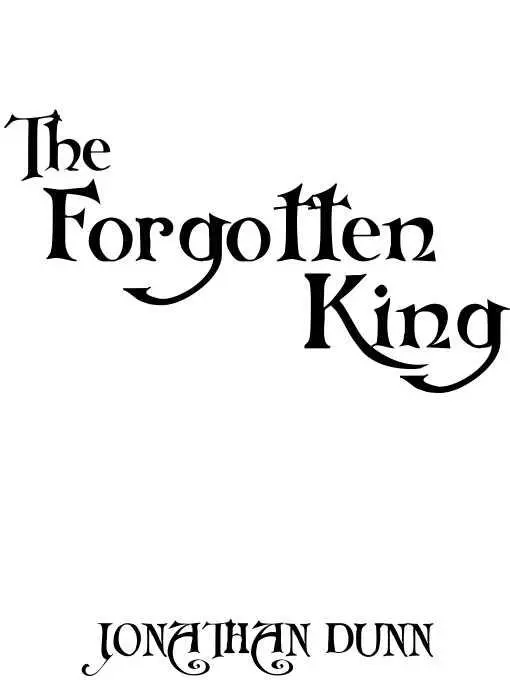
- Название:The Forgotten King
- Автор:
- Жанр:
- Год:неизвестен
- ISBN:нет данных
- Рейтинг книги:4 / 5. Голосов: 1
-
Избранное:Добавить в избранное
- Отзывы:
-
Ваша оценка:
The Forgotten King: краткое содержание, описание и аннотация
Предлагаем к чтению аннотацию, описание, краткое содержание или предисловие (зависит от того, что написал сам автор книги «The Forgotten King»). Если вы не нашли необходимую информацию о книге — напишите в комментариях, мы постараемся отыскать её.
The Forgotten King ebook is a history of the Dark Ages, of the forgotten ages that followed the fall of Rome. Civilization did not collapse with the Roman empire, however, but grew again on an island nation off the coast of Europe. It was called Atilta, a land of ancient forests and great, maritime capitals. At this time, it was at war with itself as its people fought for freedom. Yet the freedoms they desired were contradictory: some longed to overthrow their tyrannical king, others their tyrannical God. It was a fight of forest against city, and nature against civilization; of man against beast, and beast against God. But whom was the victor? For the island of Atilta is no longer to be found. Yet its history remains, embedded into the myths and legends of an exiled people. This is its story. This is the history of The Forgotten King.
The Forgotten King — читать онлайн бесплатно полную книгу (весь текст) целиком
Ниже представлен текст книги, разбитый по страницам. Система сохранения места последней прочитанной страницы, позволяет с удобством читать онлайн бесплатно книгу «The Forgotten King», без необходимости каждый раз заново искать на чём Вы остановились. Поставьте закладку, и сможете в любой момент перейти на страницу, на которой закончили чтение.
Интервал:
Закладка:
“At last!” he said with out removing his face, “What held you?” He continued without pausing to breath, “We are ready, but the night is short. Follow me,” and he turned, stepping onto the stairway above. The others joined him. The stair was closed behind them.
The house was narrow and long, since it was squeezed between the crown’s road and the crown’s wall. It was, therefore, only the next room over that opened onto the crowded streets. The house itself was also a brewer’s shop, with all the associated equipment – even a wagon with a giant barrel mounted on the rear for the purpose of transporting the wares. The windows were covered with heavy curtains and the room dimly lit by a lantern on the table beside the wagon. A stable stood to the left of the room, connected to the brewing hall by a large, wooden door.
“Get in: we are late already,” said the gaunt brewer, pointing to the wagon.
“A giant beer barrel?” cried the blond Fardy. “My brothers – as patient as they are – have seen enough of the insides of barrels. Could you think of nothing else?”
“I am a brewer, so I have a brewer’s wagon. As for your beer barrel, I do not make it, only Atiltian Scotch. Here,” and the man opened a trap door on the wagon’s bottom, large enough for a man to enter. It was triggered by pulling on the tap which was mounted on the rear of the barrel.
“What if someone tries to turn on the tap?” Clifford asked.
“There is a latch on the inside, and the trap door cannot be opened against its will,” the other returned.
“I did not mean that,” and the old man smiled, looking to the shadowed corners with a probing eye. “I have heard it said that guards do not let a brewer’s wares pass, without ensuring its quality. What if they should try this tap while we are inside?”
He followed Clifford’s eyes to the wall, where a dozen bottles of Atiltian Scotch were stacked. He sighed, “Very well,” and Clifford hurried to the shelf, returning with each of them cradled like an infant in his arms.
“If a soldier should try the tap, it will flow as if it were full.”
“But what soldier needs twelve bottles to inspect?”
“A thirsty one,” Clifford winked, and was inside the barrel before the brewer could respond. The man closed and sealed the trap door, then jumped into the driver’s seat and was off, nodding to the servant boy who stood by to open the door.
The moon was rising and its brightness cast a shadow over the streets, kept away from them by the tall buildings. These rose up a hundred feet or more, covered in thick vines and a beautifully grained wood. The lower portions of the houses were made of brick, with square windows covering most of the first floor. The tall portions sat several feet from the street, while the windowed porch or sitting room extended to its edge. The people of Eden were friendly and if one saw an acquaintance sitting in the front room while they passed, he would stop for a moment. Indeed, the forward rooms were open to the public at all hours and the richer citizens left meals out for the poor to eat during the night. Atiltians were known for their vigorous pursuit of whatever struck their fancy. They worked obsessively at things that they loved and were up before dawn without turning in until midnight or later. Yet when they did turn to sleep, they proceeded with the same vigor that characterized their waking hours.
As the ale wagon drew nearer to the Floatings, the guards became more numerous and more vigilant. Just as they came into the Floatings, in the final circle before it began, they were stopped by a company of six soldiers. The circle was lit by several lamp posts, with a fountain in its center and a garden around its edge. The captain of the guard had just returned from foreign duty, as evidenced by his plumed helm and the deep tan on his face – both testifying to a man of French persuasions; though his accent pointed to Hibernia.
“Stop there, man,” commanded the captain as the brewer entered the circle. The wagon came to halt beside the fountain.
“What is your business at this hour?” the captain asked.
“A delivery, sir,” was the answer. “A broken valve delayed the brewing, but the delivery cannot wait until morning.”
The captain was satisfied with his answer, but thought such an easy passing to be lax. “What is your cargo? There is no need to deliver it at night.”
“I have Atiltian Scotch,” the brewer paused, “And it is precisely for the darkness that I hurry, for sailors can only be kept from carousing about the shore if the shore is brought to them . If you do not want drunkards laying about the city, let them drink where they cannot safely fall over.”
“Very well,” it was the captain’s turn to pause while he sought something to say. “I am just from Hibernia and already I miss their ale. Beside it, Atiltian Scotch is but Atiltian barrel scum. But as we are not in Hibernia, and as my men are thirsty, it will have to do.”
The brewer grew flustered by the captain’s insult and only barely kept his temper – a fact those within the barrel could surmise by the wavering tone of his voice. “Go on, then, but not so much; for I have a wife to support.”
“Then you will need extra for yourself?”
The soldiers enjoyed their captain’s answer, laughing as they congregated around the tap. Having heard the conversation, those inside were prepared, and when the soldiers cupped their hands beneath the spigot, Atiltian Scotch poured out readily. Yet the soldiers were wastrels and much of it overflowed onto the ground. At last, they were finished, and there could not have been much left within the massive keg.Yet the captain had not tasted it. He walked briskly to the tap with that in mind.
“My men enjoyed your Atiltian Scotch,” he said, “But my tongue is sharper than theirs, having tasted the Hibernian best. We will see how it fits my taste.”
“It is cold going down and warm once within,” the brewer boasted. But to himself he worried, “There can be nothing left for them to pour!”
The captain cupped his hands beneath the tap as one of his soldiers pulled back on it. A trickle of liquid came out, slower than before and a different shade in the moonlight.
“Indeed, you have just brewed this,” the captain said as he prepared to drink, “For it is yet warm.” The brewer sat up straight.
“I must confess,” he continued, “That its smell is not altogether pleasurable; for it is sharply tinged and stabs itself into my nostrils.”
After letting it flow over his hands and onto his boots for a moment, the captain raised his hands to his lips and drunk deeply of the warm Atiltian Scotch. His face collapsed as he swallowed and his eyes snapped shut in revulsion.
“Blasphemy!” he cried, “That this sour scum is named Scotch. In Hibernia this would be considered nothing more than vile excrement!” His face shook and he spit repeatedly. “Go on, brewer,” he commanded, “Go on, and take your putrid concoctions with you. I will never drink again!”
The brewer bowed, then quickly spurred his horses forward. “What the devil?” he said to himself as he drove off, “Can it have been so bad? And so warm?” He shook his head. “Whatever became of it, that old boozer got what he deserved. And many times over at that!”
Chapter 60
The Floatings was still in the moonlight. No torches were allowed – on account of the densely packed ships – and the harbor was left without any light but the moon’s. Nothing could be heard but the breathing of the tide and the snoring of the groaning ships. The brewer drove his wagon down the first pier that reached into the harbor, at whose end a small cutter was waiting. A ramp connected its deck to the pier, where a shrouded man was waiting.
Читать дальшеИнтервал:
Закладка:
Похожие книги на «The Forgotten King»
Представляем Вашему вниманию похожие книги на «The Forgotten King» списком для выбора. Мы отобрали схожую по названию и смыслу литературу в надежде предоставить читателям больше вариантов отыскать новые, интересные, ещё непрочитанные произведения.










Обсуждение, отзывы о книге «The Forgotten King» и просто собственные мнения читателей. Оставьте ваши комментарии, напишите, что Вы думаете о произведении, его смысле или главных героях. Укажите что конкретно понравилось, а что нет, и почему Вы так считаете.