Edward Lee - Ghouls
Здесь есть возможность читать онлайн «Edward Lee - Ghouls» весь текст электронной книги совершенно бесплатно (целиком полную версию без сокращений). В некоторых случаях можно слушать аудио, скачать через торрент в формате fb2 и присутствует краткое содержание. Жанр: Старинная литература, на английском языке. Описание произведения, (предисловие) а так же отзывы посетителей доступны на портале библиотеки ЛибКат.
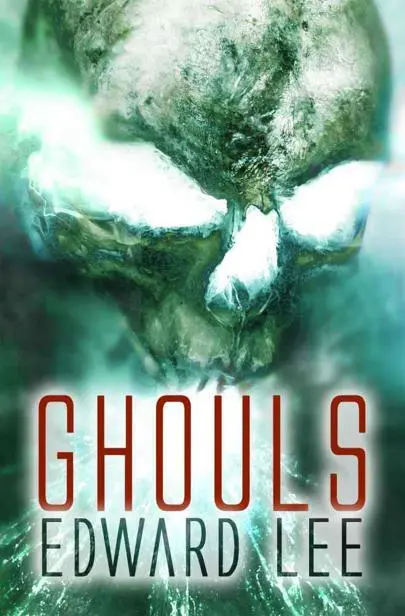
- Название:Ghouls
- Автор:
- Жанр:
- Год:неизвестен
- ISBN:нет данных
- Рейтинг книги:4 / 5. Голосов: 1
-
Избранное:Добавить в избранное
- Отзывы:
-
Ваша оценка:
Ghouls: краткое содержание, описание и аннотация
Предлагаем к чтению аннотацию, описание, краткое содержание или предисловие (зависит от того, что написал сам автор книги «Ghouls»). Если вы не нашли необходимую информацию о книге — напишите в комментариях, мы постараемся отыскать её.
The murders were only the beginning. No one knew what went on in the sullen, dark house on the hill, but town cop Kurt Morris intended to find out. The sleepy town of Tylersville, Maryland was being stalked by an unimaginable evil, it had become the haunting-ground for horrors too grisly to be described. Young girls had vanished without a trace. Graves had been opened, corpses unearthed and carried away. Quiet moonlit nights gave way to a mindless slaughter, and to the sounds of hysterical screams...
DARK HORIZONS
Time was running out. How many more would be dragged off into an endless night, and for what hideous purpose? Fear led to wild speculations about psychopaths, crazed animals, vampires, and werewolves. But Kurt knew better. Deep in the fog-shrouded woods, he had seen the nightmare figures. And the truth was much, much worse...
GHOULS!
A novel of unrelenting horror in the tradition of Dean Koontz.
Ghouls — читать онлайн бесплатно полную книгу (весь текст) целиком
Ниже представлен текст книги, разбитый по страницам. Система сохранения места последней прочитанной страницы, позволяет с удобством читать онлайн бесплатно книгу «Ghouls», без необходимости каждый раз заново искать на чём Вы остановились. Поставьте закладку, и сможете в любой момент перейти на страницу, на которой закончили чтение.
Интервал:
Закладка:
Bard looked out past the search party. His voice gave a hint of despair. “I remember when the only things that went on around here were kids laying wheel and throwing beer bottles in the road. A downed powerline or fallen tree was hot news. Now look what we got… My whole fucking town’s gone right down the pooper in the space of a week.”
Kurt kept silent. He was thinking.
Bard let out a black chuckle. “You know, this job’s making me numb. Somebody’s ripping the shit out of people, and I haven’t even actually realized it until today. You know what I mean? It’s just now sinking in what’s honest to God going on. People are being murdered.”
Kurt nodded, half aware. He looked at the doorway of the trailer and remembered all the blood he’d seen inside. My God, he thought. The blood. So much blood.
He touched his chin, staring. He was trying to remember the last full moon.
««—»»
Kurt went back home when the search at Fitzwater’s had been wrapped up. Nothing had been found in the way of evidence, nothing left behind. He had a feeling that the search at Belleau Wood would yield similar results.
The house was empty. Vicky had left a note stuck to the refrigerator by a plastic parrot magnet, WENT TO BANK, BE BACK SOON, and Melissa had vanished. He began to fry up some canned hash for lunch, but flopped it all into the garbage when he decided he wasn’t hungry. He hadn’t eaten much in the last few days. He didn’t want to; it just didn’t seem worth bothering with. He needed to get back to work. He needed to do something. Even directing traffic or writing SRO’s was better than this.
The emptiness of the house closed in; he could feel it follow him shapelessly up the stairs and into his room, the ghost of himself. The glare of sunlight made him grit his teeth. At least a suggestion of decent weather, but still it depressed him. The onstart of a classic headache pulsed behind his eyes.
As he went to close the shades, the phone rang.
“Hello—”
“I’d like to speak to Officer Morris, please.” A woman’s voice, and one he’d heard somewhere before.
“That’s me.”
A pause, as if hesitant, as if the caller were tempted to hang up. “This is Nancy Willard. We met at the house the other day…”
“Oh, yes. What can I do for you, Mrs. Willard?”
“I, uh—” She paused again, this time to lower her voice. “I’d like to talk to you about something. You may be quite interested.”
“Okay.”
“Oh, not over the phone. I mean someplace private.”
“Sure,” Kurt said. “I’ll be over in ten minutes.”
“No, no,” she said. She seemed to speak with great care, holding her voice down. “Not at the house, either, if you don’t mind. It’s kind of involved, and I’d—”
Kurt frowned.
“—just rather it be someplace else, someplace out of the way, if that’s all right with you.”
“Of course it is, Mrs. Willard,” he said. “Name a place.”
“Oh, it really doesn’t matter to me,” she hedged. “Whatever’s convenient, I guess… Oh, how about…”
Jesus, he thought. A little early in the day to be drinking, isn’t it, lady?
“How about Squidd McGuffy’s?” she said.
“What McGuffy’s?”
“Squidd. Squidd McGuffy’s. You’ve never heard of it?”
“Sorry, no. What is it, a fish store or something?”
She laughed shortly. “No, no, it’s a club, a tavern type of place.”
“Okay. Where is it?”
“At Hilltop Plaza, in Bowie, where the bookstore used to be. You can’t miss it. There’s a big sign in front with a squid on it.”
Bowie? He shook his head, bewildered. “Okay, Mrs. Willard. I’ll find it. What time?”
“Oh, say…six-thirty? Is that all right?”
“No problem at all. Squidd McGuffy’s at six-thirty.”
“Yes, yes. I’ll see you then.”
The line went dead.
— | — | —
CHAPTER TWENTY-ONE
Willard measured time with cigarettes; he smoked one every fifteen minutes, so by the accumulation of butts in the ashtray, an hour and a half had passed since Nancy had put down the phone.
The tiny light on the jackplate glowed green, indicating LINE CLEAR. In the top drawer of his desk was a UT-55A full-function extension monitor, similar to an answering machine, only quite a bit more complicated and costly. It monitored all incoming and outgoing calls on either extension, and recorded them on an Akai reel-to-reel tape recorder also in the desk. The recorder was activated whenever any phone in the house was picked up.
He’d heard Nancy’s entire conversation with Kurt Morris.
She was upstairs now. She was probably packing her bags, planning to slip out tonight after she’d spoiled everything. She was probably masturbating, eyes closed and her head full of thoughts of the security guard. He’d seen her do this many times.
The study was quiet and comfortably dark, his place of peace. The air-conditioning hummed hypnotically.
Willard lit another cigarette. He realized the obscenity of smoking, but was hooked to it. Nicotine had proved as psychologically addicting as heroin, and cigarettes were the number one preventable cause of premature death in America. Worldwide, 50 million smokers per year contracted a chronic obstructive lung disease; in the United States alone, 14 billion dollars were spent yearly to treat smoking-related ailments. The gas and particulate phases of cigarette smoke contained more than twenty toxic chemicals, carcinogens, ganglionic stimulators, tumor accelerators. Ciliotoxins wiped out the body’s primary system for foreign-matter expulsion, clearing the way for myriad pneumoconioses. Carbon monoxide interceded oxygen transport and utilization to the brain, causing excess production of hemoglobin and actually dropping the smoker’s intelligence quotient, while nicotine traumatized the cardiovascular system and unnaturally released catecholamines in the brain. Cigarettes even contained trace metals and radioactive substances. These were cold, objective facts. It perplexed him then why the government continued to subsidize the tobacco crop and thus corrupt health-care costs to levels unaffordable to the average workingman. Certainly an extended life expectancy and millions saved in health benefits was worth the jobs of an insignificant number of tobacco farmers. Perhaps the tobacco industry was really just a government plot to generate revenue and kill off the elderly before they could collect much Social Security. Monstrous, Willard thought. Monstrous to smoke. He drew deep and found harsh bliss in the smoke that filled his lungs. Ah, well.
He held one of the small amber bottles up to the desk light. TTX, the label read. FDA CONTROL 4B639, RESEARCH USE ONLY, DO NOT HANDLE, DO NOT FREEZE, AVOID DIRECT SUNLIGHT AND EXCESSIVE HEAT. Doubtfully now, he wondered. God knew he’d tried enough things in his tests. It stunned him, the metabolic tolerance to toxic substances. Tricothene, ricin, triopental sodium, tubocurarme chloride—all of them totally ineffective. A 200,000-parts-per-million carbon monoxide breathing mixture hadn’t even caused unconsciousness. A massive intracardial injection of epinephrine had only negligibly increased systolic blood pressure and respiratory expansion. Symptoms had vanished within minutes.
But those had been tests. This was something crucial and called for severe, deliberate measures, now that retrieval seemed hopeless.
The thought of Nancy interrupted his deductions. She was infuriating. It amazed him how she could be so smart and so stupid at the same time. She was scared, she lacked control, she’d left herself open to panic. Willard hadn’t panicked. No, there was no need. He was in control. But Nancy couldn’t think enough ahead to preserve the importance of the situation.
Читать дальшеИнтервал:
Закладка:
Похожие книги на «Ghouls»
Представляем Вашему вниманию похожие книги на «Ghouls» списком для выбора. Мы отобрали схожую по названию и смыслу литературу в надежде предоставить читателям больше вариантов отыскать новые, интересные, ещё непрочитанные произведения.







Обсуждение, отзывы о книге «Ghouls» и просто собственные мнения читателей. Оставьте ваши комментарии, напишите, что Вы думаете о произведении, его смысле или главных героях. Укажите что конкретно понравилось, а что нет, и почему Вы так считаете.