Bernard Cornwell - 1356 (Special Edition)
Здесь есть возможность читать онлайн «Bernard Cornwell - 1356 (Special Edition)» — ознакомительный отрывок электронной книги совершенно бесплатно, а после прочтения отрывка купить полную версию. В некоторых случаях можно слушать аудио, скачать через торрент в формате fb2 и присутствует краткое содержание. Жанр: Старинная литература, на английском языке. Описание произведения, (предисловие) а так же отзывы посетителей доступны на портале библиотеки ЛибКат.

- Название:1356 (Special Edition)
- Автор:
- Жанр:
- Год:неизвестен
- ISBN:нет данных
- Рейтинг книги:3 / 5. Голосов: 1
-
Избранное:Добавить в избранное
- Отзывы:
-
Ваша оценка:
1356 (Special Edition): краткое содержание, описание и аннотация
Предлагаем к чтению аннотацию, описание, краткое содержание или предисловие (зависит от того, что написал сам автор книги «1356 (Special Edition)»). Если вы не нашли необходимую информацию о книге — напишите в комментариях, мы постараемся отыскать её.
Go with God and Fight like the Devil.The Hundred Years War rages on and the bloodiest battles are yet to be fought. Across France, towns are closing their gates, the crops are burning and the country stands alert to danger. The English army, victorious at the Battle of Crécy and led by the Black Prince, is invading again and the French are hunting them down.Thomas of Hookton, an English archer known as Le Bâtard, is under orders to seek out the lost sword of St Peter, a weapon said to grant certain victory to whoever possesses her. As the outnumbered English army becomes trapped near the town of Poitiers, Thomas, his men and his sworn enemies meet in an extraordinary confrontation that ignites one of the greatest battles of all time.
1356 (Special Edition) — читать онлайн ознакомительный отрывок
Ниже представлен текст книги, разбитый по страницам. Система сохранения места последней прочитанной страницы, позволяет с удобством читать онлайн бесплатно книгу «1356 (Special Edition)», без необходимости каждый раз заново искать на чём Вы остановились. Поставьте закладку, и сможете в любой момент перейти на страницу, на которой закончили чтение.
Интервал:
Закладка:
‘There’s going to be a tournament in Paris,’ Robbie said, ‘I’m sure you’ll be needed there.’
‘No,’ Roland said. ‘A maiden is in trouble! She has been snatched from her lawful husband, carried off by a villain, and I am charged with her rescue.’
Robbie just gaped at the virgin knight. Roland had said those words with utmost seriousness, as if he believed he truly was a knight in one of the romances that the troubadours sang.
‘You will be paid generously, sire,’ the knight in the green and white jupon said.
‘The honour of the quest is payment enough,’ Roland de Verrec said, but added hastily, ‘Though if your master the count should offer some small token of thanks then I will, of course, be grateful.’ He bowed to Robbie. ‘We shall meet again,’ he said, ‘and do not forget what I said. You have been saved for a great purpose. You are blessed. And so am I! A quest!’
The Lord of Douglas watched Roland de Verrec walk away. ‘Is he really a virgin?’ he asked in disbelief.
‘He swears so,’ Robbie said.
‘No wonder his right arm is so bloody strong,’ the Lord of Douglas said, ‘but he must be mad as a sack of bloody stoats.’ He spat.
Roland de Verrec had a quest, and Robbie was jealous.
PART TWO
Montpellier
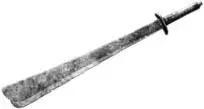
Four
‘Forgive me,’ Thomas said. He had not meant to speak aloud. He spoke to the crucifix above the main altar in the little church of Saint Sardos that stood beneath Castillon d’Arbizon’s castle. Thomas was kneeling. He had lit six candles, which burned on the side altar of Saint Agnes where a young, pale-faced priest counted bright new genoins.
‘Forgive you for what, Thomas?’ the priest asked.
‘He knows.’
‘And you don’t?’
‘Just say the masses for me, father,’ Thomas said.
‘For you? Or for the men you killed?’
‘For the men I killed,’ Thomas said. ‘I gave you enough money?’
‘You gave me enough to build another church,’ the priest said. ‘Remorse is an expensive thing, Thomas.’
Thomas half smiled. ‘They were soldiers, father,’ he said, ‘and they died in obedience to their lord. I owe them peace in their afterlife, don’t I?’
‘Their liege lord was an adulterer,’ Father Levonne said sternly. Father Medous, his predecessor, had died a year before and the Bishop of Berat had sent Father Levonne as his replacement. Thomas had suspected the newcomer was a spy, because the bishop was a supporter of the Count of Berat, who had once possessed Castillon d’Arbizon and wanted the town back, but it seemed the bishop had sent the priest in order to rid himself of a nuisance. ‘I pricked the bishop’s conscience,’ Levonne had explained to Thomas.
‘Pricked it?’
‘I preached against sin, sire,’ Levonne had said, ‘and the bishop did not like my sermons.’
Since that conversation, Father Levonne had learned to call Thomas by his name, and Thomas had come to depend on the young, earnest priest for advice, and whenever he returned from a foray into enemy territory he would come to the church of Saint Sardos, say confession and pay for masses to be said for the men he had killed. ‘So if the Count of Villon was an adulterer,’ Thomas now asked, ‘he deserved to be castrated and killed? Father, you’d have to put half this town to death if that was true.’
‘Only a half?’ Father Levonne asked, amused. ‘Speaking for myself,’ he went on, ‘I would have preferred God to determine Villon’s punishment, but perhaps God chose you as his instrument?’
‘Did I do wrong?’
‘You tell me.’
‘Just say the masses, father,’ Thomas said.
‘And the Countess of Labrouillade,’ Father Levonne went on, ‘a brazen adulteress, is here in the castle.’
‘You want me to kill her?’
‘God will choose her fate,’ the priest said gently, ‘but the Count of Labrouillade may not wait for that. He will try to reclaim her. The town prospers, Thomas. I don’t want it invaded by Labrouillade or by anyone else. Send her away, far away.’
‘Labrouillade won’t come here,’ Thomas said vengefully, ‘he’s nothing but a fat fool and he fears me.’
‘The Count of Berat is also a fool,’ the priest said, ‘and a rich one, and a brave one, and he’s looking for allies to fight against you.’
‘Only because he’s lost every time he’s tried before,’ Thomas said. Thomas had captured the town and castle from the count, who had twice tried to reclaim the property, and twice had been defeated. The town lay on the southern edge of the County of Berat and was protected by high stone walls and by the river that flowed around three sides of the crag on which the town was sited. Above the town was the castle on the crag’s high rocky summit. The castle was not large, but it was high and strong, and protected by a new gatehouse, turreted and massive, which replaced the old entrance that had been battered down by a cannon. The Earl of Northampton’s banner, the lion and stars, flew from the gatehouse and from the keep, but everyone knew that it was Thomas of Hookton, le Bâtard , who had taken the castle. It was the base from which his Hellequin could ride east and north into enemy country.
‘The count will try again,’ Levonne warned Thomas, ‘and Labrouillade might help him next time.’
‘And not just Labrouillade,’ Thomas said grimly.
‘You’ve made new enemies?’ Father Levonne asked with mock scorn. ‘I am astonished.’
Thomas gazed up at the crucifix. The church of Saint Sardos had been poor when he first captured the town, but now it glittered with wealth. The saints’ statues were newly painted and hung with semi-precious beads. The Virgin wore a crown of silver. The candlesticks and vessels on the altar were silver and gilt; the walls glowed with pictures of Saint Sardos, Saint Agnes, and the final judgement. Thomas had paid for it all, just as he had paid to decorate the other two churches in the town. ‘I’ve made new enemies,’ he said, still gazing at the blood-spattered Christ on his gilt-bronze cross, ‘but first, father, tell me what saint kneels in a cleared patch of snow?’
‘In a cleared patch of snow?’ Father Levonne asked, amused, then saw that Thomas was serious. ‘Saint Eulalia, perhaps?’
‘Eulalia?’ Thomas asked.
‘She was persecuted,’ Father Levonne said, ‘and her tormentors threw her naked into the street to shame her, but the Blessed Lord sent a snowstorm to cover her nakedness.’
‘No,’ Thomas said, ‘this was a man, and the snow seemed to avoid him.’
‘Saint Wenceslaus then? The king? We’re told the snow melted where he walked.’
‘This was a monk,’ Thomas said, ‘and in the picture I saw he’s kneeling on the grass and there’s snow all around him, but none on him.’
‘Where was this picture ?’
Thomas told him of meeting the Pope in Avignon’s Salle des Herses, and of the old painting on the wall there. ‘The man wasn’t alone,’ he said, ‘there’s another monk watching from a cottage, and Saint Peter is handing him a sword.’
‘Ah,’ Father Levonne said in an oddly regretful tone, ‘Peter’s sword.’
Thomas frowned at the priest’s tone. ‘You make it sound evil. Is the sword bad?’
Father Levonne ignored the question. ‘You say you met the Holy Father? How was he?’
‘Frail,’ Thomas said, ‘and very gracious.’
‘We’re asked to pray for his health,’ the priest said, ‘which I do. He’s a good man.’
Читать дальшеИнтервал:
Закладка:
Похожие книги на «1356 (Special Edition)»
Представляем Вашему вниманию похожие книги на «1356 (Special Edition)» списком для выбора. Мы отобрали схожую по названию и смыслу литературу в надежде предоставить читателям больше вариантов отыскать новые, интересные, ещё непрочитанные произведения.










Обсуждение, отзывы о книге «1356 (Special Edition)» и просто собственные мнения читателей. Оставьте ваши комментарии, напишите, что Вы думаете о произведении, его смысле или главных героях. Укажите что конкретно понравилось, а что нет, и почему Вы так считаете.