Robert Walker - City for Ransom
Здесь есть возможность читать онлайн «Robert Walker - City for Ransom» весь текст электронной книги совершенно бесплатно (целиком полную версию без сокращений). В некоторых случаях можно слушать аудио, скачать через торрент в формате fb2 и присутствует краткое содержание. Жанр: Старинная литература, на английском языке. Описание произведения, (предисловие) а так же отзывы посетителей доступны на портале библиотеки ЛибКат.
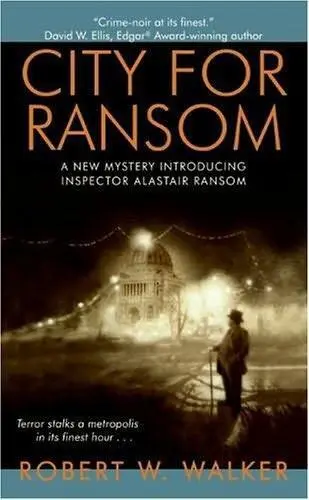
- Название:City for Ransom
- Автор:
- Жанр:
- Год:неизвестен
- ISBN:нет данных
- Рейтинг книги:5 / 5. Голосов: 1
-
Избранное:Добавить в избранное
- Отзывы:
-
Ваша оценка:
City for Ransom: краткое содержание, описание и аннотация
Предлагаем к чтению аннотацию, описание, краткое содержание или предисловие (зависит от того, что написал сам автор книги «City for Ransom»). Если вы не нашли необходимую информацию о книге — напишите в комментариях, мы постараемся отыскать её.
City for Ransom — читать онлайн бесплатно полную книгу (весь текст) целиком
Ниже представлен текст книги, разбитый по страницам. Система сохранения места последней прочитанной страницы, позволяет с удобством читать онлайн бесплатно книгу «City for Ransom», без необходимости каждый раз заново искать на чём Вы остановились. Поставьте закладку, и сможете в любой момент перейти на страницу, на которой закончили чтение.
Интервал:
Закладка:
“Yes, and now, tonight,” began Griff, “he leads you off on a wild goose chase to stand bait at the park.”
“To rid himself of my being on hand tonight at Gabby’s birthday celebration. I just know he heard Jane—Tewes and I—speaking of it.”
“He’s cunning enough to know it’d take an elephant gun or Moose Muldoon to bring you down.”
“Well . . . Muldoon’s been set straight.”
For a moment, they thought the carriage would go over on its side.
“Do you think he’d really dare strike the ladies in their home with Tewes present?”
“He’s likely planning to kill them in their beds.”
“Why do you think so?”
“Sensationalism, to strike a deeper fear in us.”
“To say we’re unsafe when snug in our own beds?”
“And he’s reaching higher along the scale of respectability, money, and social standing.”
CITY FOR RANSOM
309
“He really is a hatter, isn’t he?”
“A mad hatter.”
“But why? Just because he can?”
“He alone holds the answer to that.”
“Faster!” Griff now shouted even as he tumbled about the cab, banging into every wall and door.
“Get what you can from the whip!” shouted Ransom.
The wheels spun madly beneath them, screaming, and on sharp turns now left the ground.
Stumpf did it . . . he did it all. All the killing, that is.
Waldo didn’t even feel he was inside his body when Stumpf, at that moment of taking life—willed the essence of the dying into him. It was why Stumpf liked mirrors, liked killing them before mirrors.
He’d done it both ways of course, but the thrill and satisfaction became so much more heightened if he could stare into both their eyes and those of Stumpf at the moment of knowing. The moment of crossing over. From behind the garrote, before a mirror, he could watch all the eyes!
Stumpf could more readily act at the instant of death to net and catch the soul within his web of wanton lust if he knew the very instant of the soul’s leap toward the next dimension. Wanton lust—part and parcel of it—as Stumpf so enjoyed what Waldo Denton’s body felt at the death leap.
Stumpf got Waldo an erection—that true insignia, emblem of corporeal lust.
“All of life becomes more pronounced and clear and worth the discovery if a man is in his right spirit,” Waldo Denton was telling Jane Francis Ayers and Gabby—as he’d come to know their names. He’d first been attracted to them and their home that night he’d killed Purvis at the train station. The same night he’d seen Gabby and Cliffton kissing below the lights near the lagoon. He’d been kicking around the fair, wandering, exploring, one side of him determining good locations for murder as he scouted for Stumpf, while 310
ROBERT W. WALKER
another side looked and hungered for precisely what that college boy had—a future, yes, but also a future with a beautiful young thing. A promise at a fulfilling life of happiness, warmth, camaraderie, mutual respect, admiration . . . mutual pleasure. All things denied him.
How was it Shakespeare put it in the performance he’d seen at the theater? “If I cannot prove a hero, I shall prove a villain. . . .” Words to take heart in. Words that indicated to Waldo that he might be considered important by everyone he came into contact with, that he could affect their lives.
But even more, the play was the thing that informed Waldo that deviant thoughts belonged to others as well—even to the most famous author on the planet, William Shakespeare.
Giving hope that he perhaps was not so absolutely alone and craven as he’d felt since childhood.
Stumpf and Waldo had wormed past the Tewes threshold to allow Stumpf his chance. That was what Waldo had become—a pimp to the base Stumpf inside, who didn’t even want to spare Gabrielle, the most beautiful and innocent and pleasant and most kind person ever to address Waldo. She, and the idea of a future relationship with Gabby, remained the only thought in his head that held Stumpf back now.
So far as the older woman was concerned, Waldo had no compunction about turning Stumpf loose. When he did let Sleepeck Stumpf have his way, however, it would destroy any hairsbreadth of a chance to make Gabby see him . . . really see him and eventually see into him and eventually somehow understand the so-called Phantom of the Fair.
Enough to eventually accept his past ill behavior and forgive his transgressions as only unconditional love could free the beast within to slink off elsewhere, back to its den to hiber-nate and hopefully die of its own loneliness and suffering, which, in the end, Waldo Denton had no part of and had never had any part of—and so his mind raced at the moment of sipping tea and chewing birthday cake.
She had invited Waldo in—dear, sweet angelic Gabrielle, CITY FOR RANSOM
311
with the smiling assent of the woman Gabrielle called Aunt Jane.
Earlier . . . it seemed moments earlier, he’d watched Gabby as her aunt called out to her, something about being out alone after dark, that a girl of her social position, being the daughter of Dr. Tewes, she must not give the gossip columnists a scrap to chew on, not even an appearance of impropriety. It had made him, sitting atop the coach, impulsively call back, “Oh, no ma’am, no one could think ill of Miss Gabrielle, never!” That’s when Gabby smiled at him, her attention like a balm. Each time he drove her home from the university, where he intentionally waited, turning away other fares, Gabby gave him all her attentiveness while he spoke of one day owning his own farm and farm animals. No one had ever given him what she offered—attentiveness.
At that moment when she’d smiled up at him, what he saw in her was so amazing. She’d alighted from the cab like a floating princess with hidden wand and invisible wings.
She’d forgotten her umbrella in his cab, a memory lapse or an invitation? Of course, she wanted him to return. She liked men like him. Cliffton hadn’t been so different from him, not really? Save his prospects . . . save his dreams. But even in their dreams, especially their secret desires, to have this angel of earth caress their bodies and touch their trapped souls . . . even in this, he was no different from Purvis. The two of them clinging on Gabrielle, wanting the honor of being possessed by her, and wanting the honor of being able to address her as an enduring love, as her closest intimate on earth, to call Gabby his. And if he could not have her, surely . . . surely Stumpf would.
Waldo wanted more for her . . . more for himself . . .
more for them. He hated the thought of the empty, lost, acrid feeling in his soul whenever Stumpf finished with him.
Whenever Stumpf was sated and fulfilled, the bastard thing just went away with his good feelings and left Waldo empty and lonelier than ever, a depression like a dull blunt knife 312
ROBERT W. WALKER
cutting directly into his brain and soul. If the word lie had a face, it was Stumpf.
She had left the umbrella, rushing off after pushing the few coins through the slot to his fingertips, touching him as she did so. He’d savored the touch and lingered there, noticing the umbrella, but then he’d been distracted by the aunt’s calling out from the porch.
He’d momentarily forgotten about Gabby’s umbrella, thinking he must get in somewhere, while another part of him gave an evil thought to how he’d manipulated Chicago’s so-called premiere detective away from the Tewes home and the Tewes women he’d been watching now for some time, sending Ransom to stand about in the rain at the lagoon on the say-so of Waldo Denton!
He wondered how it’d play in the press to people if it were known that while Stumpf killed someone tonight, the great detective and “last survivor” of Haymarket spent his night in the park!
Читать дальшеИнтервал:
Закладка:
Похожие книги на «City for Ransom»
Представляем Вашему вниманию похожие книги на «City for Ransom» списком для выбора. Мы отобрали схожую по названию и смыслу литературу в надежде предоставить читателям больше вариантов отыскать новые, интересные, ещё непрочитанные произведения.









Обсуждение, отзывы о книге «City for Ransom» и просто собственные мнения читателей. Оставьте ваши комментарии, напишите, что Вы думаете о произведении, его смысле или главных героях. Укажите что конкретно понравилось, а что нет, и почему Вы так считаете.