Mark Gilleo - Sweat
Здесь есть возможность читать онлайн «Mark Gilleo - Sweat» весь текст электронной книги совершенно бесплатно (целиком полную версию без сокращений). В некоторых случаях можно слушать аудио, скачать через торрент в формате fb2 и присутствует краткое содержание. Жанр: Старинная литература, на английском языке. Описание произведения, (предисловие) а так же отзывы посетителей доступны на портале библиотеки ЛибКат.
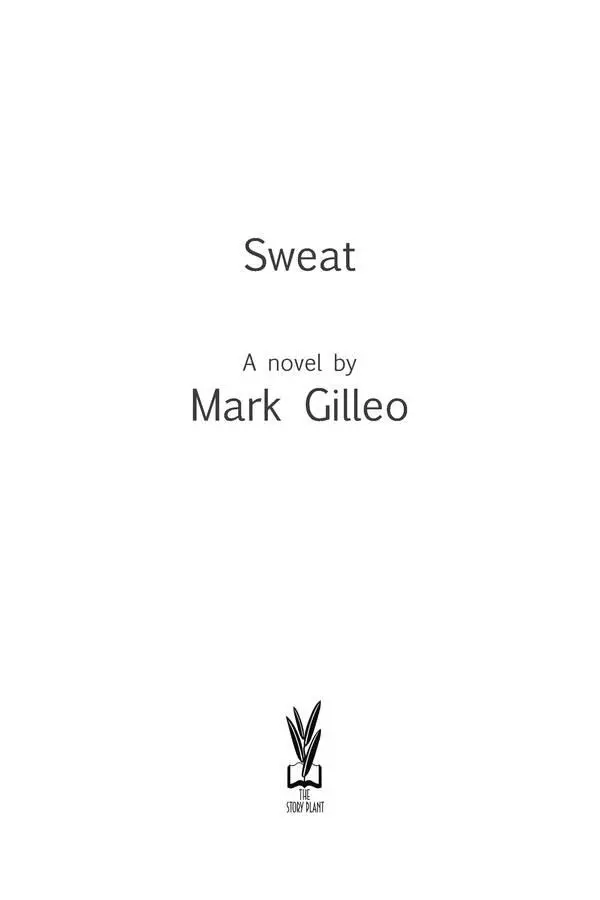
- Название:Sweat
- Автор:
- Жанр:
- Год:неизвестен
- ISBN:нет данных
- Рейтинг книги:3 / 5. Голосов: 1
-
Избранное:Добавить в избранное
- Отзывы:
-
Ваша оценка:
Sweat: краткое содержание, описание и аннотация
Предлагаем к чтению аннотацию, описание, краткое содержание или предисловие (зависит от того, что написал сам автор книги «Sweat»). Если вы не нашли необходимую информацию о книге — напишите в комментариях, мы постараемся отыскать её.
From the sweatshops of Saipan to the most powerful offices in Washington, SWEAT rockets through a story of crime and consequences with lightning pacing, a twisting plot, an unforgettable cast of characters, and wry humor. It is another nonstop thriller from one of the most exciting new voices in suspense fiction.
Sweat — читать онлайн бесплатно полную книгу (весь текст) целиком
Ниже представлен текст книги, разбитый по страницам. Система сохранения места последней прочитанной страницы, позволяет с удобством читать онлайн бесплатно книгу «Sweat», без необходимости каждый раз заново искать на чём Вы остановились. Поставьте закладку, и сможете в любой момент перейти на страницу, на которой закончили чтение.
Интервал:
Закладка:
Senator Day opened the envelope without trepidation, still engrossed in a conversation over a proposal to build a high-level bioresearch center in downtown Boston. A future incubation and study mecca for the most deadly pathogens and viruses known to man, many of which the human species itself created. The highly contested topic was gaining momentum on both sides of the political coin. Local Massachusetts politicians were focusing on the prestige and jobs the center would bring. Everyone else with an IQ above the water temperature on Cape Cod was estimating the potential death toll should a mishap occur in the state’s most populated area. As it was with most decisions, it was coming down to the important issue—money. The senator was weighing the proposals, and presently having his ear chewed off by the Mayor of Hopkinton, a small town west of Boston that was also bidding for the project.
The senator pulled the contents from the envelope and read it slowly, continuing his conversation on the bioresearch center, pausing between sentences. Yes, he understood the ramifications of a biological agent being released into downtown Boston. Yes, he understood the potential death toll could be in the tens of thousands. Yes, he could only hope that if such a calamity occurred it would claim his ex-wife as a victim. When the senator reached the second paragraph of the letter, his chest tightened, and he cut the conversation short. “I will have to get back to you, Mayor.”
The senator felt light-headed as he staggered out of his personal office. The reception room was smaller than his office with two short hallways running in either direction. The senator could hear members of his staff at work as he approached the front desk. His face pale, he asked his faithful Senate page and unfaithful office entertainment a simple question. “Where did this envelope come from?”
Both employees looked at the senator with concern. Identifying shock doesn’t require formal medical training. The senator stared at his dumbfounded dynamic duo and asked the question again, this time with enough force to arouse the rest of the staff in the adjacent rooms from their chairs. Dana looked around the reception office as if she didn’t understand the question, which may have, in fact, been the case.
Doug the Page, wearing a stunning pink bow tie, answered. “Someone dropped it off about ten minutes ago. An Asian man. Very polite. Very well-spoken.”
“Did you get a name?”
“No, he didn’t leave one.”
The senator asked for a description of the delivery person, someone doing his best to give the senator an early morning coronary. Doug the Page and Dana the Bimbo gave matching descriptions of an unremarkable Asian figure. Senator Day, face now turning crimson, walked back to his office and slammed the door behind him hard enough to put a crack in the small transom above the frame. Staring at the letter, fuming with anger, Senator Day picked up the phone.
Two floors below, Walter Payton, a seasoned veteran of the Capitol Police force, looked down at the blinking red light. A direct line ran from every Senate office in the building to the main security booth, and when the red light flashed, per protocol, everything else became less of a priority. Walter Payton raised his hand trying to silence the madness going on around him and picked up the phone.
“This is Senator Day, I’m ordering a security shutdown.”
“Good morning, Senator. This is Walter Payton of the Capitol Police. What is the situation, exactly?”
“I’m requesting the immediate apprehension of a suspicious person on the premises. Consider the suspect armed and dangerous,” the senator added with authority, almost delirious.
“Are you injured, sir?”
“No.”
“Is anyone on your staff injured?”
“No.”
“Was anything stolen or vandalized?”
“No. No crime has been committed…and I was hoping we could avoid one.”
Most of the calls to the “bat phone” were lame, emergencies only in title, urgent only to an elite group whose lives ran as smoothly as the Tokyo subway system. The adrenaline the red light had stirred in Officer Payton was already subsiding. “Could you provide a description of the suspect?” the uniformed officer asked, almost bored.
“An Asian man, approximately five-foot-six.”
Walter Payton looked down the crowded entrance hall and scratched his head. “An Asian man, you say?”
“Yes, goddamn it, an Asian man. Did I stutter?!” Senator Day screamed, saliva dripping from the corner of his mouth as he leaned over his desk and yelled into his phone.
Walter Payton peered out of his steel and Plexiglas security booth at the sea of black heads surrounding him. The newly formed group calling themselves Asian Welfare and Rights Equality (AWARE) was packed into the hall, five abreast. It had taken the busload of bag-toting citizens nearly an hour to go through security, and the main hallway on the first floor of the Hart Senate Building was now buzzing like a standing-room only sushi buffet. Senator Hamilton from the state of Washington scrambled to lead the group to an open committee room, trying desperately to appease his constituents. Showing full support for the oppressed minority was a PR opportunity no elected official dared to miss.
The AWARE group was on a mission, and Kazu Ito was their poster boy. The murder of a young straight-A student, who was then framed by the police, had galvanized the Asian rim population in the Seattle suburb. They had had enough. Trumped-up moving violations by the police at four times the rate of the white population had been the tip of the iceberg. Then came Kazu, the latest of three innocent lives snuffed out in their prime.
Not even a cross-country bus trip with a toilet that overflowed twice between Minneapolis and Chicago would prevent Kazu Ito’s father from having time on the Hill. But being herded like cattle into the cramped hall, going through repeated security checks, and being forced to stand for hours was making the bus ride, stink and all, seem pleasant by comparison. The AWARE group had passed impatient. Waiting for an empty committee room only further emboldened them and strengthened their push for greater protection of their equal rights.
Senator John Day, in a rage, was about to throw gasoline on the AWARE fire, and then fart for good measure.
Walter Payton looked at the scene in the hall and shook his head ever so slightly, the phone still in his ear. “All right, Senator. I can hold them, but you better hurry.”
Senator Day grabbed Doug the Page by the arm and headed for the first floor. Dana followed as fast as her three-inch heels would allow, her ankles on the verge of snapping as she swayed and bounced her way to forward momentum.
Senator Day roared out of the elevator, turned the corner, and came to a screeching halt, mouth open. Five-dozen jet-black heads turned toward the senator as Officer Payton stuck out his hand, pointed, and announced to the hall. “There he is.”
Senator Hamilton, grabbing the opportunity to make the news for doing something positive, stopped berating Officer Payton who remained in the comfortable confines of his bulletproof glass booth.
It was a small riot in terms of people involved and duration, but a riot nonetheless. Senator Hamilton, sixty-two and in need of all the voting support he could get, tried to simultaneously calm the AWARE group while dishing out a tongue-lashing the likes of which Senator Day hadn’t received since he burned down a neighbor’s horse barn when he was twelve. Senator Hamilton articulated his threats with grace, the overtures for impeachment with eloquence. He deftly redirected the real mission of the AWARE group, confidently guaranteeing that the newly labeled “most racist senator in modern U.S. politics” would never be re-elected. The senator from Washington, milking the chance to be a hero to his constituents, worked toward a climax. He huffed and puffed, postured and postulated. But before he could deliver the punch line to his impromptu speech, Senator Day, the target of his ire, simply turned and walked away.
Читать дальшеИнтервал:
Закладка:
Похожие книги на «Sweat»
Представляем Вашему вниманию похожие книги на «Sweat» списком для выбора. Мы отобрали схожую по названию и смыслу литературу в надежде предоставить читателям больше вариантов отыскать новые, интересные, ещё непрочитанные произведения.











Обсуждение, отзывы о книге «Sweat» и просто собственные мнения читателей. Оставьте ваши комментарии, напишите, что Вы думаете о произведении, его смысле или главных героях. Укажите что конкретно понравилось, а что нет, и почему Вы так считаете.