Gary Jennings - Aztec
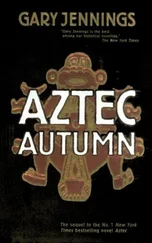
Здесь есть возможность читать онлайн «Gary Jennings - Aztec» весь текст электронной книги совершенно бесплатно (целиком полную версию без сокращений). В некоторых случаях можно слушать аудио, скачать через торрент в формате fb2 и присутствует краткое содержание. Жанр: Старинная литература, на английском языке. Описание произведения, (предисловие) а так же отзывы посетителей доступны на портале библиотеки ЛибКат.
- Название:Aztec
- Автор:
- Жанр:
- Год:неизвестен
- ISBN:нет данных
- Рейтинг книги:4 / 5. Голосов: 1
-
Избранное:Добавить в избранное
- Отзывы:
-
Ваша оценка:
Aztec: краткое содержание, описание и аннотация
Предлагаем к чтению аннотацию, описание, краткое содержание или предисловие (зависит от того, что написал сам автор книги «Aztec»). Если вы не нашли необходимую информацию о книге — напишите в комментариях, мы постараемся отыскать её.
"Anyone who reads, anyone who still lusts for adventure or that book you can't put down, will glory in Aztec."--Los Angeles Times
Aztec
Aztec
Aztec — читать онлайн бесплатно полную книгу (весь текст) целиком
Ниже представлен текст книги, разбитый по страницам. Система сохранения места последней прочитанной страницы, позволяет с удобством читать онлайн бесплатно книгу «Aztec», без необходимости каждый раз заново искать на чём Вы остановились. Поставьте закладку, и сможете в любой момент перейти на страницу, на которой закончили чтение.
Интервал:
Закладка:
I felt more than the simple grief of bereavement at losing my friend Cozcatl. After all, I had been responsible for him during much of his life, ever since he was my nine-year-old slave in Texcóco. Even that long ago, I had almost caused his execution by involving him in my campaign of revenge against the Lord Joy. Later he had lost his manhood while trying to protect me from Chimali. It was my asking Ticklish to be mother to Cocóton that had made her so avidly desire real motherhood. My near involvement in her adultery had been only narrowly averted by circumstances, not by my rectitude or my fidelity to Cozcatl. And even there I had done him a disservice. If I had bedded and impregnated Ticklish, Cozcatl might yet have lived a while, and even happily, before the God-Eating took him....
Thinking on it, I have often wondered why Cozcatl ever called me friend.
Cozcatl's widow served as sole director of their school and staff and students for some few months longer. Then she came to term and was delivered of her accursed bastard. And cursed it was; it was born dead; I do not recall even hearing what sex it would have been. When Ticklish was able to walk, she also, like Cozcatl, went walking away from Tenochtítlan, and never came back. The school was left in confusion, with the unpaid teachers threatening to leave too. So Motecuzóma, vexed by the prospect of having his servants return to him only half polished, ordered that the abandoned property be confiscated. He put it in the charge of teacher-priests recruited from a calmécac, and the school continued in existence as long as the city did.
* * *
It was about that time that my daughter Cocóton passed her seventh birthday, and we all of course ceased to call her Small Crumb. After much deliberation and choosing and discarding, I decided to add to her birth-date name of One Grass the adult name of Zyanya-Nochipa, which means Always Always, said first in her mother's language of Lóochi and repeated in Náhuatl. I thought the name, besides being a memorial of her mother, was also an adroit employment of the words. Zyanya-Nochipa could be taken to mean "always and forever," an enhancement of her mother's already lovely name. Or it could be rendered "always Always," to signify that the mother lived on in the person of her daughter.
With Béu's help, I arranged a grand feast of celebration for the day, to be attended by the little neighbor Chacalin and all my daughter's other playmates and all their parents. Beforehand, however, Béu and I escorted the birthday girl to have her new name inscribed in the register of citizens just come of that age. We did not go to the man who was in charge of keeping track of the general population. Since Zyanya-Nochipa was the daughter of an Eagle Knight, we went to the palace tonalpoqui, who kept the register of the more elite citizens.
The old archivist grumbled, "It is my duty and my privilege to use the divinatory tonalmatl book and my interpretive talents to select the child's name. Things have come to a grievous pass when parents can simply come and tell me what the new citizen is to be named. That is unseemly enough, Lord Knight, but you are also naming the poor young one with two words exactly alike, though in two different languages, and neither word means any thing. Could you not at least call her Always Bejeweled or something comprehensible like that?"
"No," I said firmly. "It is to be Always Always."
He said in exasperation, "Why not Never Never? How do you expect me to draw upon her page in the registry a name symbol of abstract words? How do I make a picture of meaningless noises?"
"They are not at all meaningless," I said with feeling. "However, Lord Tonalpoqui, I anticipated such an objection, so I presumed to work out the word pictures myself. You see, I have been a scribe in my time." I gave him the drawing I had made, which showed a hand gripping an arrow on which was perched a butterfly.
He read aloud the words for hand, arrow, and butterfly, "Noma, chichiquili, papalotl. Ah, I see you are acquainted with the useful mode of picturing a thing for its sound alone. Yes, indeed, the first sounds of the three words do make no-chi-pa. Always."
He said it with admiration, but it appeared to cost him some effort. I finally grasped that the old sage was afraid of being cheated of his full fee, since I had left him nothing but copywork to do. So I paid him an amount of gold dust that would amply have reimbursed him for several days' and nights' study of his divinatory books. At that, he ceased grumbling and set to work most eagerly. With the proper ceremony and care, and the use of rather more brushes and reeds than were really necessary, he painted on a panel page of his register the symbols: the One single dot and the tufty Grass and then my concocted symbols for Always, twice repeated. My daughter was formally named: Ce-Malinali Zyanya-Nochipa, to be familiarly called Nochipa.
At the time Motecuzóma acceded to the throne, his capital of Tenochtítlan had only half recovered from the devastation of the great flood. Thousands of its inhabitants were still living crowded together with those of their relations fortunate enough to have a roof, or were living in shanties heaped up of the flood's rubble or of maguey leaves brought from the mainland, or were living even more wretchedly in canoes moored under the city causeways. It took two more years before Tenochtítlan's reconstruction, with adequate buildings for tenement dwelling, was completed under Motecuzóma's direction.
And while he was at it, he built a fine new palace for himself, on the bank of the canal at the southern side of The Heart of the One World. It was the most immense, most luxurious, most elaborately decorated and furnished palace ever built anywhere in these lands, far grander even than Nezahualpili's city and country estates combined. As a matter of fact, Motecuzóma, determined to outdo Nezahualpili, built himself an elegant country palace as well, on the outskirts of that lovely mountain town of Quaunahuac which I have several times admiringly mentioned. As you may know, my lord friars, if any of you have visited there since your Captain-General Cortés appropriated that palace for his residence, its gardens must be the most vast, the most magnificent and variously planted of any you have ever seen anywhere.
The reconstruction of Tenochtítlan might have proceeded more rapidly—the whole of the Mexíca domain might have been better assured of prosperity—had not Motecuzóma been engaged, almost from the moment he took the throne, in supervising one war after another, and sometimes two wars at once. As I have told, he immediately launched a new assault on the oft-beset but always obdurate land of Texcala. But that was only to be expected. A newly installed Uey-Tlatoani almost always began his reign by flexing his muscles, and that land was, by virtue of its propinquity and stolid enmity, the most natural victim, however little value it would have been to us if we ever had conquered it.
But at the same time, Motecuzóma was first beginning to lay out the gardens of his country estate, and he heard from some traveler about a distinctive tree which grew only in one small region of northern Uaxyacac. The traveler rather unimaginatively called it just "the red-painted-flower tree," but his description of it intrigued the Revered Speaker. That tree's blossoms, said the man, were so constructed that they looked exactly like miniature human hands, their red petals or lobes making fingers with an apposed thumb. Unfortunately, said the traveler, the sole habitat of that tree was also the home ground of one paltry tribe of the Mixteca. Its chief or elder, an old man named Suchix, had reserved the red-painted-flower tree to himself—three or four big ones growing about his squalid hut—and kept his tribesmen forever searching for and uprooting any new sprouts that might dare to spring up elsewhere.
Читать дальшеИнтервал:
Закладка:
Похожие книги на «Aztec»
Представляем Вашему вниманию похожие книги на «Aztec» списком для выбора. Мы отобрали схожую по названию и смыслу литературу в надежде предоставить читателям больше вариантов отыскать новые, интересные, ещё непрочитанные произведения.









Обсуждение, отзывы о книге «Aztec» и просто собственные мнения читателей. Оставьте ваши комментарии, напишите, что Вы думаете о произведении, его смысле или главных героях. Укажите что конкретно понравилось, а что нет, и почему Вы так считаете.