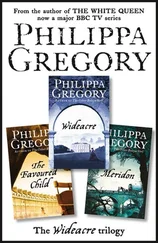
Philippa Gregory - Meridon
Здесь есть возможность читать онлайн «Philippa Gregory - Meridon» — ознакомительный отрывок электронной книги совершенно бесплатно, а после прочтения отрывка купить полную версию. В некоторых случаях можно слушать аудио, скачать через торрент в формате fb2 и присутствует краткое содержание. Жанр: Старинная литература, на английском языке. Описание произведения, (предисловие) а так же отзывы посетителей доступны на портале библиотеки ЛибКат.
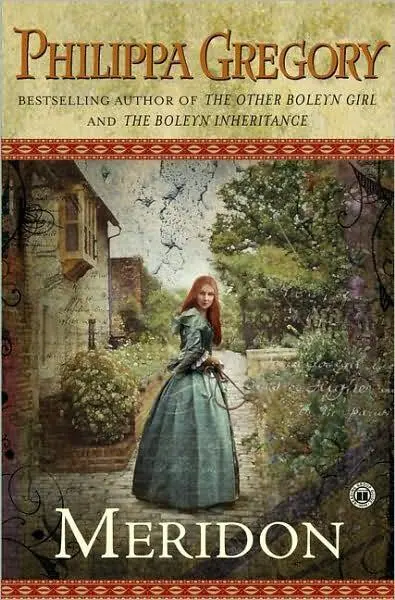
- Название:Meridon
- Автор:
- Жанр:
- Год:неизвестен
- ISBN:нет данных
- Рейтинг книги:4 / 5. Голосов: 1
-
Избранное:Добавить в избранное
- Отзывы:
-
Ваша оценка:
Meridon: краткое содержание, описание и аннотация
Предлагаем к чтению аннотацию, описание, краткое содержание или предисловие (зависит от того, что написал сам автор книги «Meridon»). Если вы не нашли необходимую информацию о книге — напишите в комментариях, мы постараемся отыскать её.
From Publishers Weekly
With this elaborate tapestry of a young woman's life, the Lacey family trilogy ( Wideacre and The Favored Child ) comes to a satisfying conclusion. Meridon is the lost child whose legacy is the estate of Wideacre. She and her very different sister, Dandy, were abandoned as infants and raised in a gypsy encampment, learning horsetrading and other tricks of survival. They are indentured to a circus master whose traveling show is made successful by Meridon's equestrian flair and Dandy's seductive beauty on the trapeze. Meridon's escape from this world is fueled by pregnant Dandy's murder and her own obsessive dream of her ancestral home. After claiming Wideacre, Meridon succumbs for a while to the temptation of the "quality" social scene, but eventually she comes to her senses, and, in a tricky card game near the end of the saga, triumphs fully. The hard-won homecoming in this historical novel is richly developed and impassioned.
Meridon — читать онлайн ознакомительный отрывок
Ниже представлен текст книги, разбитый по страницам. Система сохранения места последней прочитанной страницы, позволяет с удобством читать онлайн бесплатно книгу «Meridon», без необходимости каждый раз заново искать на чём Вы остановились. Поставьте закладку, и сможете в любой момент перейти на страницу, на которой закончили чтение.
Интервал:
Закладка:
He waited for a moment longer, but when I said nothing more he gently touched the top of my head, as you would carefully pat a sick dog. Then he went out of the room and left me alone.
19
I had thought it would be awkward speaking to James Fortescue again but I had not understood Quality manners. It seemed that if you were Quality, someone could rage and shriek at you and you could be deaf to their anger and their sorrow. Quality manners mean you only hear what suits you. Becky Miles called me to come down to drink a dish of tea with Mr Fortescue in the afternoon and he was in the parlour waiting for me, as if I had never sworn at him and screamed at him and blamed him for failing me.
Becky poured the tea for us both and handed me a cup. I kept a wary eye on James Fortescue and saw that he did not hold the plate under the cup and drink like that. He held them separately, one hand on each. I did not dare take a plate with a little cake on it as well. I did not think I could balance them all.
When he had finished, and Becky had cleared away he asked me to come with him to the dining room.
He had spread out a map on the dining-room table.
‘I can’t read,’ I said again.
He nodded. ‘I know that, Sarah,’ he said. ‘I can explain this to you. It’s a map of Wideacre, of the Wideacre estate.’
I stepped a little closer and saw it was a picture of land, like you would see if you were a buzzard, circling high above it.
‘Look,’ he said. ‘Wideacre is like a little bowl with the Downs on the south and west, and the Common to the north.’ His hand went a great sweep around the map and I saw the land was coloured green and brown.
‘Here we run a mixed farm,’ he said. ‘Much more fruit and vegetables than our neighbours because we have a skilled workforce who see the benefits of good profits. But we also farm sheep for their wool and meat, and a dairy herd.’
I nodded.
‘We grow our own fodder for the animals,’ he said. ‘As well as a lot of wheat which we sell locally and in the London market for bread.’
I nodded again.
‘It’s a most lovely country,’ he said, warmth creeping into his voice. ‘Here is Wideacre Hall, set in the middle of the parkland, d’you see Sarah? At the back of it is the Common: that’s free of fields for people to use for their own animals’ grazing, and for walking and gathering firewood or brushwood, taking small game and putting out hives. It’s bracken and gorse, some small pine trees, and in the valleys some beeches and oak trees and little streams.
‘Over here,’ he brushed the area south of the house, at the front, ‘here is the ornamental garden you see from the front window, a little rose garden, and a paddock. Then there is the woodland which stretches along the drive and right up to the road. There are some fields new planted here; but we’ve mostly kept it as a wood. This is your property, your mother wanted the parkland kept with the Hall. She played here when she was a little girl, by the side of the Fenny which runs through these woods, in the little pools and streams. She learned to tickle for trout, and she learned to swim with one of the village girls. In spring the woods are full of wild daffodils and bluebells. In summer there are little glades which are thick with purple and white violets.
‘Your boundary to the west is the Havering land.’ He pointed to a dotted line drawn on the map. ‘This map doesn’t show Havering Hall. It’s empty most of the year, the Havering family lives in London. They are distant kin to you,’ he said, ‘but they are only here in summer.’
‘Is this the village?’ I asked, pointing to a mess of little squares on the map on the right-hand side.
‘Yes,’ James Fortescue said. ‘If you come out of Wideacre Hall drive and turn right you go along the lane to the Chichester road, see? But if you go out of the drive and turn left you go down to Acre village.
‘Most of it is along the main street. The church is here,’ he pointed. ‘It was struck by lightning and has a new spire. The cottages on this side of the street were damaged in the same storm and some of them are new. But those on the other side of the street are older. In need of repair, too. Opposite the church is the vicarage – you’ll find the vicar, Dr Reed, does not wholly approve of the way Acre runs itself! And there are cottages down these lanes towards the common land. Then there are squatter houses, where people have come to make their homes but have not properly built yet.’
I nodded. I knew about squatters’ rights. It was one of the reasons the parish wardens always moved Da on. They were always in a terror that he would claim that he had been there long enough to be a member of the parish and claim parish relief.
‘Don’t you move them on?’ I asked shrewdly.
James shook his head. ‘No,’ he said. ‘We give them a chance to work and they can either take a wage – not a very big one – or take a share in the profits of the estate. If they plan to stay then they join the corporation. We don’t have so many people that we cannot afford to take them on.’
‘And where does that man live?’ I asked. ‘The manager?’
‘That’s Will Tyacke,’ James said. ‘He comes from a very old family. They have been here longer than the Laceys. His cousin was the first manager here after your mother died. But he had an accident and Will came over from another estate and took over. He lives in the manager’s cottage,’ he pointed to one of the little squares on the map set a little back from the main street. The blue wriggling line which indicated the River Fenny went past the back of the cottage through a small paddock.
‘And south of the road and south of the village are fields,’ James said. ‘Some of them are resting, we leave them to grass every third year. Some of them are fruit fields – it’s very sunny there. Most of them are wheat fields. This is a famous estate for high wheat production,’ he paused for a moment. ‘There were battles about that in the past,’ he said. ‘In the old days, before it was a corporation. There was a riot, and arson when the Laceys were sending wheat out of the country but starving their workforce. But that changed when we started sharing the crop, and sharing the profits. We have fields as high up the hill as the horses can pull the plough. Above that the land is only good for sheep to graze. It’s very high land – up there on the Downs – covered with short sweet grass, and in springtime there are thousands of little flowers and orchids. There are great flocks of butterflies up there: tiny blue and yellow ones. The larks sing very loudly, and there are curlews.’ He broke off.
‘You love it here,’ I said. ‘Why don’t you live here?’
He shook his head. ‘I was going to marry your mother and build a house here with her,’ he said. ‘Once she was gone, I could not have lived here alone.’ He was silent for a moment.
‘I visit often,’ he said. ‘Will Tyacke knows more about farming than I will ever learn, but I like to come down to keep an eye on things.’
I nodded, looking at my land, spread out over James’s map like a patchwork of rich fabrics.
‘You will need to learn the land,’ he said quietly. ‘Now you are here, you will need to know your way around, and the crops that are planted, and the people who live and work here.’
I stared down at the map. It was as if it were my future laid out here, not just fields.
‘I suppose I will,’ I said.
‘Perhaps you would like to ride out, look round it,’ James suggested. ‘Will Tyacke said he would come this afternoon and take you out for a ride if you would like that. He is the best man to show you the land, and he knows everyone.’
Читать дальшеИнтервал:
Закладка:
Похожие книги на «Meridon»
Представляем Вашему вниманию похожие книги на «Meridon» списком для выбора. Мы отобрали схожую по названию и смыслу литературу в надежде предоставить читателям больше вариантов отыскать новые, интересные, ещё непрочитанные произведения.
Обсуждение, отзывы о книге «Meridon» и просто собственные мнения читателей. Оставьте ваши комментарии, напишите, что Вы думаете о произведении, его смысле или главных героях. Укажите что конкретно понравилось, а что нет, и почему Вы так считаете.