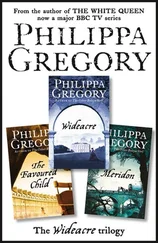
Philippa Gregory - Meridon
Здесь есть возможность читать онлайн «Philippa Gregory - Meridon» — ознакомительный отрывок электронной книги совершенно бесплатно, а после прочтения отрывка купить полную версию. В некоторых случаях можно слушать аудио, скачать через торрент в формате fb2 и присутствует краткое содержание. Жанр: Старинная литература, на английском языке. Описание произведения, (предисловие) а так же отзывы посетителей доступны на портале библиотеки ЛибКат.
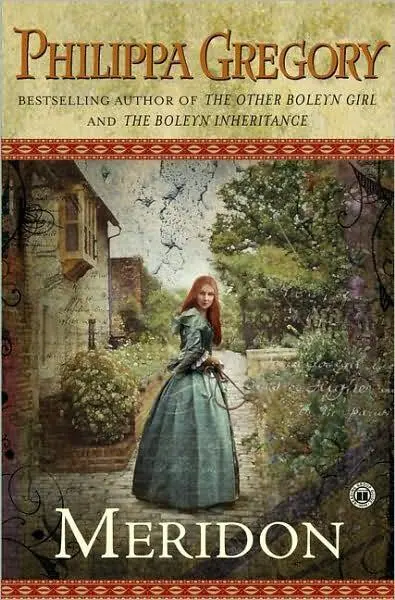
- Название:Meridon
- Автор:
- Жанр:
- Год:неизвестен
- ISBN:нет данных
- Рейтинг книги:4 / 5. Голосов: 1
-
Избранное:Добавить в избранное
- Отзывы:
-
Ваша оценка:
Meridon: краткое содержание, описание и аннотация
Предлагаем к чтению аннотацию, описание, краткое содержание или предисловие (зависит от того, что написал сам автор книги «Meridon»). Если вы не нашли необходимую информацию о книге — напишите в комментариях, мы постараемся отыскать её.
From Publishers Weekly
With this elaborate tapestry of a young woman's life, the Lacey family trilogy ( Wideacre and The Favored Child ) comes to a satisfying conclusion. Meridon is the lost child whose legacy is the estate of Wideacre. She and her very different sister, Dandy, were abandoned as infants and raised in a gypsy encampment, learning horsetrading and other tricks of survival. They are indentured to a circus master whose traveling show is made successful by Meridon's equestrian flair and Dandy's seductive beauty on the trapeze. Meridon's escape from this world is fueled by pregnant Dandy's murder and her own obsessive dream of her ancestral home. After claiming Wideacre, Meridon succumbs for a while to the temptation of the "quality" social scene, but eventually she comes to her senses, and, in a tricky card game near the end of the saga, triumphs fully. The hard-won homecoming in this historical novel is richly developed and impassioned.
Meridon — читать онлайн ознакомительный отрывок
Ниже представлен текст книги, разбитый по страницам. Система сохранения места последней прочитанной страницы, позволяет с удобством читать онлайн бесплатно книгу «Meridon», без необходимости каждый раз заново искать на чём Вы остановились. Поставьте закладку, и сможете в любой момент перейти на страницу, на которой закончили чтение.
Интервал:
Закладка:
‘What d’you think you’re doing?’
I turned and saw a working man in the doorway, blocking the moonlight, his face half in shadow. A rugged, ordinary face, tanned with weather, smile-lines etched in white around the eyes. Brown eyes, broad mouth, a shock of brown hair, ordinary homespun clothes. A yeoman farmer, not Quality.
‘What are you doing here?’ I replied, as if it were my own house and he a trespasser.
He did not challenge my right to ask.
‘I was watching in the woods,’ he said politely. ‘There’ve been some poachers, out from Petersfield I think. Using gin traps. I hate gin traps. I was waiting to catch them and see them off when I saw you riding down the drive. Why are you here?’
I shrugged, a helpless weary little gesture. ‘I’m looking for Wide,’ I said, too tired to think of a better story. Too sick at heart to construct a clever lie. ‘I’m looking for Wide, I belong there,’ I said.
‘This is Wideacre,’ he replied. ‘Wideacre estate, and this is Wideacre Hall. Is this the place you are looking for?’
My knees buckled a little under me, and I would have fallen but he was at my side in one swift step, and he caught me and carried me out to the night air and dumped me gently on the terrace step and loosened my shirt at the throat. The gleam of the gold clasp on the string caught his eye and he touched it gently with one stubby forefinger.
‘What’s that?’ he said.
I unfastened it and drew it out. ‘It was a necklace of rose pearls,’ I said. ‘But all the pearls were sold. My ma left it to me when she died, I was to show it when they came looking for me.’ I paused. ‘No one ever came looking for me,’ I said desolately. ‘So I kept it.’
He turned it over in his hands and held it close so that he could read the inscription. ‘John and Celia,’ he said. He spoke the names like an incantation. As if he had known what the inscription would say before he looked at it in the moonlight, as if he knew that was what he would see in the old worn gold. ‘Who are they?’
‘I don’t know,’ I said. ‘Maybe my ma knew, but she never told me. Nor my da. I was to keep it and show it when they came looking for me. But no one ever came.’
‘What’s your name?’ he asked. His gaze under the ragged fringe of hair was acute.
I was about to say ‘Meridon’, but then I paused. I did not want to be Meridon any more. Mamselle Meridon the bareback rider, Mamselle Meridon on that damned killer trapeze. I did not want the news of Gower’s Amazing Show to reach me here, I wanted to leave that life far behind me as if it had never been. As if there had been no Meridon, and no Dandy. As if Meridon were as dead as Dandy. As if neither of them had ever been.
‘My name is Sarah,’ I said. I cast about in my mind for a surname. ‘Sarah Lacey.’
18
The next few days were a blur, like a dream you cannot remember on waking. I remember that the man who hated gin traps picked me up in his arms, and that I was so tired and so weary that I did not object to his touch but was a little comforted by it, like a hurt animal. He took me inside the house and there were two other people there, a man and a woman, and there were a great many quick questions and answers over my head as it rested on his shoulder. The homespun tickled my cheek and felt warm and smelled reassuring, like hay. He carried me upstairs and the woman put me to bed, taking away my clothes and bringing me a nightgown of the finest lawn I had ever seen in my life with exquisite white thread embroidery on the cuffs and hem and around the neck. I was too tired to object that I was a vagrant and a gypsy brat and that a corner of the stables would have suited me well. I tumbled into the great bed and slept without dreams.
I was ill then for two days. The man who hated gin traps brought a doctor from Chichester and he asked me how I felt, and why I would not eat. He asked me where I had come from and I feigned forgetfulness and told them I could remember nothing except my name and that I was looking for Wide. He left a draught of some foul medicine, which I took the precaution of throwing out of the window whenever it was brought to me, and advised that I should be left to rest.
The man who hated gin traps told me that Sea was safe in the stables and eating well. ‘A fine horse,’ he said, as if that might encourage me to tell of how I got him, how a dirty-faced, stunned gypsy brat came to be riding a first-class hunter.
‘Yes,’ I said, and I turned my face away from his piercing eyes and closed my eyelids as if I would sleep.
I did sleep. I slept and woke to the sunlight on the ceiling of the bedroom and the windows half open and the smell of early roses and the noise of pigeons cooing. I dozed again and when I woke the woman brought me some broth and a glass of port wine and some fruit. I ate the soup but left the rest and slept again. In all of those days I saw nothing but the light on the ceiling of the bed chamber and ate nothing but soup.
Then one morning I woke and did not feel lazy and tired. I stretched, a great cat-like stretch with my toes pointing down to the very foot of the bed and my arms outflung, and then I threw back the fine linen sheets and went over to the window and pushed it open.
It had rained in the night and the sunlight was glinting on the wet leaves and flowers of the rose garden and mist was steaming off the paddock. Immediately below me the paving stones of the terrace were dark yellow where they were damp, paler where they were drying. Beyond the terrace was the gravel of the drive where Sea and I had ridden that first night, beyond that the rose garden with pretty shaped flower-beds and small paths running between them. A delicate little summerhouse of white painted wood stood to my left; as I watched, a swallow swooped in through the open doorway, beak full of mud, nest-building.
Beyond the rose garden was a smooth green paddock with Sea, very confident, cropping the grass with his tail raised, a stream of silver behind him. He looked well, perhaps even a little plumper for his stay in a good stable with fine hay and spring grass to eat. Behind the paddock was a dark mass of trees in fresh new foliage, copper beeches red as rose-shoots, oak trees with leaves so fresh and green they were lime coloured, and sweet green beeches with branches like layers of draper’s silk. And beyond the woods, ringing the valley like a guardian wall, were the high clear slopes of the Downs, striped with white chalk at the dry stream beds, soft with green and lumpy with coppices on the lower slopes. The sky above them was a clear promising blue, rippled with cloud. For the first time in my life I looked at the horizon and knew that I was home. I had arrived at Wide, at last.
There was a clatter of horse’s hooves and I looked along the drive and saw the man who hated gin traps riding up towards the house, sitting easily on an ungainly cob. A working horse, a farmer’s horse, able to pull a cart or a plough or work as a hunter on high days and holidays. He scanned the windows and pulled up the horse as he saw me.
‘Good morning,’ he said pleasantly, and doffed his cap. In the morning sunlight his hair showed gleams of bronze, his face young, smiling. I guessed he was about twenty-four; but a serious young man appears older. For a moment I thought of Jack, who would have been a child at forty as long as he was under his father’s thumb; but then I pushed the thought away from me. Jack was gone. Robert Gower was gone. Meridon and her sister were gone. I could remember nothing.
‘Good morning,’ I said. I leaned out of the window to see his horse better. He sat well, as if he spent much of his day in the saddle. ‘A good working horse,’ I observed.
‘Nothing like your beauty,’ he replied. ‘But he does well enough for me. Are you feeling better? Are you well enough to dress and come downstairs?’
Читать дальшеИнтервал:
Закладка:
Похожие книги на «Meridon»
Представляем Вашему вниманию похожие книги на «Meridon» списком для выбора. Мы отобрали схожую по названию и смыслу литературу в надежде предоставить читателям больше вариантов отыскать новые, интересные, ещё непрочитанные произведения.




Обсуждение, отзывы о книге «Meridon» и просто собственные мнения читателей. Оставьте ваши комментарии, напишите, что Вы думаете о произведении, его смысле или главных героях. Укажите что конкретно понравилось, а что нет, и почему Вы так считаете.