Philippa Gregory - The Constant Princess
Здесь есть возможность читать онлайн «Philippa Gregory - The Constant Princess» — ознакомительный отрывок электронной книги совершенно бесплатно, а после прочтения отрывка купить полную версию. В некоторых случаях можно слушать аудио, скачать через торрент в формате fb2 и присутствует краткое содержание. Жанр: Старинная литература, на английском языке. Описание произведения, (предисловие) а так же отзывы посетителей доступны на портале библиотеки ЛибКат.
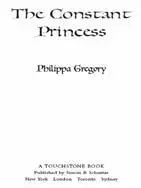
- Название:The Constant Princess
- Автор:
- Жанр:
- Год:неизвестен
- ISBN:нет данных
- Рейтинг книги:4 / 5. Голосов: 1
-
Избранное:Добавить в избранное
- Отзывы:
-
Ваша оценка:
The Constant Princess: краткое содержание, описание и аннотация
Предлагаем к чтению аннотацию, описание, краткое содержание или предисловие (зависит от того, что написал сам автор книги «The Constant Princess»). Если вы не нашли необходимую информацию о книге — напишите в комментариях, мы постараемся отыскать её.
Thus, bestselling author Philippa Gregory introduces one of her most unforgettable heroines: Katherine of Aragon. Known to history as the Queen who was pushed off her throne by Anne Boleyn, here is a Katherine the world has forgotten: the enchanting princess that all England loved. First married to Henry VIII's older brother, Arthur, Katherine's passion turns their arranged marriage into a love match; but when Arthur dies, the merciless English court and her ambitious parents -- the crusading King and Queen of Spain -- have to find a new role for the widow. Ultimately, it is Katherine herself who takes control of her own life by telling the most audacious lie in English history, leading her to the very pinnacle of power in England.
Set in the rich beauty of Moorish Spain and the glamour of the Tudor court, The Constant Princess presents a woman whose constancy helps her endure betrayal, poverty, and despair, until the inevitable moment when she steps into the role she has prepared for all her life: Henry VIII's Queen, Regent, and commander of the English army in their greatest victory against Scotland.
From Publishers Weekly
As youngest daughter to the Spanish monarchs and crusaders King Ferdinand and Queen Isabella, Catalina, princess of Wales and of Spain, was promised to the English Prince Arthur when she was three. She leaves Spain at 15 to fulfill her destiny as queen of England, where she finds true love with Arthur (after some initial sourness) as they plot the future of their kingdom together. Arthur dies young, however, leaving Catalina a widow and ineligible for the throne. Before his death, he extracts a promise from his wife to marry his younger brother Henry in order to become queen anyway, have children and rule as they had planned, a situation that can only be if Catalina denies that Arthur was ever her lover. Gregory's latest (after Earthly Joys) compellingly dramatizes how Catalina uses her faith, her cunning and her utter belief in destiny to reclaim her rightful title. By alternating tight third-person narration with Catalina's unguarded thoughts and gripping dialogue, the author presents a thorough, sympathetic portrait of her heroine and her transformation into Queen Katherine. Gregory's skill for creating suspense pulls the reader along despite the historical novel's foregone conclusion.
The Constant Princess — читать онлайн ознакомительный отрывок
Ниже представлен текст книги, разбитый по страницам. Система сохранения места последней прочитанной страницы, позволяет с удобством читать онлайн бесплатно книгу «The Constant Princess», без необходимости каждый раз заново искать на чём Вы остановились. Поставьте закладку, и сможете в любой момент перейти на страницу, на которой закончили чтение.
Интервал:
Закладка:
He stepped back into the room, caught her into his arms and kissed her heartily. “You shall have whoever you want to serve you. Anyone you want, always. Send for her at once, I know she is the finest of women. And appoint Lady Elizabeth Boleyn, too. She is returning to court after her confinement. She has had another girl.”
“What will she call her?” Catalina asked, diverted.
“Mary, I think. Or Anne. I can’t remember. Now, about our dance…”
She beamed at him. “I shall get a troupe of musicians and dancers and if I can order soft-voice zephyrs I will do that too.” She laughed at the happiness in his face. She could hear the tramp of his guard coming to the door. “See you at Mass!”
I married him for Arthur, for my mother, for God, for our cause, and for myself. But in a very little while I have come to love him. It is impossible not to love such a sweet-hearted, energetic, good-natured boy as Harry in these first years of his reign. He has never known anything but admiration and kindness, he expects nothing less. He wakes happy every morning, filled with the confident expectation of a happy day. And, since he is king, and surrounded by courtiers and flatterers, he always has a happy day. When work troubles him or people come to him with disagreeable complaints he looks around for someone to take the bother of it away from him. In the first few weeks it was his grandmother who commanded. Slowly, I make sure that it is to me that he hands the burdens of ruling the kingdom.
The Privy Councilors learn to come to me to ascertain what the king would think. It is easier for them to present a letter or a suggestion, if he has been prepared by me. The courtiers soon know that anything that encourages him to go away from me, anything that takes the country away from the alliance with Spain will displease me, and Harry does not like it when I frown. Men seeking advantage, advocates seeking help, petitioners seeking justice—all learn that the quickest way to a fair, prompt decision is to call first at the queen’s rooms and then wait for my introduction.
I never have to ask anyone to handle him with tact. Everyone knows that a request should come to him as it were fresh, for the first time. Everyone knows that the self-love of a young man is very new and very bright and should not be tarnished. Everyone takes a warning from the case of his grandmother who is finding herself put gently and implacably to one side, because she openly advises him, because she takes decisions without him, because once—foolishly—she scolded him. Harry is a king so careless that he will hand over the keys of his kingdom to anyone he trusts. The trick for me is to make sure that he trusts only me.
I make sure that I never blame him for not being Arthur. I taught myself—in the seven years of widowhood—that God’s will was done when He took Arthur from me, and there is no point in blaming those who survive when the best prince is dead. Arthur died with my promise in his ears and I think myself very lucky indeed that marriage to his brother is not a vow that I have to endure but one I can enjoy.
I like being queen. I like having pretty things and rich jewels and a lapdog, and assembling ladies-in-waiting whose company is a pleasure. I like paying María de Salinas the long debt of her wages and watching her order a dozen gowns and fall in love. I like writing to Lady Margaret Pole and summoning her to my court, falling into her arms and crying for joy to see her again, and having her promise that she will be with me. I like knowing that her discretion is absolute; she never says one word about Arthur. But I like it that she knows what this marriage has cost me and why I have done it. I like her watching me make Arthur’s England even though it is Harry on the throne.
The first month of marriage is nothing for Harry but a round of parties, feasts, hunts, outings, pleasure trips, boating trips, plays, and tournaments. Harry is like a boy who has been locked up in a schoolroom for too long and is suddenly given a summer holiday. The world is so filled with amusement for him that the least experience gives him great pleasure. He loves to hunt—and he had never been allowed fast horses before. He loves to joust and his father and grandmother had never even allowed him in the lists. He loves the company of men of the world who carefully adapt their conversation and their amusements to divert him. He loves the company of women but—thank God—his childlike devotion to me holds him firm. He likes to talk to pretty women, play cards with them, watch them dance and reward them with great prizes for petty feats—but always he glances towards me to see that I approve. Always he stays at my side, looking down at me from his greater height with a gaze of such devotion that I can’t help but be loving towards him for what he brings me and in a very little while, I can’t help but love him for himself.
He has surrounded himself with a court of young men and women who are such a contrast to his father’s court that they demonstrate by their very being that everything has changed. His father’s court was filled with old men, men who had been through hard times together, some of them battle-hardened; all of them had lost and regained their lands at least once. Harry’s court is filled with men who have never known hardship, never been tested.
I have made a point of saying nothing to criticize either him or the group of wild young men that gather around him. They call themselves the “Minions” and they encourage each other in mad bets and jests all the day and—according to gossip—half the night too. Harry was kept so quiet and so close for all his childhood that I think it natural he should long to run wild now, and that he should love the young men who boast of drinking bouts and fights, and chases and attacks, and girls who they seduce, and fathers who pursue them with cudgels. His best friend is William Compton, the two go about with their arms around each other’s shoulders as if ready to dance or braced for a fight for half the day. There is no harm in William, he is as great a fool as the rest of the court, he loves Harry as a comrade, and he has a mock-adoration of me that makes us all laugh. Half of the Minions pretend to be in love with me and I let them dedicate verses and sing songs to me and I make sure that Harry always knows that his songs and poems are the best.
The older members of the court disapprove and have made stern criticisms of the king’s boisterous lads, but I say nothing. When the councilors come to me with complaints I say that the king is a young man and youth will have its way. There is no great harm in any one of the comrades; when they are not drinking, they are sweet young men.
One or two, like the Duke of Buckingham who greeted me long ago, or the young Thomas Howard, are fine young men who would be an ornament to any court. My mother would have liked them. But when the lads are deep in their cups they are noisy and rowdy and excitable as young men always are and when they are sober they talk nonsense. I look at them with my mother’s eyes and I know that they are the boys who will become the officers in our army. When we go to war their energy and their courage is just what we will need. The noisiest, most disruptive young men in peacetime are exactly the leaders I will need in time of war.
Lady Margaret, the king’s grandmother, having buried a husband or two, a daughter-in-law, a grandson and finally her own precious prince, was a little weary of fighting for her place in the world and Catalina was careful not to provoke her old enemy into open warfare. Thanks to Catalina’s discretion, the rivalry between the two women was not played overtly—anyone hoping to see Lady Margaret abuse her granddaughter-in-law as she had insulted her son’s wife was disappointed. Catalina slid away from conflict.
Читать дальшеИнтервал:
Закладка:
Похожие книги на «The Constant Princess»
Представляем Вашему вниманию похожие книги на «The Constant Princess» списком для выбора. Мы отобрали схожую по названию и смыслу литературу в надежде предоставить читателям больше вариантов отыскать новые, интересные, ещё непрочитанные произведения.


Обсуждение, отзывы о книге «The Constant Princess» и просто собственные мнения читателей. Оставьте ваши комментарии, напишите, что Вы думаете о произведении, его смысле или главных героях. Укажите что конкретно понравилось, а что нет, и почему Вы так считаете.