Philippa Gregory - The Constant Princess
Здесь есть возможность читать онлайн «Philippa Gregory - The Constant Princess» — ознакомительный отрывок электронной книги совершенно бесплатно, а после прочтения отрывка купить полную версию. В некоторых случаях можно слушать аудио, скачать через торрент в формате fb2 и присутствует краткое содержание. Жанр: Старинная литература, на английском языке. Описание произведения, (предисловие) а так же отзывы посетителей доступны на портале библиотеки ЛибКат.
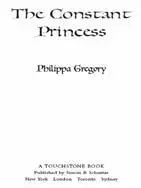
- Название:The Constant Princess
- Автор:
- Жанр:
- Год:неизвестен
- ISBN:нет данных
- Рейтинг книги:4 / 5. Голосов: 1
-
Избранное:Добавить в избранное
- Отзывы:
-
Ваша оценка:
The Constant Princess: краткое содержание, описание и аннотация
Предлагаем к чтению аннотацию, описание, краткое содержание или предисловие (зависит от того, что написал сам автор книги «The Constant Princess»). Если вы не нашли необходимую информацию о книге — напишите в комментариях, мы постараемся отыскать её.
Thus, bestselling author Philippa Gregory introduces one of her most unforgettable heroines: Katherine of Aragon. Known to history as the Queen who was pushed off her throne by Anne Boleyn, here is a Katherine the world has forgotten: the enchanting princess that all England loved. First married to Henry VIII's older brother, Arthur, Katherine's passion turns their arranged marriage into a love match; but when Arthur dies, the merciless English court and her ambitious parents -- the crusading King and Queen of Spain -- have to find a new role for the widow. Ultimately, it is Katherine herself who takes control of her own life by telling the most audacious lie in English history, leading her to the very pinnacle of power in England.
Set in the rich beauty of Moorish Spain and the glamour of the Tudor court, The Constant Princess presents a woman whose constancy helps her endure betrayal, poverty, and despair, until the inevitable moment when she steps into the role she has prepared for all her life: Henry VIII's Queen, Regent, and commander of the English army in their greatest victory against Scotland.
From Publishers Weekly
As youngest daughter to the Spanish monarchs and crusaders King Ferdinand and Queen Isabella, Catalina, princess of Wales and of Spain, was promised to the English Prince Arthur when she was three. She leaves Spain at 15 to fulfill her destiny as queen of England, where she finds true love with Arthur (after some initial sourness) as they plot the future of their kingdom together. Arthur dies young, however, leaving Catalina a widow and ineligible for the throne. Before his death, he extracts a promise from his wife to marry his younger brother Henry in order to become queen anyway, have children and rule as they had planned, a situation that can only be if Catalina denies that Arthur was ever her lover. Gregory's latest (after Earthly Joys) compellingly dramatizes how Catalina uses her faith, her cunning and her utter belief in destiny to reclaim her rightful title. By alternating tight third-person narration with Catalina's unguarded thoughts and gripping dialogue, the author presents a thorough, sympathetic portrait of her heroine and her transformation into Queen Katherine. Gregory's skill for creating suspense pulls the reader along despite the historical novel's foregone conclusion.
The Constant Princess — читать онлайн ознакомительный отрывок
Ниже представлен текст книги, разбитый по страницам. Система сохранения места последней прочитанной страницы, позволяет с удобством читать онлайн бесплатно книгу «The Constant Princess», без необходимости каждый раз заново искать на чём Вы остановились. Поставьте закладку, и сможете в любой момент перейти на страницу, на которой закончили чтение.
Интервал:
Закладка:
“Everyone saw that he was in love with you.”
“No they didn’t. Everyone saw that we were together, as a prince and princess. Everyone saw that he came to my bedroom only as he had been ordered. No more. No one can say what went on behind the bedroom door. No one but me. And I say that he was impotent. Who are you to deny that? Do you dare to call me a liar?”
The older woman bowed her head to gain time. “If you say so,” she said carefully. “Whatever you say, Infanta.”
“Princess.”
“Princess,” the woman repeated.
“And I do say it. It is my way ahead. Actually, it is your way ahead too. We can say this one, simple thing and stay in England, or we can return to Spain in mourning and become next to nobody.”
“Of course, I can tell them what you wish. If you wish to say your husband was impotent and you are still a maid, then I can say that. But how will this make you queen?”
“Since the marriage was not consummated, there can be no objection to me marrying Prince Arthur’s brother Harry,” Catalina said in a hard, determined voice.
Doña Elvira gasped with shock at this next stage.
Catalina pressed on. “When this new emissary comes from Spain, you may inform him that it is God’s will and my desire that I be Princess of Wales again, as I always have been. He shall speak to the king. He shall negotiate, not my widow’s jointure but my next wedding.”
Doña Elvira gaped. “You cannot make your own marriage!”
“I can,” Catalina said fiercely. “I will, and you will help me.”
“You cannot think that they will let you marry Prince Harry?”
“Why should they not? The marriage with his brother was not consummated. I am a virgin. The dowry to the king is half paid. He can keep the half he already has, and we can give him the rest of it. He need not pay my jointure. The contract has been signed and sealed; they need only change the names, and here I am in England already. It is the best solution for everyone. Without it I become nothing; you certainly are nobody. Your ambition, your husband’s ambition, will all come to nothing. But if we can win this then you will be the mistress of a royal household, and I will be as I should be: Princess of Wales and Queen of England.”
“They will not let us!” Doña Elvira gasped, appalled at her charge’s ambition.
“They will let us,” Catalina said fiercely. “We have to fight for it. We have to be what we should be, nothing less.”
Princess-in-Waiting
Winter 1503
KING HENRY AND HIS QUEEN, driven by the loss of their son, were expecting another child, and Catalina, hoping for their favor, was sewing an exquisite layette of baby clothes before a small fire in the smallest room of Durham Palace in the early days of February 1503. Her ladies, hemming seams according to their abilities, were seated at a distance, Doña Elvira could speak privately.
“This should be your baby’s layette,” the duenna said resentfully under her breath. “A widow for a year, and no progress made. What is going to become of you?”
Catalina looked up from her delicate black-thread work. “Peace, Doña Elvira,” she said quietly. “It will be as God and my parents and the king decide.”
“Seventeen, now,” Doña Elvira said, stubbornly pursuing her theme, her head down. “How long are we to stay in this godforsaken country, neither a bride nor a wife? Neither at court nor elsewhere? With bills mounting up and the jointure still not paid?”
“Doña Elvira, if you knew how much your words grieve me, I don’t think you would say them,” Catalina said clearly. “Just because you mutter them into your sewing like a cursing Egyptian doesn’t mean I don’t hear them. If I knew what was to happen, I would tell you myself at once. You will not learn any more by whispering your fears.”
The woman looked up and met Catalina’s clear gaze.
“I think of you,” she said bluntly. “Even if no one else does. Even if that fool ambassador and that idiot the emissary does not. If the king does not order your marriage to the prince, then what is to become of you? If he will not let you go, if your parents do not insist on your return then what is going to happen? Is he just going to keep you forever? Are you a princess or a prisoner? It is nearly a year. Are you a hostage for the alliance with Spain? How long can you wait? You are seventeen—how long can you wait?”
“I am waiting,” Catalina said calmly. “Patiently. Until it is resolved.”
The duenna said nothing more, Catalina did not have the energy to argue. She knew that during this year of mourning for Arthur, she had been steadily pushed more and more to the margins of court life. Her claim to be a virgin had not produced a new betrothal as she had thought it would; it had made her yet more irrelevant. She was only summoned to court on the great occasions, and then she was dependent on the kindness of Queen Elizabeth.
The king’s mother, Lady Margaret, had no interest in the impoverished Spanish princess. She had not proved readily fertile, she now said she had never even been bedded, she was widowed and brought no more money into the royal treasury. She was of no use to the house of Tudor except as a bargaining counter in the continuing struggle with Spain. She might as well stay at her house in the Strand, as be summoned to court. Besides, My Lady the King’s Mother did not like the way that the new Prince of Wales looked at his widowed sister-in-law.
Whenever Prince Harry met her, he fixed his eyes on her with puppylike devotion. My Lady the King’s Mother had privately decided that she would keep them apart. She thought that the girl smiled on the young prince too warmly, she thought she encouraged his boyish adoration to serve her own foreign vanity. My Lady the King’s Mother was resentful of anyone’s influence on the only surviving son and heir. Also, she mistrusted Catalina. Why would the young widow encourage a brother-in-law who was nearly six years her junior? What did she hope to gain from his friendship? Surely she knew that he was kept as close as a child: bedded in his father’s rooms, chaperoned night and day, constantly supervised? What did the Spanish widow hope to achieve by sending him books, teaching him Spanish, laughing at his accent and watching him ride at the quintain, as if he were in training as her knight errant?
Nothing would come of it. Nothing could come of it. But My Lady the King’s Mother would allow no one to be intimate with Harry but herself, and she ruled that Catalina’s visits to court were to be rare and brief.
The king himself was kind enough to Catalina when he saw her, but she felt him eye her as if she were some sort of treasure that he had purloined. She always felt with him as if she were some sort of trophy—not a young woman of seventeen years old, wholly dependent on his honor, his daughter by marriage.
If she could have brought herself to speak of Arthur to her mother-in-law or to the king then perhaps they would have sought her out to share their grief. But she could not use his name to curry favor with them. Even a year since his death, she could not think of him without a tightness in her chest which was so great that she thought it could stop her breathing for very grief. She still could not say his name out loud. She certainly could not play on her grief to help her at court.
“But what will happen?” Doña Elvira continued.
Catalina turned her head away. “I don’t know,” she said shortly.
“Perhaps if the queen has another son with this baby, the king will send us back to Spain,” the duenna pursued.
Catalina nodded. “Perhaps.”
The duenna knew her well enough to recognize Catalina’s silent determination. “Your trouble is that you still don’t want to go,” she whispered. “The king may keep you as a hostage against the dowry money, your parents may let you stay; but if you insisted you could get home. You still think you can make them marry you to Harry; but if that was going to happen you would be betrothed by now. You have to give up. We have been here a year now and you make no progress. You will trap us all here while you are defeated.”
Читать дальшеИнтервал:
Закладка:
Похожие книги на «The Constant Princess»
Представляем Вашему вниманию похожие книги на «The Constant Princess» списком для выбора. Мы отобрали схожую по названию и смыслу литературу в надежде предоставить читателям больше вариантов отыскать новые, интересные, ещё непрочитанные произведения.


Обсуждение, отзывы о книге «The Constant Princess» и просто собственные мнения читателей. Оставьте ваши комментарии, напишите, что Вы думаете о произведении, его смысле или главных героях. Укажите что конкретно понравилось, а что нет, и почему Вы так считаете.