Jack Whyte - The Skystone
Здесь есть возможность читать онлайн «Jack Whyte - The Skystone» весь текст электронной книги совершенно бесплатно (целиком полную версию без сокращений). В некоторых случаях можно слушать аудио, скачать через торрент в формате fb2 и присутствует краткое содержание. Жанр: Старинная литература, на английском языке. Описание произведения, (предисловие) а так же отзывы посетителей доступны на портале библиотеки ЛибКат.
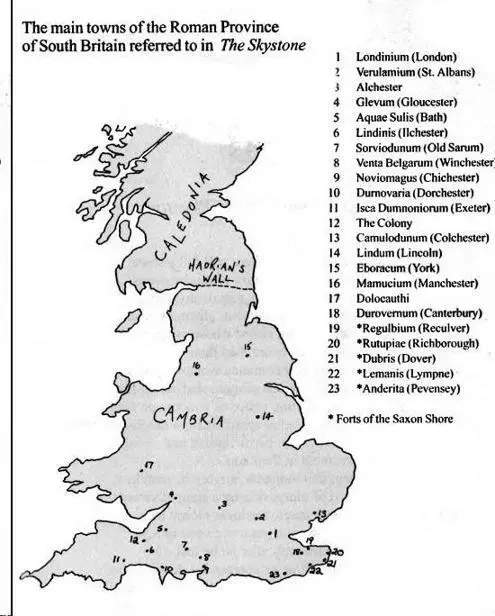
- Название:The Skystone
- Автор:
- Жанр:
- Год:неизвестен
- ISBN:нет данных
- Рейтинг книги:5 / 5. Голосов: 1
-
Избранное:Добавить в избранное
- Отзывы:
-
Ваша оценка:
The Skystone: краткое содержание, описание и аннотация
Предлагаем к чтению аннотацию, описание, краткое содержание или предисловие (зависит от того, что написал сам автор книги «The Skystone»). Если вы не нашли необходимую информацию о книге — напишите в комментариях, мы постараемся отыскать её.
During the days of the decaying Roman Empire, the legions of Britain struggle to preserve the ancient principles of loyalty and discipline-virtues embodied in the Roman general Caius Britannicus and his friend Publius Varrus, an ex-soldier turned ironsmith. Whyte re-creates the turbulence and uncertainty that marked fifth-century Britain and provides a possible origin for one of the greatest artifacts of Arthurian myth-the legendary sword Excalibur. Strong characters and fastidious attention to detail make this a good choice for most libraries and a sure draw for fans of the Arthurian cycle.
The Skystone — читать онлайн бесплатно полную книгу (весь текст) целиком
Ниже представлен текст книги, разбитый по страницам. Система сохранения места последней прочитанной страницы, позволяет с удобством читать онлайн бесплатно книгу «The Skystone», без необходимости каждый раз заново искать на чём Вы остановились. Поставьте закладку, и сможете в любой момент перейти на страницу, на которой закончили чтение.
Интервал:
Закладка:
I nodded. "Agreed. "
"Good man! And I know you'll look after ray sister. She's a fine girl, Publius. Make you a grand wife and fill this house up with babies. Sons, Publius, sons! that's what a man needs. You can't have too many children. Look at what happened to me. I lost three of them in a month, and now my oldest is going into the army. If he gets himself killed, my name will die with me. "
He lapsed into silence, and I covered the pause by pouring more wine, after which we sat quietly for a few minutes before he spoke again.
"Well? What was your question?"
"It was about your family. " I hesitated and then plunged on. "I have not expressed my regrets since you came home, and you have made no mention of what happened. What did happen in Africa, Caius?" His hand shook as he stared into the bottom of his cup, leaving my question unanswered for so long that I started to excuse myself for asking, but he waved me to silence.
"It was bad, Varrus. Very, very bad. " His voice was low-pitched and lifeless, but I had no trouble hearing him. "I had known that it would not be pleasant in the first place, and I wanted to leave my family here in Britain, where they would be safe, but Heraclita would have none of that. She was adamant that Britain was not safe, with the way the damned Saxons were stepping up their raids, and I have to admit that, at the time, I tended to agree with her.
"Anyway, she insisted that this time we would go as a family, I had always soldiered alone, as you know, leaving her with the children, and she had never complained. I told you about it in the letter I wrote to you before I left, you may remember. " I nodded. "Well, against my own better judgment, I gave in to her arguments. Numidia had been settled for centuries and there would be no danger there, she said. Like a fool I agreed, because it would be pleasant, for once, to have my family close by. It was pure selfishness. I rationalized every objection that came into my own mind and I shut my eyes to the thousand and one possibilities that could work against us.
"On the way over, as you know, we stopped in Rome, and then again in Constantinople. She hated Rome. So did I. It is a very depressing place nowadays. Since the court moved away it's been almost deserted. There is still a court there, nominally at least, maintained by the so-called Emperor of the West, but it's a joke. Everyone who is anyone lives in Constantinople now. There's really only the Mob left in Rome, and the civil service people who keep them as happy as they can. It is quite dreadful. Constantinople, on the other hand, is altogether different. Alien and orientally mysterious. We would have enjoyed being able to stay there longer. " His voice trailed away, his thoughts obviously on the enjoyment they had known there, and then he snapped himself back to his narrative.
"Well, we arrived in Numidia eventually, and at first it was... sufferable. My work load was considerable and I had very little time to spend with my family, even though they were within easy reach. And then, within six months of our arrival, I fell sick of this pestilence. Our best physicians were helpless against it, and it spread like ripples on water. Nothing could stop it. You know what our army physicians are like. The first thing they did was to ban the drinking of water, but it made no difference. Our men were falling like leaves in autumn. Hundreds died, hundreds. And those who did not die did not get better — they just seemed to hang on, getting sicker again the moment they seemed to begin making progress. I was one of these. There were times when I thought I was going to die, and there were times when I was afraid I might not die. It was indescribable. It weakened me close to death, but it did not take me.
"And yet it took my wife, my daughter Meleiia and my two youngest sons, Marcus and Paulus. All of them within one month. That was the month when I was at my worst, and they decided not to tell me about my family, for fear the news would kill me. The medics expected me to die every day, but God had decreed, for reasons of His own, that I should live, and I did. The rest of my time passed as a penance, with neither military nor civil distinction but without further disaster, either. And here I am. "
"I am sorry, my friend, " I said. "I knew nothing of this until I came here a few weeks ago. Then I was appalled. "
"Aye, well!" He sniffed loudly. "It was years ago and I have grown used to it, almost. Except for the sometime memories that spring out of hiding to assail me when I least expect them. "
"What about Picus, General? Was he not affected?"
"No. The sickness never touched him, and thank God he had the strength of boyhood to block his grief and memories. " There was nothing more I could say that would not have sounded foolish, so I said nothing further. He changed the subject abruptly.
"I wish you had been here when we arrived yesterday. I'd have been interested in your reaction to the table conversation at dinner last night. Fascinating discussion of a terrifying topic. Wish you could have heard it."
"What was the topic? Tell me. "
"We were talking of morale. "
"Morale? That's a terrifying topic?"
"Yes, it is. " The seriousness of his tone did not even dent my tolerant smile at first, but as he continued to speak it faded quickly.
"I tell you, Publius, the morale of the legions has never been so low, not even during the Invasion, although that only affected Britain. It's a sickness that affects the whole Empire. The rot is everywhere. Mutiny is widespread — no discipline, no order, no structure left with any meaning. More barbarian mercenaries in the army today than there have ever been before, although every one of them now calls himself a Roman citizen. You know how I feel about that. But it's the structure that's lacking, Varrus. The foundation. There are no standards left. No symbols of worthiness for the young people of the Roman world to align themselves with. No values that can be accepted on faith and relied upon. The whole world's falling into chaos. " He fell silent for a space, then, "Do you know, Publius, " he went on, "that if I had made just a bit of an effort in Africa before the pestilence struck us, I could have had myself elected Emperor of Rome by my own legions? Do you realize what that means?"
I stared at him, wide-eyed, wondering what was to come next. I had never seen him so despondent.
"I, Caius Britannicus, now sitting here in front of this fire, could have been appointed, or elected, Emperor of Rome by my own soldiers. And I had fifty thousand of them under my direct command in Africa, with many thousands more who would have marched to join my standard. " It never occurred to me that he might be exaggerating. I knew that he was telling me the absolute and literal truth. I waited for him to go on.
"The soldiers of Rome have no loyalty to Rome, Publius. The State has deprived them of too much, and has betrayed their interests and their trust too often. There's no focus for the soldier's loyalty, so that when he does find someone in authority with whom he can identify, he will adhere to that man's cause with total, suicidal devotion. I was approached very quietly by some of my officers. No specifically treasonous statements were made, but I was given to understand that the armies were ready to install someone in power who would look after their needs and see to the refurbishing of the frontiers. I could have done it, Publius, had I not fallen ill. "
"You mean, you considered it?"
He was gazing into his own mind. "Considered it? I suppose I did. Of course I did. I thought about it. "
"And would you have done it?"
"Would I have accepted the Empire?" His eyes drifted from me to the fire. "I don't know. Perhaps I might have. I was tempted, at first, but I saw the temptation for what it was, and I resisted it until I fell ill. I had been in Rome, you remember, and in Constantinople, and I had seen nothing there that inspired any loyalty in me to anyone. And when I looked at my men and saw the way they were being treated by the same government, I felt guilty and disloyal to them. " He paused again. "Rome is nothing without her legions, Varrus. And yet she has consistently treated them like dirt for two hundred years and more, now. The few fine emperors we have had have all been soldiers — apart from Claudius, whom I believe, nevertheless, to have been the finest of the lot. Soldiers understand the needs of Empire. They appreciate the need for discipline. They understand logistics and the laws of supply and demand. And they understand the need for strong communications over long distances, and the necessity of leaving command decisions to the discretion of the commander on the scene in times of emergency. Perhaps I would have made a good emperor."
Читать дальшеИнтервал:
Закладка:
Похожие книги на «The Skystone»
Представляем Вашему вниманию похожие книги на «The Skystone» списком для выбора. Мы отобрали схожую по названию и смыслу литературу в надежде предоставить читателям больше вариантов отыскать новые, интересные, ещё непрочитанные произведения.







Обсуждение, отзывы о книге «The Skystone» и просто собственные мнения читателей. Оставьте ваши комментарии, напишите, что Вы думаете о произведении, его смысле или главных героях. Укажите что конкретно понравилось, а что нет, и почему Вы так считаете.