Jack Whyte - The Singing Sword
Здесь есть возможность читать онлайн «Jack Whyte - The Singing Sword» весь текст электронной книги совершенно бесплатно (целиком полную версию без сокращений). В некоторых случаях можно слушать аудио, скачать через торрент в формате fb2 и присутствует краткое содержание. Жанр: Старинная литература, на английском языке. Описание произведения, (предисловие) а так же отзывы посетителей доступны на портале библиотеки ЛибКат.
- Название:The Singing Sword
- Автор:
- Жанр:
- Год:неизвестен
- ISBN:нет данных
- Рейтинг книги:3 / 5. Голосов: 1
-
Избранное:Добавить в избранное
- Отзывы:
-
Ваша оценка:
The Singing Sword: краткое содержание, описание и аннотация
Предлагаем к чтению аннотацию, описание, краткое содержание или предисловие (зависит от того, что написал сам автор книги «The Singing Sword»). Если вы не нашли необходимую информацию о книге — напишите в комментариях, мы постараемся отыскать её.
A sequel to The Skystone, this rousing tale continues Whyte's nuts-and-bolts, nitty gritty, dirt-beneath-the-nails version of the rise of Arthurian "Camulod" and the beginning of Britain as a distinct entity. In this second installment of the Camulod Chronicles, Whyte focuses even more strongly on a sense of place, carefully setting his characters into their historical landscape, making this series more realistic and believable than nearly any other Arthurian epic. As the novel progresses, and the Roman Empire continues to decay, the colony of Camulod flourishes. But the lives of the colony's main characters, Gaius Publius Varrus?ironsmith, innovator and soldier?and his brother-in-law, former Roman Senator Caius Britannicus, are not trouble-free, especially when their most bitter enemy, Claudius Seneca, reappears. Through these men's journals, the novel focuses on Camulod's pains and joys, including the moral and ethical dilemmas the community faces, the joining together of the Celtic and Briton bloodlines and the births of Uther Pendragon and Caius Merlyn Britannicus. Whyte provides rich detail about the forging of superior weaponry, the breeding of horses, the training of cavalrymen, the growth of a lawmaking body within the community and the origins of the Round Table. It all adds up to a top-notch Arthurian tale forged to a sharp edge in the fires of historical realism.
The Singing Sword — читать онлайн бесплатно полную книгу (весь текст) целиком
Ниже представлен текст книги, разбитый по страницам. Система сохранения места последней прочитанной страницы, позволяет с удобством читать онлайн бесплатно книгу «The Singing Sword», без необходимости каждый раз заново искать на чём Вы остановились. Поставьте закладку, и сможете в любой момент перейти на страницу, на которой закончили чтение.
Интервал:
Закладка:
What a mind, Father! At one step, Theodosius had preserved his sons' succession and doubled the Empire's chances of survival in the face of aggression, even though the doom-sayers immediately began bewailing the destruction of the Empire as men have known it. Neither Stilicho nor Rufinus will flag in their protection of their charges, and each will watch the other very closely. The Empire is in strong, but mutually inimical hands. Of course, Theodosius had no intention of dying so quickly. But die he has, and we must live now with the aftermath of his plotting.
I wish I could receive letters from you in return, but I must either ask you not to write or charge you to say nothing in your letters that might be construed by anyone as being treasonous or contumacious. The security I enjoy in my writings is now outgoing only. Anything coming to me must undergo close scrutiny by the enemies of Stilicho and his Western Empire.
Farewell. I will write again soon.
Picus
X
Astounded by this latest news from Picus, we girded ourselves and prepared for mighty things to happen. But nothing did. Life in our isolated Colony went on with its own placid rhythm, and I continued to work patiently and painstakingly with my own fledgling army. Then, in the following summer of 394, Picus's words came home to us with a new urgency.
Word came from Ullic's kingdom that pirates were landing in force along the south side of the estuary to the north of us, and we received three separate delegations from towns and villages to the south and west, beseeching our help in defending their lands from the Saxon and Frankish raiders who were descending on the coasts like swarms of flies. We also had it on good authority, from Bishop Alaric and his priests, that Saxon raiding parties had been wintering for the past two years on coastal lands to the south-east, not even bothering to sail home, and thereby catching advantage of the spring months to raid and plunder, thanks to the scarcity of military garrisons in that region. Things were going rapidly to Hades, and we were emerging as the only pocket of organized resistance in the whole south-west of Britain.
Ironically, our biggest difficulty now was maintaining our defensive role. The temptation to go marching off to war was very strong. I know; my own hot head was attuned to it. Only the level thinking of Caius Britannicus kept us in check. His was the voice that kept reminding us of the prime purposes of the Colony: self-sufficiency and survival.
Even so, we sent forces out to help our neighbours when we could, and it was this neighbourly attitude that finally brought us to the official notice of the military authorities.
We had known right from the outset that by maintaining a private military force — even if we did call it quasi-military — we were placing ourselves outside the law. In legal terms, all men within the Empire fit to bear arms were automatically soldiers and owed their loyalty to the Emperor himself. The fact that there might be three or even four Emperors at any one time was academic; it had no bearing on the law. It followed, therefore, that any private citizen equipping or maintaining an armed band of soldiers — even if they were private retainers — was, ipso facto, usurping the loyalty these men owed to the Emperor. He was depriving the Empire of troops.
The rich had, of course, been maintaining private "security forces" of their own for centuries. This was a known and accepted fact. In the space of a few years, however, in our quiet little Colony we had accumulated and trained, outfitted and equipped a genuine army of close to a thousand men. Three things had enabled us to do this in safety. The first, of course, was that our original plans had been devised with the full cognizance and support of several of the most senior officers in the armies of Britain. The second was tied directly to the first and was well understood by all concerned: our "army" was being prepared in accordance with a plan; it would not be mobilized, or become effective, until after the regular legions had been withdrawn from Britain, if such a catastrophe ever occurred. The third thing that had protected us was our isolation. We were far off the beaten track, and in the early years, at least, we had taken great pains to maintain secrecy and security.
As the years passed, however, circumstances changed. We worked our trainees hard, and their training demanded that they be uniformed, to give them that sense of belonging so necessary to military units. Then, as a diplomatic gesture to please our valuable ally in the north-west, King Ullic Pendragon, Britannicus changed the uniforms from plain homespun to a military red, giving our men a visibility beyond anything they had had before. That visibility became even more pronounced after the regular military authorities started pulling garrisons out of the forts in the west to concentrate them in the south-east on the Saxon Shore, in the area south of the Wall in the north and around Londinium, which had for a long time been the administrative centre of the region called South Britain. The removal of these garrisons led to increases in raiding, and that led us more and more into open defensiveness, increasing the risk of our being "noticed" officially. It had to happen sooner or later. It happened in 396.
One bright-eyed young staff officer in Londinium had heard about our exploits and saw in them an opportunity to impress his superiors with his efficiency. He prepared a report on "a rebellious group of bandits and deserters in the west, operating to the south of Glevum." We had his report almost before his superiors did, thanks to Plautus, who had been on duty at the time and saw the document. A small expedition was detached from one of the Cambrian garrisons to investigate the report, and it found no trace of any organized bandits south of Glevum.
It was sheer bad luck that the young officer in command of that expedition happened to dine with a magistrate in Glevum. In the course of that dinner he picked up some genuine information about us and our activities and he included that information in his report to his superiors in Londinium. This time we had the information before he even sent off his missive. One of Alaric's priests sent the word to us, directly from the clerk who wrote out the officer's report. In it, the young tribune stated that he had "every reason to believe that the rumours of organized bandits operating south of Glevum are, in fact, references to a commune of civilians living to the south of Aquae Sulis, who have organized themselves along quasi-military lines in order to defend themselves and their farms against Hibernian raiders." He went on to say that he had been given no indication that these people were involved in any lawless activities, other than the intrinsically lawless taking up of arms in a semi-organized fashion. He said that he had been able to obtain no clear indication of the numerical strength of these people, having heard estimates ranging from a hundred men to several thousand. His personal opinion was that the figure of as many as a hundred might be grossly exaggerated. He did recommend, however, that in the interests of the Senate and the People of Rome an investigation should be conducted into the condition of the citizenry in that part of the country, which was outside of his own immediate jurisdiction.
On the whole, it was an excellent report, submitted by a man who was unusual in that time in that he was both an officer of the army and, at the same time, thorough, fair-minded and conscientious in the performance of his duty. The news of his report hit the Colony the way my skystone must have hit the ground. Britannicus summoned an immediate emergency meeting of the Council, and it was a stormy session.
Читать дальшеИнтервал:
Закладка:
Похожие книги на «The Singing Sword»
Представляем Вашему вниманию похожие книги на «The Singing Sword» списком для выбора. Мы отобрали схожую по названию и смыслу литературу в надежде предоставить читателям больше вариантов отыскать новые, интересные, ещё непрочитанные произведения.


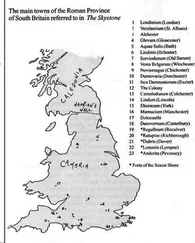






Обсуждение, отзывы о книге «The Singing Sword» и просто собственные мнения читателей. Оставьте ваши комментарии, напишите, что Вы думаете о произведении, его смысле или главных героях. Укажите что конкретно понравилось, а что нет, и почему Вы так считаете.