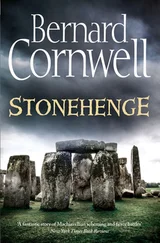
Bernard Cornwell - Stonehenge
Здесь есть возможность читать онлайн «Bernard Cornwell - Stonehenge» — ознакомительный отрывок электронной книги совершенно бесплатно, а после прочтения отрывка купить полную версию. В некоторых случаях можно слушать аудио, скачать через торрент в формате fb2 и присутствует краткое содержание. Жанр: Старинная литература, на русском языке. Описание произведения, (предисловие) а так же отзывы посетителей доступны на портале библиотеки ЛибКат.
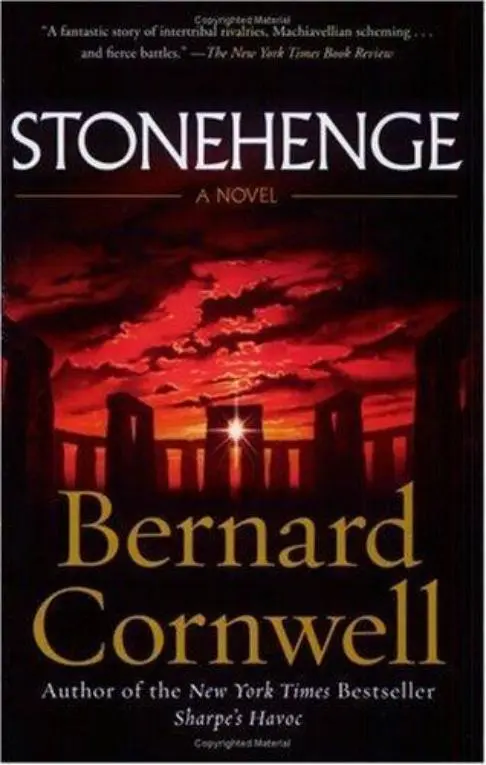
- Название:Stonehenge
- Автор:
- Жанр:
- Год:неизвестен
- ISBN:нет данных
- Рейтинг книги:3 / 5. Голосов: 1
-
Избранное:Добавить в избранное
- Отзывы:
-
Ваша оценка:
Stonehenge: краткое содержание, описание и аннотация
Предлагаем к чтению аннотацию, описание, краткое содержание или предисловие (зависит от того, что написал сам автор книги «Stonehenge»). Если вы не нашли необходимую информацию о книге — напишите в комментариях, мы постараемся отыскать её.
Stonehenge — читать онлайн ознакомительный отрывок
Ниже представлен текст книги, разбитый по страницам. Система сохранения места последней прочитанной страницы, позволяет с удобством читать онлайн бесплатно книгу «Stonehenge», без необходимости каждый раз заново искать на чём Вы остановились. Поставьте закладку, и сможете в любой момент перейти на страницу, на которой закончили чтение.
Интервал:
Закладка:
The sun was at its height when the talking began. The strangers first announced that they came from Sarmennyn, a place as far west as a man could walk before he met the wild sea and a country, they said, of hard rock, high hills and thin soil. Sarmennyn, they went on, was far away, very far, which meant they had come a long distance to talk with the great Hengall, chief of Ratharryn, though that flattery went past Hengall with as much effect as dawn mist drifting by a temple post. Despite the day's warmth the chief had draped his black bear pelt across his shoulders and was carrying his great stone mace.
The leader of the strangers, a tall, gaunt man with a scarred face and one blind eye, explained that one of their own people, a young and foolish man, had stolen some paltry treasures belonging to the tribe. The thief had fled. Now the strangers had heard that he had come to Hengall's land and there died, which was no more than he deserved. Small as the treasures were, the strangers still sought their return and were willing to pay well for them.
Hengall listened to Haragg's long translation, then objected that he had been sleeping and did not understand why the Outlanders had woken him if all they wanted was to exchange a few trifles. Still, he conceded, since the strangers had disturbed his sleep, and since they were being respectful, he was willing to waste a little time in seeing what offerings they had brought. Hengall did not trust Haragg to interpret for him, so instead his speech was translated by Valan, a slave who had been captured from the Out-folk many years before. Valan had served Hengall a long time and was now the chief's friend rather than his slave and was even allowed to keep his own hut, cattle and wife.
The one-eyed man apologized for waking the great Hengall and said he would have happily conducted the transaction with one of Hengall's servants, but since the chief had been gracious enough to listen to their plea, would he also be kind enough to confirm that the missing treasures were indeed in his keeping?
'We normally throw trifles away,' Hengall said, 'but perhaps we kept them.' He gestured to the embankment where a group of small children, bored with the talk, were tumbling among the woad plants growing just beneath the Outlanders' heads that Lengar had brought back from the forest. Those heads had not come from the Outfolk of Sarmennyn, but from other Outfolk tribes who lived closer to Ratharryn, but their presence was still unsettling to the visitors. 'Children like bright things,' Hengall said, nodding towards the impaled heads, 'so maybe we kept your treasures to amuse the young ones? But you say you have brought other things to exchange for them?'
The strangers laid their gifts on the turf. There were some fine otter hides and seal skins, a basket of sea-shells, three bronze bars, a rod of copper, some curious sharp teeth that they claimed came from ocean monsters, a portion of shiny turtle shell and, best of all, some lumps of amber that were scarce as gold. Hengall must have noted that the bags were still half full for he stretched his arms, yawned again, tugged at the tangles in his beard and finally said that so long as he was awake he might go and talk to the goddess Mai about the prospect of catching some fish from her river. 'We saw some large pike there yesterday, did we not?' he called to Galeth.
'Very large pike.'
'I like eating pike,' Hengall said.
The strangers hastily added more bronze ingots and the people of Ratharryn murmured astonishment at the value of the gifts. And still the offerings came; some finely carved bone needles, a dozen bone combs, a tangle of fish-hooks, three bronze knives of great delicacy, and finally a stone axe with a beautifully polished head that had a blueish tinge and glittered with tiny shining flecks. Hengall lusted after that axe, but he forced himself to sound unimpressed as he wondered why the Outfolk had bothered to carry such miserable offerings so far from their own country.
The leader of the strangers added one final treasure: a bar of gold. The bar was the size of a spearhead and heavy enough to need two hands to carry it, and the watching crowd gasped. By itself that shining lump contained more gold than was in all the lozenges. The Outfolk were well known to be grudging with their gold, yet now they were offering a great piece of it, and that was a mistake for it contradicted their assertion that the missing treasures were mere trifles. Hengall, still pretending to be indifferent, pressed the strangers until, reluctantly, they confessed that the missing treasures were not trivial at all, but sacred objects that arrayed the sun's bride each year. The treasures, the grim-faced Haragg admitted, had been gifts from their sea god to Erek himself and the people of Sarmennyn feared that their loss would bring ill fortune. The strangers were pleading now. They wanted their treasures back, and they would pay for them dearly because they were terrified of Erek's displeasure.
'Erek is their name for Slaol,' Valan told Hengall.
Hengall, pleased to have forced the admission from the strangers, stood. 'We shall think on this matter,' he announced.
Food was fetched from the settlement. There was cold pork, flat bread, smoked fish, and bowls of chickweed and sorrel. The strangers ate warily, fearful of being poisoned, but afraid to give offence by rejecting the food. Only their priest did not eat, but just lay staring into the sky. Gilan and Ratharryn's priests huddled together, whispering fiercely, while Lengar and his friends formed another small group at the circle's far side. Folk came to inspect the offered gifts, though none crossed the charm-ringed circle to touch them for the gifts had still not been cleansed of Outfolk sorcery by Ratharryn's priests. Hengall talked with the elders and sometimes asked questions of the priests, though it was mainly with Gilan that he talked. The priest had now made two visits to Cathallo and he spoke urgently with Hengall who listened, nodded and finally seemed convinced by whatever Gilan urged on him.
The sun was sliding down to its western home when Hengall resumed his place, but custom demanded that any man in the tribe could have his opinion heard before Hen-gall pronounced a decision. A few men did stand and most advised accepting the Outfolk's payment. 'The gold is not ours,' Galeth said, 'but was stolen from a god. How can it bring us good luck? Let the strangers have their treasures.' Voices murmured in support, then Lengar beat the ground with his spear staff and the murmurs died as Hengall's son stood to address the crowd.
'Galeth is right!' Lengar said, causing surprise among those who thought that the two men could never agree. 'The Outfolk should have their treasures back. But we should demand a higher price than these scourings from their huts.' He gestured at the goods piled in front of the strangers. 'If the Outfolk want their treasures returned, then let them come from their far country with all their spears and all their bows and offer themselves to our service for a year.'
Haragg, the Outfolk interpreter, whispered to his companions, who looked worried, but Hengall shook his head. 'And how are we to feed this horde of armed Outfolk?' he asked his son.
'They will feed from the crops and cattle that they capture with their weapons.'
'And what crops and cattle are they?' Hengall asked.
'Those that grow and graze to the north of us,' Lengar answered defiantly, and many in the tribe voiced their agreement. The tribe of Sarmennyn was famous for its warriors. They were lean, hungry men from a bare land and they took with their spears what their country could not provide. Such feared warriors would surely make brief work of Cathallo and more of Hengall's folk raised their voices in Lengar's support.
Hengall raised his vast club for silence. 'The army of Sarmennyn,' he said, 'has never reached this far into the heartland. Yet now you would invite them? And if they do come with their spears and their bows and their axes, how do we rid ourselves of them? What is to stop them turning on us?'
Читать дальшеИнтервал:
Закладка:
Похожие книги на «Stonehenge»
Представляем Вашему вниманию похожие книги на «Stonehenge» списком для выбора. Мы отобрали схожую по названию и смыслу литературу в надежде предоставить читателям больше вариантов отыскать новые, интересные, ещё непрочитанные произведения.





Обсуждение, отзывы о книге «Stonehenge» и просто собственные мнения читателей. Оставьте ваши комментарии, напишите, что Вы думаете о произведении, его смысле или главных героях. Укажите что конкретно понравилось, а что нет, и почему Вы так считаете.