Frank Brady - Endgame
Здесь есть возможность читать онлайн «Frank Brady - Endgame» весь текст электронной книги совершенно бесплатно (целиком полную версию без сокращений). В некоторых случаях можно слушать аудио, скачать через торрент в формате fb2 и присутствует краткое содержание. Год выпуска: 2011, ISBN: 2011, Издательство: Crown Publishing Group, Жанр: Старинная литература, на английском языке. Описание произведения, (предисловие) а так же отзывы посетителей доступны на портале библиотеки ЛибКат.
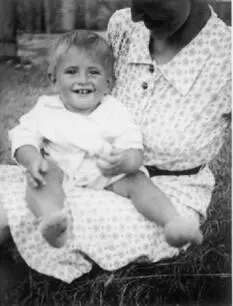
- Название:Endgame
- Автор:
- Издательство:Crown Publishing Group
- Жанр:
- Год:2011
- ISBN:9780307463920
- Рейтинг книги:4 / 5. Голосов: 1
-
Избранное:Добавить в избранное
- Отзывы:
-
Ваша оценка:
Endgame: краткое содержание, описание и аннотация
Предлагаем к чтению аннотацию, описание, краткое содержание или предисловие (зависит от того, что написал сам автор книги «Endgame»). Если вы не нашли необходимую информацию о книге — напишите в комментариях, мы постараемся отыскать её.
descent
entire
Time, Life
Newsweek At first all one noticed was how gifted Fischer was. Possessing a 181 I.Q. and remarkable powers of concentration, Bobby memorizedhundreds of chess books in several languages, and he was only 13 when he became the youngest chess master in U.S. history. But his strange behavior started early. In 1972, at the historic Cold War showdown in Reykjavik, Iceland, where he faced Soviet champion Boris Spassky, Fischer made headlines with hundreds of petty demands that nearly ended the competition.
It was merely a prelude to what was to come.
Arriving back in the United States to a hero’s welcome, Bobby was mobbed wherever he went—a figure as exotic and improbable as any American pop culture had yet produced. No player of a mere “board game” had ever ascended to such heights. Commercial sponsorship offers poured in, ultimately topping $10 million—but Bobby demurred. Instead, he began tithing his limited money to an apocalyptic religion and devouring anti-Semitic literature.
After years of poverty and a stint living on Los Angeles’ Skid Row, Bobby remerged in 1992 to play Spassky in a multi-million dollar rematch—but the experience only
a paranoia that had formed years earlier when he came to believe that the Soviets wanted him dead for taking away “their” title. When the dust settled, Bobby was a wanted man—transformed into an international fugitive because of his decision to play in Montenegro despite U.S. sanctions. Fearing for his life, traveling with bodyguards, and wearing a long leather coat to ward off knife attacks, Bobby lived the life of a celebrity fugitive – one drawn increasingly to the bizarre. Mafiosi, Nazis, odd attempts to breed an heir who could perpetuate his chess-genius DNA—all are woven into his late-life tapestry.
And yet, as Brady shows, the most notable irony of Bobby Fischer’s strange descent – which had reached full plummet by 2005 when he turned down yet
multi-million dollar payday—is that despite his incomprehensible behavior, there were many who remained fiercely loyal to him. Why that was so is at least partly the subject of this book—one that at last answers the question: “Who
Bobby Fischer?”
Endgame — читать онлайн бесплатно полную книгу (весь текст) целиком
Ниже представлен текст книги, разбитый по страницам. Система сохранения места последней прочитанной страницы, позволяет с удобством читать онлайн бесплатно книгу «Endgame», без необходимости каждый раз заново искать на чём Вы остановились. Поставьте закладку, и сможете в любой момент перейти на страницу, на которой закончили чтение.
Интервал:
Закладка:
The non-chess media gave the tournament far more attention than usual, though they’d never been sure whether chess was a sport or an art. Life and the Saturday Evening Post arranged to interview Bobby. Sports Illustrated headlined its story THE AMAZING VICTORY STREAK OF BOBBY FISCHER. Chess publications around the world wrote of the unparalleled achievement. Only Bent Larsen, always a Fischer detractor, was unimpressed: “Fischer was playing against children,” he said.
Reshevsky a child? Robert Byrne? Larry Evans? Pal Benko?

On March 9, 1964, Bobby Fischer was twenty-one. His birthday gave him something in common with many young American males during that time of military escalation: participation in the military draft. President John F. Kennedy had been assassinated the previous November, and his successor, Lyndon Baines Johnson, had escalated the war in Vietnam. To be drafted at that time meant a strong likelihood of serving in Southeast Asia.
As a “1-A” candidate, Bobby was scheduled to take his physical examination at the U.S. Army Recruiting Station on Whitehall Street in New York City. If selected, he’d spend the next two years in the army. Fischer was patriotic at that time, but his focus was chess, and the chess community was counting on him to play in the Interzonal at Amsterdam. True, he’d said that he would never play in the FIDE cycle again because it was stacked in favor of the Soviets. But might he somehow get back on the road to the championship? The world wanted it, and in his heart Bobby wanted it—but he said he wouldn’t change his mind. Nevertheless, several people began researching whether there might be a way to get Fischer a deferment until after the Interzonal was completed … just in case he played in it.
On Bobby’s behalf, an official of the United States Chess Federation contacted General George B. Hershey, head of the Selective Service bureau. Hershey explained that “a temporary deferment, on almost any grounds, is usually an easy matter to secure from a local board, but eventually Fischer will probably be drafted.”
A somewhat longer deferment was available, and totally legal, for college students. Bobby had dropped out of high school, but the New School for Social Research, a progressive college in New York City, was willing to accept his extraordinary chess accomplishments in lieu of traditional schoolwork. Alfred Landa, then assistant to the president, said that Fischer would not only be allowed to matriculate into the college, but be given a full scholarship. Bobby thought long and hard about the offer. One afternoon he started to walk to the New School to put in his application—and then stopped. His experience with schools had been distasteful, and perhaps that caused forebodings. Without giving an explanation, he refused to enter the school building, and he refused to apply for a student deferment.
He was rescheduled to take his physical examination and went to the recruiting station by himself. Afterward, it was announced that Bobby had been rejected—for reasons that have never been made public. Bobby Fischer was classified 4F—the military rating that meant you had one or more medical conditions that totally disqualified you from serving in uniform. He seemed and appeared fine, physically.
Whatever the reason, Bobby Fischer never served in the military.
Bobby sat confined in a small wood-paneled room at the Marshall Chess Club, with only the chessboard and a referee. There was no player facing him. After deciding on his move, he wrote it down on his score sheet, which was then carried by the referee to a “runner,” who brought it quickly to a nearby room where a Teletype machine had been set up. Bobby then waited, still alone, as the move was transmitted to Havana, Cuba, where his opponent sat facing his own chessboard. When the opponent made his answering move, it was transmitted by wire from Havana back to the Marshall, the Teletype operator turned the reply over to the runner, and the move was carried back to the silent room where Bobby tensely awaited it.
It was 1965 and Bobby had accepted an invitation to play in the Capablanca Memorial Tournament in Havana. It was exactly the type of tournament he’d been seeking for his return to international competition. There would be thirteen grandmasters and eight international masters, not quite as strong a field as at Bobby’s last international tournament, but incredibly powerful. The $3,000 appearance fee sealed it for him. Bobby was back.
But not quite. Diplomatic relations between the United States and Cuba were still severely strained. The State Department had begun to permit journalists access to Cuba, although it denied entry to ordinary citizens. Fischer had applied for a visa, since he was a regular contributor to Chess Life and had made special arrangements to do an article on this tournament for the Saturday Review , which sent a letter to the United States Department of State—as did the U.S. Chess Federation—confirming the legitimacy of his trip and petitioning permission for him to go to Cuba. There’s no question that his primary motivation in wanting to go was to play in the tournament, but he also intended to write about it. Nonetheless, the State Department flatly refused to recognize him as a legitimate columnist, and therefore denied him the opportunity to travel to Havana.
What no one knew was that the FBI was investigating Bobby, and had been for years. Their interest in him may have been triggered by their belief that his mother was a Communist, in part because she’d spent six years in Moscow attending medical school; they’d been investigating Regina since Bobby was a child. When Bobby went to Moscow in 1958, when he was fifteen, the FBI presumed that Regina had sent him there to be indoctrinated.
The Bureau obviously had trouble believing that someone would travel so much simply for the purpose of playing chess, especially to countries that were restricted for political reasons. A notice in Bobby’s FBI file states that his passport was “not valid for travel to Albania, Cuba, and those portions of China, Korea and Vietnam under communist control,” and it contains a 1965 memorandum from the Office of the Coordinator of Cuban Affairs which advises that “Cuban travel criteria make no provision for validation for the purpose of participating in chess competitions.”
FBI target or not, Bobby was primed to play in the tournament, and he wouldn’t be denied. Helping him out were officials in the United States Chess Federation who came up with a highly unorthodox idea: Bobby would stay in New York and play the tournament from a room in the Marshall Chess Club. There were no cell phones in 1965, and there was certainly no Internet. But Fischer could play the tournament by Teletype. Cuban chess officials were delighted, offering to pay some $10,000 in expenses for the open telephone line and Teletype machine that were required. As for the other participants in the tournament, they agreed, some reluctantly, to the novel arrangement. Che Guevara, a strong chess player, was the principal force behind organizing the tournament.
Then Fidel Castro intervened, calling the situation a “great propaganda victory for Cuba.” It made headlines. Furious, Bobby cabled Castro, threatening to withdraw from the tournament unless the premier promised to stop using him as a political ploy. Bobby continued:
I WOULD ONLY BE ABLE TO TAKE PART IN THE TOURNAMENT IN THE EVENT THAT YOU IMMEDIATELY SENT ME A TELEGRAM DECLARING THAT NEITHER YOU, NOR YOUR GOVERNMENT WILL ATTEMPT TO MAKE POLITICAL CAPITAL OUT OF MY PARTICIPATION IN THE TOURNEY, AND THAT IN THE FUTURE NO POLITICAL COMMENTARIES ON THIS SCORE WILL BE MADE.
Читать дальшеИнтервал:
Закладка:
Похожие книги на «Endgame»
Представляем Вашему вниманию похожие книги на «Endgame» списком для выбора. Мы отобрали схожую по названию и смыслу литературу в надежде предоставить читателям больше вариантов отыскать новые, интересные, ещё непрочитанные произведения.
![Антон Текшин - EndGame [СИ]](/books/394477/anton-tekshin-endgame-si-thumb.webp)





Обсуждение, отзывы о книге «Endgame» и просто собственные мнения читателей. Оставьте ваши комментарии, напишите, что Вы думаете о произведении, его смысле или главных героях. Укажите что конкретно понравилось, а что нет, и почему Вы так считаете.