Frank Brady - Endgame
Здесь есть возможность читать онлайн «Frank Brady - Endgame» весь текст электронной книги совершенно бесплатно (целиком полную версию без сокращений). В некоторых случаях можно слушать аудио, скачать через торрент в формате fb2 и присутствует краткое содержание. Год выпуска: 2011, ISBN: 2011, Издательство: Crown Publishing Group, Жанр: Старинная литература, на английском языке. Описание произведения, (предисловие) а так же отзывы посетителей доступны на портале библиотеки ЛибКат.
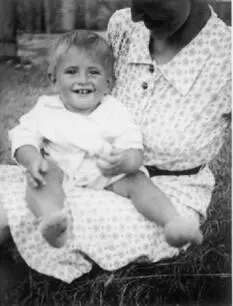
- Название:Endgame
- Автор:
- Издательство:Crown Publishing Group
- Жанр:
- Год:2011
- ISBN:9780307463920
- Рейтинг книги:4 / 5. Голосов: 1
-
Избранное:Добавить в избранное
- Отзывы:
-
Ваша оценка:
Endgame: краткое содержание, описание и аннотация
Предлагаем к чтению аннотацию, описание, краткое содержание или предисловие (зависит от того, что написал сам автор книги «Endgame»). Если вы не нашли необходимую информацию о книге — напишите в комментариях, мы постараемся отыскать её.
descent
entire
Time, Life
Newsweek At first all one noticed was how gifted Fischer was. Possessing a 181 I.Q. and remarkable powers of concentration, Bobby memorizedhundreds of chess books in several languages, and he was only 13 when he became the youngest chess master in U.S. history. But his strange behavior started early. In 1972, at the historic Cold War showdown in Reykjavik, Iceland, where he faced Soviet champion Boris Spassky, Fischer made headlines with hundreds of petty demands that nearly ended the competition.
It was merely a prelude to what was to come.
Arriving back in the United States to a hero’s welcome, Bobby was mobbed wherever he went—a figure as exotic and improbable as any American pop culture had yet produced. No player of a mere “board game” had ever ascended to such heights. Commercial sponsorship offers poured in, ultimately topping $10 million—but Bobby demurred. Instead, he began tithing his limited money to an apocalyptic religion and devouring anti-Semitic literature.
After years of poverty and a stint living on Los Angeles’ Skid Row, Bobby remerged in 1992 to play Spassky in a multi-million dollar rematch—but the experience only
a paranoia that had formed years earlier when he came to believe that the Soviets wanted him dead for taking away “their” title. When the dust settled, Bobby was a wanted man—transformed into an international fugitive because of his decision to play in Montenegro despite U.S. sanctions. Fearing for his life, traveling with bodyguards, and wearing a long leather coat to ward off knife attacks, Bobby lived the life of a celebrity fugitive – one drawn increasingly to the bizarre. Mafiosi, Nazis, odd attempts to breed an heir who could perpetuate his chess-genius DNA—all are woven into his late-life tapestry.
And yet, as Brady shows, the most notable irony of Bobby Fischer’s strange descent – which had reached full plummet by 2005 when he turned down yet
multi-million dollar payday—is that despite his incomprehensible behavior, there were many who remained fiercely loyal to him. Why that was so is at least partly the subject of this book—one that at last answers the question: “Who
Bobby Fischer?”
Endgame — читать онлайн бесплатно полную книгу (весь текст) целиком
Ниже представлен текст книги, разбитый по страницам. Система сохранения места последней прочитанной страницы, позволяет с удобством читать онлайн бесплатно книгу «Endgame», без необходимости каждый раз заново искать на чём Вы остановились. Поставьте закладку, и сможете в любой момент перейти на страницу, на которой закончили чтение.
Интервал:
Закладка:
Bobby loved Yugoslavia because of the superstar status accorded him by its chess adherents, and, on a delightful autumnal day, he entered the tournament hall at Lake Bled primed to play. Now eighteen and dressed in an impeccably tailored suit with a white handkerchief deftly positioned in his breast pocket, he looked somewhat older and carried himself with an athletic swagger. He looked a little like a budding movie star. Many of the Yugoslavs didn’t recognize him at first.
Walking in the streets, he’d be besieged by autograph seekers. From his experience at the Interzonal and the Candidates tournament in 1958–59, both held in Yugoslavia, he’d grasped enough of the language to at least autograph his name in Serbo-Croat. Fans went wild when he inscribed their scorecards in their own language. When a spectator from Moscow asked for an autograph, Bobby signed it using the Russian Cyrillic alphabet, needing to change only a few letters.
For Bobby, the highlight of the tournament was his game against Tal in the second round. Tal, who was much better behaved than the last time he played Bobby—doing less staring and snickering—seemed to suffer a lapse of chess logic on the sixth move, and he blundered again on the ninth move, becoming enmeshed in the opening that Bobby had prepared against him. Tal’s spotty play was blamed on the fact that he wasn’t feeling well. Bobby’s own play was not at its sharpest, but he exploited the weak moves of his opponent and pressed home the advantage until Tal lapsed into a hopeless endgame and resigned. The applause was tumultuous. “A charmer,” piped Chess Review . Bobby was almost giddy with delight at notching his first win against one of the strongest players in the world, a former World Champion, the man he’d fantasized about murdering during the 1959 Candidates.
As Tal and Fischer left the stage, journalists rushed to them begging for a comment. The two combatants, both a little playful, performed for the crowd:
Tal[Sighing]: It is difficult to play against Einstein’s theory.
Fischer[Exulting]: Finally, he has not escaped from me!
Bobby was not happy with his eventual second-place showing in the tournament, and like Tal, he blamed some of his draws on illness. By the end of the competition, he was feeling mild discomfort in the lower right part of his abdomen, and he was also having difficulty keeping food down. When the pain worsened, and he mentioned it to some of the players, they insisted he see a physician.
Suspicious as always of doctors, Bobby was also concerned about communicating in Serbo-Croat. Would he be able to understand what was being said to him? A doctor was summoned to the Hotel Toplice, and one of the Yugoslavian players served as translator. As soon as the doctor touched his abdomen, Bobby flinched in pain. “It seems like appendicitis,” the doctor warned. “You’ll have to go to a hospital. If the appendix ruptures, you may get peritonitis, and the infection will spread.” Bobby asked if there was anything that could be done without going to a hospital. “No,” the doctor answered emphatically. Bobby reluctantly agreed, and he was driven from Bled in Slovenia to Banja Luka in Bosnia for treatment at a large university hospital. He begged the doctors not to operate, even though they told him that it was a relatively simple procedure and cautioned him of the dangers involved in not operating. They assured him he’d be up and walking around in a few days, but he was still resistant. Not only was he philosophically opposed to surgery, he was frightened of anesthesia. He didn’t even want to take medicine to stop the pain. The doctors prevailed on that point and also insisted that he take a regimen of antibiotics. Eventually, the pain lessened and within two or three days he was feeling himself again. He was effusively thankful to the doctors for not insisting he be put under the knife.
After the appendicitis scare, the British Broadcasting Corporation invited him to London to appear on a show called Chess Treasury of the Air , and he spent about ten days in England. Christmas in London was a charming experience for Bobby. It seemed to be what he imagined New York City might have been like around 1890 or 1900. He admired the gentility of the city’s citizens and the cleanliness of its streets. Pal Benko was there for a while with him and noticed that though he himself had a thick Hungarian accent, he could be more easily understood by the Londoners than Bobby with his pronounced Brooklyn dialect. Bobby spent a British Christmas with his mother and her new husband, Cyril Pustan, who’d heard him on the BBC show.

As he continued to prepare for upcoming tournaments, Bobby was also being drawn closer to the Worldwide Church of God, and he began to face a time conflict between his two commitments: religion and chess. “I split my life into two pieces,” he told an interviewer later. “One was where my chess career lies. There I kept my sanity, so to speak. And the other was my religious life. I tried to apply what I learned in the church to my chess career, too. But I was still studying chess. I wasn’t just ‘trusting in God’ to give me the moves.” Bobby’s pragmatic philosophy was similar to the old Arabic saying “Trust in Allah but tie up your camel.”
In addition to his Bible correspondence course, listening to Reverend Armstrong’s sermons, and his in-depth study of the Old and New Testaments, Bobby was reading the Plain Truth , the Church’s bimonthly magazine, which claimed to have a circulation of more than 2,500,000. Articles in the magazine were, as the title implies, written plainly and seemed as much political as religious. Bobby read every issue cover to cover, though, and much of what he ingested made sense to him. Forty years later he’d still be espousing ideas put forth by Armstrong and the Plain Truth .
One issue outlined horrific prophecies, graphically illustrated, of what Armstrong predicted would be World War III, when the United States and Great Britain would be destroyed by a United States of Europe. Armstrong said that before the war began, he’d lead his church members to Jordan, where they’d be saved because they were “God’s People.” Bobby, too.
Bobby wrote a preachy letter to his mother, enthusiastically discussing Armstrong’s teachings and his intense biblical studies, which had “changed my whole outlook on life.” He’d become convinced that only by following Armstrong’s interpretation of the Bible could he find health and happiness, become successful, and gain eternal life, and he urged her to read the Bible and Armstrong’s writings. Regina wasn’t buying his sales pitch and wrote back that Armstrong and his church were feeding Bobby a line of mumbo jumbo and engaging in fear mongering. A good and tolerant life was the best life, she said; call it a religion if you like. After that, they both agreed not to discuss his religious views or hers. Neither mother nor son was willing to try to make a convert of the other.
Bobby tried to live and practice his beliefs; he felt truly born again , and he was applying the same sense of discipline and reverence to the Bible that he had all his life to chess. He began making donations to worthy causes; he wouldn’t have sex, because he wasn’t married; he scorned profanity and pornography; and he attempted to follow the Ten Commandments in every detail. “If anyone tried to live by the letter of the law, it was me,” he said later, in an interview published by the Ambassador Report .
But eventually his religious commitments began tearing him apart. He couldn’t spend ten or twelve hours a day studying chess and another six to eight hours on Bible studies; and the constant surfacing of impure thoughts and other minor sins was plaguing him. “The more I tried [to be obedient] the more crazy I became,” he noted. “I was half out of my head—almost stoned.” Without giving up on Armstrong, he realized that Caissa (the patron goddess of chess) had more meaning for him than the Worldwide Church of God. Focus, focus, focus! Chess had to become paramount again; it had to be his first priority, or his dream of achieving the World Championship would be just that: a dream.
Читать дальшеИнтервал:
Закладка:
Похожие книги на «Endgame»
Представляем Вашему вниманию похожие книги на «Endgame» списком для выбора. Мы отобрали схожую по названию и смыслу литературу в надежде предоставить читателям больше вариантов отыскать новые, интересные, ещё непрочитанные произведения.
![Антон Текшин - EndGame [СИ]](/books/394477/anton-tekshin-endgame-si-thumb.webp)



Обсуждение, отзывы о книге «Endgame» и просто собственные мнения читателей. Оставьте ваши комментарии, напишите, что Вы думаете о произведении, его смысле или главных героях. Укажите что конкретно понравилось, а что нет, и почему Вы так считаете.