Frank Brady - Endgame
Здесь есть возможность читать онлайн «Frank Brady - Endgame» весь текст электронной книги совершенно бесплатно (целиком полную версию без сокращений). В некоторых случаях можно слушать аудио, скачать через торрент в формате fb2 и присутствует краткое содержание. Год выпуска: 2011, ISBN: 2011, Издательство: Crown Publishing Group, Жанр: Старинная литература, на английском языке. Описание произведения, (предисловие) а так же отзывы посетителей доступны на портале библиотеки ЛибКат.
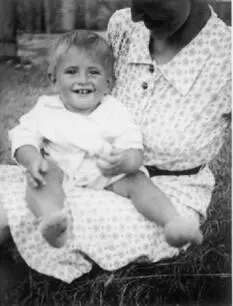
- Название:Endgame
- Автор:
- Издательство:Crown Publishing Group
- Жанр:
- Год:2011
- ISBN:9780307463920
- Рейтинг книги:4 / 5. Голосов: 1
-
Избранное:Добавить в избранное
- Отзывы:
-
Ваша оценка:
Endgame: краткое содержание, описание и аннотация
Предлагаем к чтению аннотацию, описание, краткое содержание или предисловие (зависит от того, что написал сам автор книги «Endgame»). Если вы не нашли необходимую информацию о книге — напишите в комментариях, мы постараемся отыскать её.
descent
entire
Time, Life
Newsweek At first all one noticed was how gifted Fischer was. Possessing a 181 I.Q. and remarkable powers of concentration, Bobby memorizedhundreds of chess books in several languages, and he was only 13 when he became the youngest chess master in U.S. history. But his strange behavior started early. In 1972, at the historic Cold War showdown in Reykjavik, Iceland, where he faced Soviet champion Boris Spassky, Fischer made headlines with hundreds of petty demands that nearly ended the competition.
It was merely a prelude to what was to come.
Arriving back in the United States to a hero’s welcome, Bobby was mobbed wherever he went—a figure as exotic and improbable as any American pop culture had yet produced. No player of a mere “board game” had ever ascended to such heights. Commercial sponsorship offers poured in, ultimately topping $10 million—but Bobby demurred. Instead, he began tithing his limited money to an apocalyptic religion and devouring anti-Semitic literature.
After years of poverty and a stint living on Los Angeles’ Skid Row, Bobby remerged in 1992 to play Spassky in a multi-million dollar rematch—but the experience only
a paranoia that had formed years earlier when he came to believe that the Soviets wanted him dead for taking away “their” title. When the dust settled, Bobby was a wanted man—transformed into an international fugitive because of his decision to play in Montenegro despite U.S. sanctions. Fearing for his life, traveling with bodyguards, and wearing a long leather coat to ward off knife attacks, Bobby lived the life of a celebrity fugitive – one drawn increasingly to the bizarre. Mafiosi, Nazis, odd attempts to breed an heir who could perpetuate his chess-genius DNA—all are woven into his late-life tapestry.
And yet, as Brady shows, the most notable irony of Bobby Fischer’s strange descent – which had reached full plummet by 2005 when he turned down yet
multi-million dollar payday—is that despite his incomprehensible behavior, there were many who remained fiercely loyal to him. Why that was so is at least partly the subject of this book—one that at last answers the question: “Who
Bobby Fischer?”
Endgame — читать онлайн бесплатно полную книгу (весь текст) целиком
Ниже представлен текст книги, разбитый по страницам. Система сохранения места последней прочитанной страницы, позволяет с удобством читать онлайн бесплатно книгу «Endgame», без необходимости каждый раз заново искать на чём Вы остановились. Поставьте закладку, и сможете в любой момент перейти на страницу, на которой закончили чтение.
Интервал:
Закладка:
Fischer, deciding to use Tal’s tactics against him, tried producing his own stare, and even flashed Tal an abbreviated, sneering smile of contempt. But after a few seconds, he’d break eye contact and concentrate on more important things: the action on the board, the sequence of moves he planned to follow, or the ways to counter the combination Tal seemed to be formulating.
Tal was an encyclopedia of kinetic movement. All in a matter of seconds, he’d move a chess piece, record the action on his score sheet, position his head within inches of the clock to check the time, grimace, smile, raise his eyebrows, and “make funny faces,” as Bobby characterized it. Then he’d rise and walk up and down the stage while Bobby was thinking. Tal’s coach Igor Bondarevsky referred to his charge’s movements as “circling around the table like a vulture”—presumably, a vulture ready to pounce.
Tal chain-smoked and could consume a pack of cigarettes during the course of a game. He also had the habit of resting his chin on the edge of the table, peering through the pieces and peeking at his opponent, rather than establishing a bird’s-eye view by sitting up straight and looking down, which would have provided a better perspective on the intricacies of the board. Since Tal’s body language was so bizarre, Fischer interpreted it as an attempt to annoy him.
Tal’s gestures and staring infuriated Fischer. He complained to the arbiter, but little was done. Whenever Tal rose from the board, in the middle of the game, when Fischer was planning his next move, he’d begin talking to the other Soviet players, and they enjoyed whispering about their or others’ positions. Although he knew some Russian, Bobby had trouble with the declensions and usage. He’d hear the words ferz ’ (“queen”) or lad’ya (“rook”), for example, and he couldn’t tell whether Tal was talking specifically about his position. All he knew was that it was maddening. Bobby couldn’t understand why the chief arbiter didn’t prevent this muttering, since it was forbidden by the rules, and he told the organizers that Tal should be thrown out of the tournament. That Soviet players had for decades been talking to one another during games with no complaints didn’t help Bobby’s cause.
Fischer was also perturbed that when a game was finished, many of the players would immediately join with their opponents to analyze their completed games, right on the stage, just a few feet from where he was playing rather than in the postmortem analysis room. The buzz distracted his attention. He wrote a complaint about the chattering and handed it to the chief arbiter:
After the game is completed, analysis by the opponents must be prohibited to avoid disturbing the other players. Upon completion of the game, the Referee must immediately remove the chess pieces from the table to prevent analysis. We recommend that the organization prepare a special room for post-mortem analysis. The room must be completely out of earshot of all of the participants .
Robert J. Fischer, International Grandmaster
As it turned out, though, nothing was done. No other players joined in the protest, because most were guilty of doing the very thing Fischer was opposing.
Bobby was fast gaining a reputation as a constant complainer, the Petulant American, a role most of the players found distasteful. They believed he’d invariably blame tournament conditions or the behavior of the other players for a loss.
Whether or not Bobby was hypersensitive, he did suffer from hyperacusis—an acute senstivity to noise and even distant sounds—and it was clear that Tal, in particular, knew just how to rattle him. The Russian would look at Bobby from near or far, and begin laughing, and once in the communal dining room he pointed to Bobby and said out loud, “Fischer: cuckoo!” Bobby almost burst into tears. “Why did Tal say ‘cuckoo’ to me?” he asked, and for the first and perhaps only time during the tournament, Larsen tried to console him: “Don’t let him bother you.” He told Bobby he’d have an opportunity to seek revenge … on the board. After that, a local Bled newspaper published a group of caricatures of all eight players, and a souvenir postcard was made of the drawings. Bobby’s portrait was particularly severe, with his ears akimbo and his mouth open, making him look as if he were … well, cuckoo.
Sure enough, in the drawing, next to the portrait of Bobby was a little bird perched on his board. It was a cuckoo.
Spectators, players, and journalists began asking Bobby how he could take two months off, September and October, during the school year to play in a tournament. Finally it was revealed: He’d dropped out of Erasmus Hall. It had been crushing for Regina to have to sign the authorization releasing the sixteen-year-old from the school. She hoped she could talk him back into classes somewhere, someday, after he finished playing in the Candidates tournament. As an inducement to get him to change his mind about dropping out, the assistant principal of Erasmus, Grace Corey, wrote to Bobby in Yugoslavia, telling him how well he’d done on the New York State Regents examinations. He’d earned a grade of 90 percent in Spanish and 97 percent in geometry, making for “a really good year.”
Good grades or not, an image began to attach itself to Bobby. As a result of the publicity about his schooling, or lack thereof, Fischer was beginning to be thought of as a nyeculturni by the Russians, unschooled and uncultured, and they began to tease him. “What do you think of Dostoyevsky, Bobby?” someone queried. “Are you a Benthamite?’ another asked. “Would you like to meet Goethe?” They were unaware that Bobby had read literature in high school, and for his own enjoyment. He liked George Orwell’s work, and for years held on to his copies of Animal Farm and 1984; he also read and admired Oscar Wilde’s The Picture of Dorian Gray . Voltaire’s Candide was a favorite, and he’d often talk about the comic parts. Tal asked Bobby if he’d ever gone to the opera, and when Bobby burst into the refrain from “The March of the Smugglers,” from Bizet’s Carmen , the Russian was temporarily silenced. Bobby had attended a performance of the French opera with his mother and sister at the Metropolitan Opera House in New York shortly before going to Europe. He also owned a book that told the stories of all the great operas, which he’d dip into from time to time.
Unfortunately, cultured or not, Bobby played poorly in the tournament at first. He was frustrated at being down two games to none against Tal, who never passed up a chance to annoy his younger opponent. Just before Bobby and Tal were to play a third time, Bobby approached Alexander Koblentz, one of Tal’s trainers, and said sotto voce, as menacingly as he could: “If Tal doesn’t behave himself, I am going to smash out all of his front teeth.” Tal persisted in his provocation, though, and Fischer lost their third game as well.
It was a situation where a youthful player like Bobby could spiral down irretrievably, playing himself into an abyss. But he took momentary charge of his psyche, despite his losses, and began to feel optimistic. After defeating a cold, he placed himself in the abstract world of Lewis Carroll and the universe of reversal and wrote: “I am now in quite a good mood, and eating well. [Like] in Alice in Wonderland . Remember? The Red Queen cried before she got a piece of dirt in her eye. I am in a good mood before I win all of my games.”
“Let’s go to a movie,” Dimitrije Bjelica said to Bobby the night before he was to play Vasily Smyslov. Bjelica was a Yugoslavian chess journalist; he was also nationally known as a television commentator on soccer. He’d befriended Bobby in Portorož and was sympathetic to his complaints, and he thought a movie might take Bobby’s mind off his problems. As luck would have it, though, the only English-language film being shown in Belgrade was Lust for Life , the lush biopic of the mad nineteenth-century Dutch painter Vincent Van Gogh.
Читать дальшеИнтервал:
Закладка:
Похожие книги на «Endgame»
Представляем Вашему вниманию похожие книги на «Endgame» списком для выбора. Мы отобрали схожую по названию и смыслу литературу в надежде предоставить читателям больше вариантов отыскать новые, интересные, ещё непрочитанные произведения.
![Антон Текшин - EndGame [СИ]](/books/394477/anton-tekshin-endgame-si-thumb.webp)






Обсуждение, отзывы о книге «Endgame» и просто собственные мнения читателей. Оставьте ваши комментарии, напишите, что Вы думаете о произведении, его смысле или главных героях. Укажите что конкретно понравилось, а что нет, и почему Вы так считаете.