William Bernhardt - Double Jeopardy
Здесь есть возможность читать онлайн «William Bernhardt - Double Jeopardy» весь текст электронной книги совершенно бесплатно (целиком полную версию без сокращений). В некоторых случаях можно слушать аудио, скачать через торрент в формате fb2 и присутствует краткое содержание. Год выпуска: 1995, ISBN: 1995, Издательство: Ballantine Books, Жанр: Старинная литература, на английском языке. Описание произведения, (предисловие) а так же отзывы посетителей доступны на портале библиотеки ЛибКат.
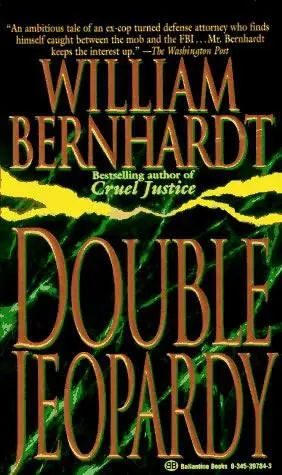
- Название:Double Jeopardy
- Автор:
- Издательство:Ballantine Books
- Жанр:
- Год:1995
- ISBN:9780708958285
- Рейтинг книги:4 / 5. Голосов: 1
-
Избранное:Добавить в избранное
- Отзывы:
-
Ваша оценка:
Double Jeopardy: краткое содержание, описание и аннотация
Предлагаем к чтению аннотацию, описание, краткое содержание или предисловие (зависит от того, что написал сам автор книги «Double Jeopardy»). Если вы не нашли необходимую информацию о книге — напишите в комментариях, мы постараемся отыскать её.
When mobster Al Moroconi is charged with orchestrating a heinous crime against a young woman, the first defense attorney on the case mysteriously disappears. Now, Travis Byrne--a smart Dallas cop who recently traded his badge for a law degree--is appointed by a federal judge to speak for the defense.
But just as the trial is getting under way, Moroconi shoots his way out of court custody, steals a car, and vanishes into the Dallas underworld--taking Travis's reputation with him. Suddenly the FBI is after Travis for a murder he didn't commit. The mob wants to kill him for a secret hit list he doesn't have. Running for his life, Travis comes to a horrifying realization: the charge against Moroconi is just a cover for something much bigger and more foul....
Double Jeopardy — читать онлайн бесплатно полную книгу (весь текст) целиком
Ниже представлен текст книги, разбитый по страницам. Система сохранения места последней прочитанной страницы, позволяет с удобством читать онлайн бесплатно книгу «Double Jeopardy», без необходимости каждый раз заново искать на чём Вы остановились. Поставьте закладку, и сможете в любой момент перейти на страницу, на которой закончили чтение.
Интервал:
Закладка:
Crescatelli flipped open a panel on the box to reveal a numeric keypad similar to that found on a telephone receiver. “Of course, Bell subsequently had all issues of that journal yanked from every library in the country. But it was too late. The entire AT&T switching system operates on twelve electronically generated combinations of six master tones—those are the tones you hear sometimes after you dial a long-distance number. The tone for each number is a combination of two fixed tones played simultaneously to create a certain beat frequency. Once those frequencies became public knowledge, all a guy had to do was get a Casio keyboard and a tape deck and record the tones. Play back the recording into a phone receiver and presto!—you’ve made a long-distance phone call without touching the dial.”
Cavanaugh was writing frenetically. “So your tape recorder can now make a long-distance call, something I could’ve done with my fingers. So what?”
Crescatelli shook his head. “I suppose for certain doubting Thomases it will be necessary to explain every little step. Remember the tandem networks? The blue box is programmed with tones that emulate the inactive whistling of a tandem. When the blue-box operator wants to call from Dallas to Tulsa, he might start by calling a toll-free number in Ypsilanti. The tandem in Ypsilanti is seized and starts listening to the beep tones that tell it which number to ring. Meanwhile, a mark is made on the Dallas office accounting tape noting that a call from your number to the Ypsilanti toll-free number has been initiated. The blue-box operator then sends a tone that emulates the inactive whistling of the tandem. The tandem assumes the caller has hung up and stops ringing the toll-free number. As soon as the blue-box operator stops sending the signal, the Ypsilanti tandem assumes the trunk is again being used and listens for a new series of tones to tell it where to call. The blue-box operator beeps out another number, say to Poughkeepsie.”
“Why would anyone call Poughkeepsie?” Travis whispered. Cavanaugh swatted him.
“The tandem relays the call. The blue-box operator can go on like this indefinitely, whistling his way from one tandem to the next, till he decides to connect with his ultimate destination. When he does, he can talk as long as he wants—’cause it’s all going to be charged to the owner of that first toll-free number. More importantly, for the purpose of those on the lam, the call cannot be traced by normal methods, and even abnormal high-tech methods will require much longer than usual.”
“Why is that?”
“Say someone has a trace on the receiving phone; his trace won’t run back to the caller’s phone—he’ll go back to the last tandem in the chain—and then the one before that, and the one before that, and so on and so on. Slowly. Eventually he’ll get back to the caller’s phone, but I’d like to think most people would have the sense not to talk that long.”
Travis whispered to Cavanaugh, “Did you get all that? Or any of that?”
“Enough,” she said, nodding.
“As any fool can see,” Crescatelli continued, “this information could easily be put to nefarious purposes, especially by cheapskates who don’t want to give the phone company its due. Come to think of it, it would probably be irresponsible to write this dissertation. I think I’ll scrap the whole idea.” He sighed. “What the heck. I’ll probably never go to college anyway.”
Cavanaugh stepped out from behind the machinery and quietly slipped the blue box into her purse. “You’re a gem and a half, John, but you’ve only taken me halfway home. How can I trace a phone call made in the past—one that’s already been disconnected? And don’t tell me it can’t be done. I work for the federal prosecutor’s office. I know it can.”
“Then again,” Crescatelli reflected, still staring at the ceiling, “there might be some legitimate uses for the article I envision. After all, once you understand about tandems, there isn’t much you can’t do with the phone system. Every major city has a central accounting computer that maintains their phone records. Of course, this is done for billing purposes, not out of any desire to aid law enforcement officials, but it does come in handy when the police want to know everyone who’s called a particular line within a given time period.”
“How do we access the central computer?”
Crescatelli batted a finger against his lips. “How does one access the central computer? Well, if you have a modem, you do it just like you call anyone else. All you have to know is the number.”
“Then we need the number of the central accounting computer for Dallas,” Travis said.
“Fortunately,” Crescatelli said, “the number of the Dallas computer, now displayed on this terminal screen, is totally top secret. I shudder to think what might happen if an unscrupulous person got hold of it.”
Cavanaugh jotted down the number.
Crescatelli punched a few more numbers on his terminal. “While I’ve been sitting here musing I’ve managed to take the phone line connected by modem to this computer through eighteen tandems crisscrossing the United States. Not absolutely necessary, but it would be best if this inquiry were not easily traced back here, just in case someone should become suspicious. Of course, I’m just doing it to remind myself how it’s done. Anybody could call on this line now and it couldn’t be traced back for twenty years.”
Crescatelli stood, stretched, and yawned. “All this brain work is tiring. I’m going to get a Coke. Maybe a doughnut, too.” He pushed his chair back and sauntered toward the kitchen.
“A prince among men,” Cavanaugh whispered as she slid into his chair.
“No kidding,” Travis said. “You must’ve saved that guy’s life.”
She began punching keys on the terminal keyboard. “As a matter of fact, I did.”
“How?”
“Oh … it’s a long story.”
“So shorten it.”
“Before John went legit, which was before John was John, he was a phone phreak. That’s with a ph. ”
“What’s a phone phreak?”
“A telephone hacker. Used blue boxes and other devices to help friends make freebie long-distance phone calls. Not exactly admirable, but hardly a crime against humanity. Despite the fact that he was married, had one baby and another on the way, the phone company decided to make an example of him. John went underground. I was assigned to find him. I didn’t.”
“You mean, you did, but you didn’t turn him in.”
“Whatever. John is basically a good man, and I didn’t think an entire family should be destroyed just because Daddy made a dumb mistake he’ll never repeat. I’ve always had a soft spot for underdogs.” She looked at Travis awkwardly, then returned her attention to the terminal. “Did you follow all that rigmarole about switching tandems?”
“Not by a long shot.”
“Then watch.” She keyed up the modem and punched in the number on the computer screen. After a few moments they heard a typically shrill recorded operator voice say: “You have reached the central accounting records for area code 214. If you wish to make an inquiry, press one. If you wish—”
Cavanaugh pressed one.
“Please dial the number you wish records displayed for at the sound of the tone.” After a short pause they heard a beeping noise. “What’s your phone number, Byrne?”
He told her. “Why?”
“Just wait and see.”
Almost immediately, the screen filled with a long list of dates and times, each numbered sequentially. Beside the time and date stamp was a numeric indication of the length of the call.
“Good Lord!” Travis exclaimed. “That’s every phone call I’ve received in the past week!”
Читать дальшеИнтервал:
Закладка:
Похожие книги на «Double Jeopardy»
Представляем Вашему вниманию похожие книги на «Double Jeopardy» списком для выбора. Мы отобрали схожую по названию и смыслу литературу в надежде предоставить читателям больше вариантов отыскать новые, интересные, ещё непрочитанные произведения.








Обсуждение, отзывы о книге «Double Jeopardy» и просто собственные мнения читателей. Оставьте ваши комментарии, напишите, что Вы думаете о произведении, его смысле или главных героях. Укажите что конкретно понравилось, а что нет, и почему Вы так считаете.