Peter Tremayne - Absolution by Murder
Здесь есть возможность читать онлайн «Peter Tremayne - Absolution by Murder» весь текст электронной книги совершенно бесплатно (целиком полную версию без сокращений). В некоторых случаях можно слушать аудио, скачать через торрент в формате fb2 и присутствует краткое содержание. Год выпуска: 1994, ISBN: 1994, Издательство: Signet, Жанр: Старинная литература, на английском языке. Описание произведения, (предисловие) а так же отзывы посетителей доступны на портале библиотеки ЛибКат.
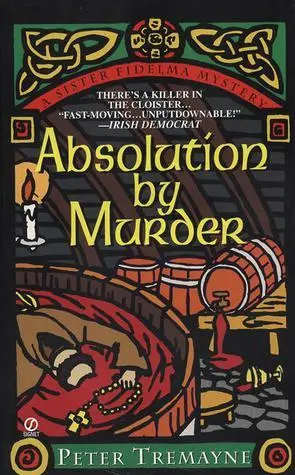
- Название:Absolution by Murder
- Автор:
- Издательство:Signet
- Жанр:
- Год:1994
- ISBN:9780451192998
- Рейтинг книги:5 / 5. Голосов: 1
-
Избранное:Добавить в избранное
- Отзывы:
-
Ваша оценка:
Absolution by Murder: краткое содержание, описание и аннотация
Предлагаем к чтению аннотацию, описание, краткое содержание или предисловие (зависит от того, что написал сам автор книги «Absolution by Murder»). Если вы не нашли необходимую информацию о книге — напишите в комментариях, мы постараемся отыскать её.
Absolution by Murder — читать онлайн бесплатно полную книгу (весь текст) целиком
Ниже представлен текст книги, разбитый по страницам. Система сохранения места последней прочитанной страницы, позволяет с удобством читать онлайн бесплатно книгу «Absolution by Murder», без необходимости каждый раз заново искать на чём Вы остановились. Поставьте закладку, и сможете в любой момент перейти на страницу, на которой закончили чтение.
Интервал:
Закладка:
‘What is going on?’ she demanded.
Eadulf asked one of the brothers, who replied with an expression of fear.
‘A victim of the Yellow Plague,’ Eadulf translated, ‘the pestilence that is tearing this land apart, destroying men, women and children without deference to race, sex or rank. The person must have wandered here, seeking aid, and wandered too near the market set up by the traders below the abbey walls.’
Fidelma stared aghast.
‘You mean they are stoning a sick and dying person to death? Is no one going to put a stop to this outrage?’
Eadulf bit his lip, embarrassed.
‘Would you face that hysterical mob?’ He pointed down to where the crowd were still screaming their fear at the now still bundle of rags. ‘Anyway,’ he added, ‘it is all over.’
Fidelma compressed her lips. The stillness of the rags confirmed Eadulf’s assessment.
‘Soon, when the people realise the person is dead, they will disperse and someone will go to drag the body away to be burnt. Too many have died from this plague for us to be able to reason with these churls.’
The Yellow Plague, Fidelma knew, was an extreme form of jaundice, which had swept across Europe for several years and was now devastating both Britain and Ireland. It had reached Ireland, where it was known as the buidhe chonaill, eight years before, ushered in, claimed the scholars, by a total eclipse of the sun. It attacked mainly during the height of the summer and had eliminated half of the population of Ireland already. Two High Kings, the provincial kings of Ulster and Munster and many other persons of rank were among its victims. High-ranking churchmen such as Fechin of Fobhar, Ronan, Aileran the Wise, Cronan, Manchan and Ultan of Clonard had succumbed to its fury. So many parents had died leaving young children starving that Ultan of Ardbraccan had been moved to open an orphanage to feed and nurture these youthful victims of the plague.
Fidelma knew well the horrors of the pestilence.
‘Are your Saxon churls then animals?’ sniffed Fidelma. ‘How can they treat their fellow creatures so? And, worse still, how can the brethren of Christ stand by and watch it as if it were some side show at a fair?’
Already the brethren who had lined the windows and witnessed the tragedy were dispersing indifferently back to their tasks. If they understood her outspoken criticism they gave no sign.
‘Our ways are not your ways,’ Eadulf said patiently. ‘That I know. I have seen your sanctuaries for the sick and feeble in Ireland. Maybe one day we will learn from them. But you are in a country where the people fear sickness and death. The Yellow Plague is seen as a great evil, sweeping all before it. What people fear they will attempt to destroy. I have seen sons turning their own dying mothers out into the cold because they have the symptoms of this plague.’
Fidelma was about to argue with Eadulf, but what was the use? Eadulf was right. The ways of Northumbria were not those of her own land.
‘Let us find Seaxwulf,’ she said, turning from the window.
Below the window the shouting had abated. The people were dropping their stones and turning back to the gaiety of the market which stretched below the walls of the abbey. The bundle of rags huddled immobile in the mud where it had fallen at the first cast of the stone.
When Seaxwulf entered the room, Fidelma recognised him at once as the young monk with corn-coloured hair who had stood at Wilfrid’s side in the sacrarium.
Seaxwulf was a slender, smooth-faced young man who giggled nervously every now and again when asked a direct question. He had light blue eyes and had a curious habit of fluttering his eyelids and speaking with a hissing lisp in a soprano voice. In all, Fidelma had to keep reminding herself that she was speaking to a male and not a flirtatious young girl. Nature seemed to have played the young man a cruel trick by a moment of sexual indecision. She found his age hard to guess but presumed he was in his early twenties, although there was hardly a sign of a razor touching the soft downy hair on his cheeks.
It was Brother Eadulf who questioned the young man in Saxon while Fidelma struggled hard to follow with her inadequate but growing knowledge of the language.
‘You visited the Abbess Étain on the day she died,’ Eadulf stated flatly.
Seaxwulf actually tittered slightly and placed a slender hand over his thin lips.
His bright eyes peered at them over the top of his palm, almost coquettishly.
‘Did I?’
The voice had an odd sensual quality.
Eadulf snorted disgustedly.
‘For what purpose did you visit the Abbess of Kildare in her cell?’
The eyelids fluttered again, accompanied by another nervous giggle.
‘That is my secret.’
‘It is not,’ contradicted Eadulf. ‘We have the authority of your king, bishop and the abbess of this house to discover the truth. You are oath bound to inform us.’
Eadulf’s voice was sharp and incisive.
Seaxwulf blinked and pouted in mock annoyance.
‘Oh, very well!’ The voice was now petulant, like a child’s. ‘I went at the behest of Wilfrid of Ripon. I am his secretary, you know, and confidant.’
‘For what purpose did you go there?’ demanded Eadulf again.
The young man paused and frowned, an almost peevish frown.
‘You should speak of this to Abbot Wilfrid.’
‘I am asking you,’ snapped Eadulf, his voice suddenly harsh. ‘And I expect an answer. Now!’
Seaxwulf stuck out his lower lip. Sister Fidelma cast her eyes to the ground to contain her amusement at the actions of the curious young monk.
‘I went to negotiate with the abbess on Wilfrid’s behalf.’
Here Fidelma broke in, not sure she had heard the word correctly.
‘Negotiate?’ She emphasised the word.
‘Yes. As chief counsels for Rome and Columba, Wilfrid and the Abbess Étain were intent on agreeing points before the public assembly started.’
Fidelma’s eyes widened.
‘The Abbess Étain was making agreements with Wilfrid of Ripon?’ She put the question swiftly through Eadulf.
Seaxwulf shrugged his slender shoulders.
‘To agree points before the debate saves much time and energy, sister.’
‘I am not sure what you mean. Are you saying that points of dissension were to be agreed before the public discussions?’
Again Eadulf had to translate this question into Saxon for the monk and the reply back into Irish.
Seaxwulf raised his eyebrows as if the question need not have been asked.
‘Of course.’
‘And the Abbess Étain was a willing party to making such agreements?’
Fidelma was astonished at the revelation that negotiations were being carried out away from the public debate. It did not seem honest that the two factions could decide points without bringing them into the open before the synod.
Seaxwulf shrugged languorously.
‘I have been to Rome. It happens all the time. Why waste time squabbling in public when a private agreement will get you what you want?’
‘How far had these agreements gone?’ demanded Fidelma through Eadulf.
‘Not far,’ replied Seaxwulf confidently. ‘We had reached some agreement on the tonsure. As you know, Rome regards the tonsure of your church of Columba as barbaric. We adhere to the tonsure of the saintly Peter which he cut in commemoration of Christ’s crown of thorns. The Abbess Étain was considering accepting that the Columban church had been misled as to the nature of the tonsure.’
Fidelma swallowed hard.
‘But that is impossible,’ she whispered.
Seaxwulf smiled, as if pleased at her reaction.
‘Oh yes. Oh yes, the abbess could concede that point in return for the concession of the blessing, whereby we of Rome hold up the thumb and the first and second fingers to represent the Trinity when giving the blessing whereas you of the Columban church hold up the first, third and fourth fingers. Wilfrid was ready to concede that either form was valid.’
Читать дальшеИнтервал:
Закладка:
Похожие книги на «Absolution by Murder»
Представляем Вашему вниманию похожие книги на «Absolution by Murder» списком для выбора. Мы отобрали схожую по названию и смыслу литературу в надежде предоставить читателям больше вариантов отыскать новые, интересные, ещё непрочитанные произведения.



Обсуждение, отзывы о книге «Absolution by Murder» и просто собственные мнения читателей. Оставьте ваши комментарии, напишите, что Вы думаете о произведении, его смысле или главных героях. Укажите что конкретно понравилось, а что нет, и почему Вы так считаете.