Peter Tremayne - Absolution by Murder
Здесь есть возможность читать онлайн «Peter Tremayne - Absolution by Murder» весь текст электронной книги совершенно бесплатно (целиком полную версию без сокращений). В некоторых случаях можно слушать аудио, скачать через торрент в формате fb2 и присутствует краткое содержание. Год выпуска: 1994, ISBN: 1994, Издательство: Signet, Жанр: Старинная литература, на английском языке. Описание произведения, (предисловие) а так же отзывы посетителей доступны на портале библиотеки ЛибКат.
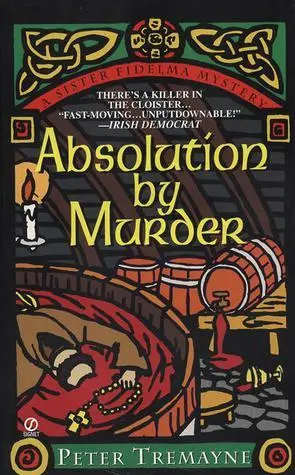
- Название:Absolution by Murder
- Автор:
- Издательство:Signet
- Жанр:
- Год:1994
- ISBN:9780451192998
- Рейтинг книги:5 / 5. Голосов: 1
-
Избранное:Добавить в избранное
- Отзывы:
-
Ваша оценка:
Absolution by Murder: краткое содержание, описание и аннотация
Предлагаем к чтению аннотацию, описание, краткое содержание или предисловие (зависит от того, что написал сам автор книги «Absolution by Murder»). Если вы не нашли необходимую информацию о книге — напишите в комментариях, мы постараемся отыскать её.
Absolution by Murder — читать онлайн бесплатно полную книгу (весь текст) целиком
Ниже представлен текст книги, разбитый по страницам. Система сохранения места последней прочитанной страницы, позволяет с удобством читать онлайн бесплатно книгу «Absolution by Murder», без необходимости каждый раз заново искать на чём Вы остановились. Поставьте закладку, и сможете в любой момент перейти на страницу, на которой закончили чтение.
Интервал:
Закладка:
‘As soon as the brethren had concluded the midday meal, the prandium, an hour after the midday Angelus. The abbess, who had eaten with the Abbess Hilda and Bishop Colmán, asked me to accompany her to her cubiculum.’
‘So that was after you had the quarrel with her?’ Fidelma said quickly.
‘I said that it was no quarrel,’ Gwid snapped defensively. ‘And Étain did not keep her temper long. She was a kind woman.’
‘For what purpose did she ask you to attend her after the midday meal?’ queried Eadulf.
‘To discuss the manner of the debate that afternoon,’ replied Gwid. ‘As you know, Étain was scheduled to open the proceedings on behalf of the church of Columba. She wanted to discuss her speech with me, the way she could use quotations from the apostles to appeal to the Saxons. Her Greek was sometimes not of the best.’
‘How long were you with her?’ Fidelma asked.
‘An hour. No more than an hour. We spoke about the detail of her arguments with respect to the references from the Gospels. I stood ready to translate should there be doubt about the quotations she chose.’
‘How did she seem to you when you left her?’ Eadulf asked, rubbing the tip of his nose with his forefinger.
Gwid frowned.
‘I do not follow.’
‘Was she apprehensive? Was she relaxed? How did she seem?’
‘She seemed relaxed enough. Obviously she was preoccupied with her work but no more preoccupied than I have seen her when preparing for one of her tutorials at Emly.’
‘She expressed no alarm? No one had threatened her since she had been here?’
‘Ah, you mean a threat from one of the Roman faction? She told me that once or twice she had been insulted by Roman priests. Athelnoth, for example. But he—’
Gwid suddenly bit her lip.
Fidelma’s eyes sparkled immediately.
‘You were going to say something, sister?’ Her voice was quiet but insistent.
Gwid grimaced awkwardly.
‘It is nothing. Something personal and irrelevant.’
Eadulf scowled.
‘We will judge what is irrelevant, sister. What were you going to say?’
‘Athelnoth was very antagonistic to Etain.’
‘Because?’ prompted Fidelma, sensing the woman’s extreme reluctance to make herself clear.
‘It is not seemly that I should speak of the dead abbess in this manner.’
Eadulf gave a bark of exasperation.
‘You have not spoken in any manner as yet. What is not seemly?’
‘We know that Athelnoth is not only pro-Roman but he views Northumbrians as superior to all people,’ Fidelma remarked, remembering what Étain had told her on her first night at Streoneshalh.
Gwid bit her lip again, colouring slightly.
‘The antagonism was one of personal anger rather than one of theological conflict.’
Fidelma was perplexed.
‘You will have to explain this. What do you mean by “personal anger”?’
‘I believe that Athelnoth made advances to the Abbess Étain. Advances of an amorous nature.’
There was a brief silence.
Sister Fidelma’s lips puckered into a long, silent whistle. Étain was an attractive woman, Fidelma had long realised that fact, and Étain was no celibate. She was a woman appreciative of manly attraction. Indeed, Fidelma had placed in the dim recess of her memory what Étain had told her when they had met, of her wish to remarry and resign from the abbacy of Kildare.
Eadulf was shaking his head in surprise.
‘Are you sure of this, Sister Gwid?’
The Pictish religieuse raised her broad shoulders and let them fall in a gesture that was one of part indecision and part resignation.
‘I cannot say that I am sure. All I know is that Étain disliked him intensely and said to me that under some circumstances she could accept some of the new teachings of Rome.’
‘What do you think she meant by that?’
‘I believe she was referring to the teachings on celibacy, brother,’ responded Gwid with some coyness.
‘Did you know, then, Abbess Étain was to announce her resignation as abbess of Kildare after this assembly?’ Fidelma asked suddenly. ‘Did you know she contemplated taking a husband—?’
‘When did Étain make this comment about celibacy?’ Eadulf interrupted.
Fidelma bit her lip in irritation for Eadulf had cut off the spontaneity that she had hoped for in Gwid’s reply. The Pictish sister stirred uneasily.
‘We were talking about how she would respond if the Roman faction brought up the arguments on celibacy. Many of them believe that there should be no mixed houses, and that all the religious, from the brethren to the bishops should remain celibate. It was after this that the abbess made her remark. I did not know that Étain contemplated marriage herself or resigning from the abbacy.’ Gwid frowned. ‘If this is true, it would have been unjust.’
‘Unjust?’
‘Immoral then, immoral that a woman of the abbess’ talent should resign her office to live with a man. Perhaps her death was a form of absolution from an action which would have been vile and sinful.’
Fidelma gazed curiously at her.
‘How do you know that she referred to Athelnoth when she made her remarks? How could you interpret that to mean that the Saxon had made advances to her?’
‘Because Athelnoth disturbed us when we were talking of this matter, requesting to speak alone with Etain. Étain told him that she was busy and he went away. It happened while we were talking of celibacy. She said, so far as I recall, “When a man like that makes advances, I could accept these new teachings of Rome” – or words to that effect.’
Eadulf returned to the questioning.
‘Are you sure she said “when” rather than “if’? Was she implying that Athelnoth had made such advances or was she hypothesising?’ he demanded curtly.
Sister Gwid raised a shoulder and let it fall.
‘I came away with the distinct impression that Athelnoth had already made licentious suggestions to the abbess.’
There was a silence while Fidelma and Eadulf digested the significance of what Gwid had told them.
Fidelma continued after a moment or two of silence.
‘And was there any other person or incident which Étain spoke of in connection with antagonism or dislike from the Roman faction?’
‘Only the subject of Athelnoth was spoken of.’
‘Very well. Thank you, sister. We are sorry to have added to your sorrow.’
The ungainly sister rose and turned for the door.
‘Incidentally – ’
Fidelma’s voice stayed her.
‘– you seemed to indicate that marriage among religious is a vile, sinful practice. What do you think of the controversy of celibacy among the religious?’
Sister Gwid’s mouth tightened grimly.
‘I am in favour of the teaching of the blessed Paul of Tarsus and of Maighnenn, abbot of Kilmainham. Let the sexes not defile each other in the service of the Almighty!’
Eadulf waited until Sister Gwid had left before rounding on Fidelma in annoyance, interrupting her thoughts.
‘If we are working together, sister, you really should not keep information from me.’
Fidelma was about to respond angrily but suddenly realised that Eadulf was right to be annoyed. She had not mentioned Étain’s decision to resign her office to marry. She had not even thought it important and she was not convinced that it was. She sighed under her breath.
‘I am sorry. I was not sure whether Étain’s decision to resign her office was a matter of relevance. Étain only mentioned it to me on the night before her death.’
‘Who was she to marry?’
‘I presume it was someone she met in Ireland. Her intention was to go back to Kildare and resign her office. Then I suppose she would continue to teach in a double house as she did before at Emly.’
Читать дальшеИнтервал:
Закладка:
Похожие книги на «Absolution by Murder»
Представляем Вашему вниманию похожие книги на «Absolution by Murder» списком для выбора. Мы отобрали схожую по названию и смыслу литературу в надежде предоставить читателям больше вариантов отыскать новые, интересные, ещё непрочитанные произведения.









Обсуждение, отзывы о книге «Absolution by Murder» и просто собственные мнения читателей. Оставьте ваши комментарии, напишите, что Вы думаете о произведении, его смысле или главных героях. Укажите что конкретно понравилось, а что нет, и почему Вы так считаете.