A Stairs - Eva Ibbotson
Здесь есть возможность читать онлайн «A Stairs - Eva Ibbotson» весь текст электронной книги совершенно бесплатно (целиком полную версию без сокращений). В некоторых случаях можно слушать аудио, скачать через торрент в формате fb2 и присутствует краткое содержание. Год выпуска: 0101, Жанр: Старинная литература, на английском языке. Описание произведения, (предисловие) а так же отзывы посетителей доступны на портале библиотеки ЛибКат.
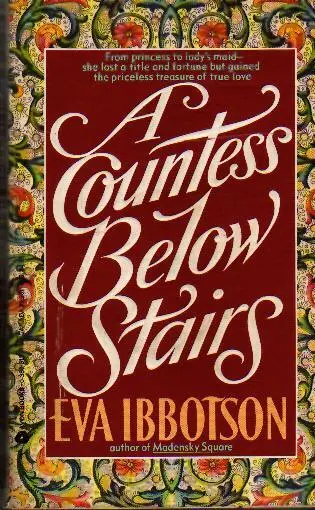
- Название:Eva Ibbotson
- Автор:
- Жанр:
- Год:0101
- ISBN:нет данных
- Рейтинг книги:4 / 5. Голосов: 1
-
Избранное:Добавить в избранное
- Отзывы:
-
Ваша оценка:
Eva Ibbotson: краткое содержание, описание и аннотация
Предлагаем к чтению аннотацию, описание, краткое содержание или предисловие (зависит от того, что написал сам автор книги «Eva Ibbotson»). Если вы не нашли необходимую информацию о книге — напишите в комментариях, мы постараемся отыскать её.
Eva Ibbotson — читать онлайн бесплатно полную книгу (весь текст) целиком
Ниже представлен текст книги, разбитый по страницам. Система сохранения места последней прочитанной страницы, позволяет с удобством читать онлайн бесплатно книгу «Eva Ibbotson», без необходимости каждый раз заново искать на чём Вы остановились. Поставьте закладку, и сможете в любой момент перейти на страницу, на которой закончили чтение.
Интервал:
Закладка:
There had been so many in his youth. The dairymaids in blue caps like coifs to keep their curls out of the milk, their breath as sweet as that of the cows they tended. The dimity sewing girls in checked pink gingham with quick, pricked fingers … Scullery maids, patient as oxen with their hessian aprons and humped behinds, forever scrubbing pale circles in the darker stone … Laundry maids singing like blackbirds as they hung up the sheets …
He forgot so many things these days, but he could still remember almost all their names. Daisy, the little freckled nursemaid with streamers in her cap … Even in his pram he’d loved Daisy. Netta, the poor little drudge at his public school who’d still managed to force a dimple into her pinched cheek when he’d passed her in the interminable, dank corridors with her buckets … And Elly, the Irish chambermaid, who’d given him so lightly and gaily what most youths had to buy with trepidation and risk from some professional. Ah, the panache of that girl who’d seduced him, not in som haystack or barn but on the needlepoint rug in the tapestry room, in the still hour between lunch and tea.
But of course it was wrong. Oh, one could find reasons, perhaps. Easy to say that if his parents had been able to show that they loved him, if the girl he’d asked to marry him hadn’t laughed in his face, he’d have been different. Those were just excuses, thought the humiliated old man, while Isolde died and the gay and beguiling ghosts continued to walk inside his head.
The parlourmaids at his club, the tips of their delectable, shell-pink ears peeping from beneath their caps as they bent down to serve … The hoity-toity ladies’ maids in rustling black silk… And down in the kitchen another world, hard to penetrate but glorious, with the flushed, busty and bustling girls and the delicious smells of the food caught in their white-bibbed aprons and later (if Fate was kind and they were willing) in their loosened hair…
Isolde was dead. Uncle Sebastien rose and took the needle from the record.
It was over.
There was a knock at the door. Not Mary, he hoped. The dowager, when she learnt what had befallen him, had offered to take him with her to the Mill House. He’d refused, of course. There were only three bedrooms; he’d be impossibly in her way with his music and his insomnia. It wasn’t even as though Mary was really his niece. He’d already been living at Mersham, a beached-up middle aged bachelor, when she came there as a bride. She owed nothing to her dead husband’s uncle. No, he wasn’t as selfish as that but, all the same, he hoped it wasn’t Mary. If she came now he might just weaken…
‘Come in.’
A dark, enquiring head, a questioning: ‘You are not busy, sir?’ A curtsy.
Anna. He smiled. The dowager was right, he had not laid a finger on Anna. Too much of a snob, he told himself, for he had known her at once for what she was. Yet with this girl he felt none of the constraints he sometimes felt with women of his own class. And, as she stood before him, he understood what Rupert could not do: why the other maids, so quick to peck out an outsider, accepted her. For all her intelligence and breeding, Anna had something of their essence: a lack of self-regard, of priggery, a deep and selfless capacity for service.
‘Miss Hardwicke is out and I have finished my work downstairs so Lady Westerholme has sent me to see if you require anything,’ said Anna, paraphrasing the dowager’s anguished: ‘Go to Mr Frayne, Anna,’ as she met her in the passage. She came closer. ‘You are sad?’
‘No … no,’ said Uncle Sebastien, wondering what it would be like to have a daughter such as this. ‘It’s just … well, you may have heard, I’m to have a nurse. Miss Hardwicke feels I need looking after … that it’s too much for the maids to keep carrying trays. It’s very thoughtful of her.’
Anna nodded and tried to give him the concept back in an endurable form. ‘Nurses are so beautiful,’ she said. ‘And they have such lovely uniforms, caps and cloaks and everything so starched and crisp.’
‘This one is middle-aged and sensible. I’m going on a diet, too.’
Even Anna was daunted by this prospect. Then she came and slipped to her knees by his side and said, ‘Please will you play for me? Not the gramophone. You, yourself. The Waldstein Sonata, perhaps, because I love it so much and particularly the last movement where the hands cross?’
The old man shook his head. ‘I can’t, Anna. I can’t play properly any more.’
‘Please,’ said Anna, knowing that he must be led into his place of refuge - and waited.
Forgetting his own troubles, Uncle Sebastien looked at her, noting the weary droop of the shoulders, the dark smudges under her eyes, and something else, something that had not been there, he thought, when first she came to Mersham - a look, almost, of bewilderment, of puzzlement, as though she was troubled by something she did not yet understand.
‘If you’ll play with me?’ he said cunningly. ‘I have the Schubert duets. What about the Fantasia in F ?’
‘Ah, yes’ Her face was suddenly transfigured. ‘But I cannot play with you, it is impossible.’
‘Not Selina Strickland, I hope. Because -‘
‘No.’ She sighed. ‘I shall be gone so soon that it doesn’t matter, I think. But you are a professional.’
In silence, Uncle Sebastien held out his hands, bent and swollen with rheumatism and age.
‘Yes, you are right,’ said Anna quietly. ‘God understands these things. Come.’
And so they played some of the world’s loveliest piano music - the exiled homesick girl, the humiliated, tired old man. Not properly. Better than that.
- - - -*
The next day, after taking up Mr Frayne’s tea tray, Peggy came back to the kitchens heaving with an almost operatic rage.
‘When I got up the stairs there was this blinkin’ great cow all done up in white overalls met me at the door an’ wouldn’t let me past. ‘All trays are to be put down on the table outside from now on,’ she said.’ Peggy’s mimicry of the nurse’s genteel tones was accurate and savage.
Anna turned. ‘Was she beautiful?’ she asked, clutching at straws.
‘Beautiful! You must be joking. A nose like a hatchet and a huge black wart with whiskers on it.’
Anna sighed. Baskerville’^ wart, contrasting so poignantly with the blond undulations of his cheeks, was one of his greatest assets, but she could see that it might not be the same for a lady.
‘None of us are allowed in the room from now on,’ raged Peggy, ‘not when Mr Frayne is in it.’
‘Well, you used to grumble enough about the way he carried on,’ said Louise. ‘I’d have thought you’d be pleased.’
Peggy bit her lip. She seemed to be terribly upset.’ ‘e didn’t mean any harm,’ she said.
‘He’d never push it too far,’ echoed Pearl. ‘A proper gentleman he was, really.*
‘Crikey, you talk as if he was dead,’ said Louise.
‘ ‘e might as well be,’ said Peggy, and spoke truer than she knew.
- - - -*
While Mersham was preparing for the wedding, Heslop was no less busy preparing for the ball.
Heslop’s butler, Mr Hawkins, had been trained by Proom himself and he brought to his work an iron rigor and indomitable sense of style. At Heslop, The Times was still ironed before it reached the breakfast table; the footmen, their hair powdered, wore their claret-coloured knee breeches and swallow tail coats even when the family dined alone; Monsieur Bourget, the chef, throwing off quenelles fricassees and temperaments with equal abandon, defended his kitchens, with their scurrying retinue of minions, as if they were Fort Knox. If Minna yearned sometimes for the simplicity of her American childhood or the easier ways of Mersham, she knew better than to interfere, and Heslop ran like clockwork.
Читать дальшеИнтервал:
Закладка:
Похожие книги на «Eva Ibbotson»
Представляем Вашему вниманию похожие книги на «Eva Ibbotson» списком для выбора. Мы отобрали схожую по названию и смыслу литературу в надежде предоставить читателям больше вариантов отыскать новые, интересные, ещё непрочитанные произведения.






Обсуждение, отзывы о книге «Eva Ibbotson» и просто собственные мнения читателей. Оставьте ваши комментарии, напишите, что Вы думаете о произведении, его смысле или главных героях. Укажите что конкретно понравилось, а что нет, и почему Вы так считаете.