Upton Sinclair - Love's pilgrimage
Здесь есть возможность читать онлайн «Upton Sinclair - Love's pilgrimage» весь текст электронной книги совершенно бесплатно (целиком полную версию без сокращений). В некоторых случаях можно слушать аудио, скачать через торрент в формате fb2 и присутствует краткое содержание. Год выпуска: 1911, Издательство: New York : M. Kennerley, Жанр: Старинная литература, на английском языке. Описание произведения, (предисловие) а так же отзывы посетителей доступны на портале библиотеки ЛибКат.
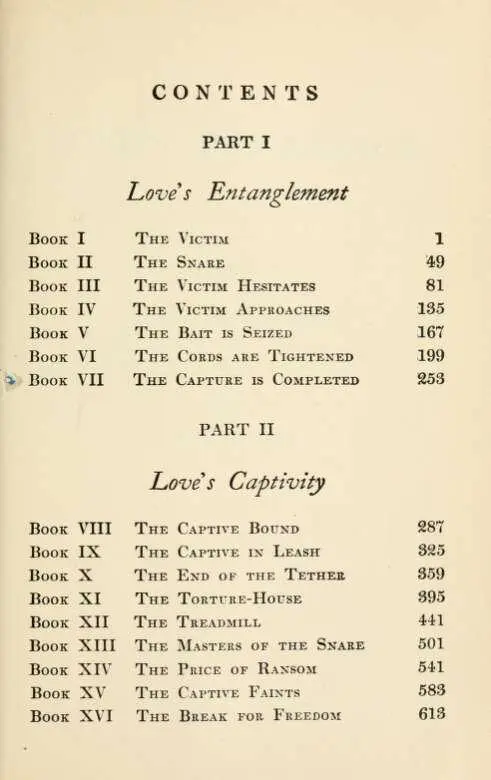
- Название:Love's pilgrimage
- Автор:
- Издательство:New York : M. Kennerley
- Жанр:
- Год:1911
- ISBN:нет данных
- Рейтинг книги:4 / 5. Голосов: 1
-
Избранное:Добавить в избранное
- Отзывы:
-
Ваша оценка:
Love's pilgrimage: краткое содержание, описание и аннотация
Предлагаем к чтению аннотацию, описание, краткое содержание или предисловие (зависит от того, что написал сам автор книги «Love's pilgrimage»). Если вы не нашли необходимую информацию о книге — напишите в комментариях, мы постараемся отыскать её.
Love's pilgrimage — читать онлайн бесплатно полную книгу (весь текст) целиком
Ниже представлен текст книги, разбитый по страницам. Система сохранения места последней прочитанной страницы, позволяет с удобством читать онлайн бесплатно книгу «Love's pilgrimage», без необходимости каждый раз заново искать на чём Вы остановились. Поставьте закладку, и сможете в любой момент перейти на страницу, на которой закончили чтение.
Интервал:
Закладка:
This was not a difficult decision; for in the first place he was one of the disinherited and dispossessed himself ; and in the next place, even before the "economic screw" had penetrated his consciousness, he had been a rebel in his sympathies and tastes. Jesus, Isaiah, Milton, Shelley—such men as these had been the friends of his soul; and he had sought in vain for their spirit in modern society—he had thought that it was dead, and that he, and a few other lonely dreamers in garrets, were the only ones who knew or cared about it. But now he came upon the amazing discovery that this spirit, driven from legislative-halls and courts of justice, from churches and schools and editorial sanctums, had flamed into life in the hearts of the working class,
and was represented in a political party which nurrb bered some thirty millions of adherents and cast some seven million votes!
Beginning nearly a century ago, these workingmen had taken the spirit of Jesus and Isaiah and Milton and Shelley, and had worked out a scientific basis for
v •*
it, and a method whereby it could be made to count in the world of affairs. They had analyzed all the evils of modern society—poverty and luxury, social and political corruption, prostitution, crime and war; they had not only discovered the causes of them, but had laid down with mathematical precision the remedies, and had gone on to carry the remedies into effect. In every civilized land upon the globe they were at work as a political party of protest; they were holding conventions and adopting programs; they had an enormous literature, they were publishing newspapers and magazines, many of them having circulations of hundreds of thousands of copies.
The strangest thing of all was this. Thyrsis was an educated man—or was supposed to be. He had spent five years in schools, and nine years in colleges and universities ; he had given the scholars of the world full opportunity to guide him to whatever was of importance. Also, he had been an omnivorous reader upon his own impulse; and here he was, at the end of it all—practically ignorant that this enormous movement existed!
In economic classes in college there had, of course, been some mention of Socialism; but this had been of the Utopian variety, the dreams of Plato and St. Simon and Fourier. There had been some account of the innumerable communities which had sprung up in America—with careful explanation, however, that they had all proven failures. Also one heard vaguely of Marx
THE MASTERS OF THE SNARE 529
and Lassalle, two violent men, whose ideas were still popular among the ignorant masses of Europe, but could be of no concern to the fortunate inhabitants of a free Republic.
And then, after this, to come upon some piece of writing—such as, for instance, the "Communist Manifesto" ! To read this mile-stone in the progress of civilization, this marvellous exposition of the development of human societies, and of the forces which drive and control them; and to realize that two lonely students, who had cast in their lot with the exploited toilers, had been able to predict the whole course of political and industrial evolution for sixty years, and to foresee and expound with precision the ultimate outcome of the whole process—matters of which the orthodox economists were still as ignorant as babes unborn!
Or to discover the writings of such a man as Karl Kautsky, the intellectual leader of the modern movement in Germany; such books as "The Social Revolution", and "The Road to Power"—in which one seemed to see a giant of the mind, standing in a death-duel with those forces of night and destruction that still made of the fair earth a hell! With what accuracy he was able to measure the strength of these powers of evil, to anticipate their every move, to plan the exact parry with which to meet them! To Thyrsis he seemed like some general commanding an army in battle, with the hopes of future ages hanging upon his skill. But this was a general who fought, not with sword and fire, but with ideas ; a conqueror in the cause of "right reason and the will of God". He wrote simply, as a scientist; and yet one could feel the passion behind the quiet words—the hourly shock of the incessant conflict, the grim persistence which pressed on in the face
of obloquy and persecution, the courage which had been tested through generations of anguish and toil.
Thyrsis' mind rushed through these things like a prairie-fire; and all the time that he read, his wonder grew upon him. How could he have been kept ignorant of them? He was quick to pounce upon the essential fact, that this was no accident; it was something that must have been planned and brought about deliberately. He had thought that he was being educated, when in reality he was being held back and fenced off from truth. It was a world-wide conspiracy—it was that very class-war which the established order was waging upon these men and their ideas!
§ 10. IT was not difficult for any one to understand the ideas, if he really wished to. They began with the fact of "surplus value". One man employed another man for the sake of the wealth he could be made to produce, over what he was paid as wages. That seemed obvious enough; and yet, what consequences came from following it up! Throughout human history men had been setting other men to work; whether they were called slaves, or serfs, or laborers, or servants, the motive-power which had set them to work had been the desire for "surplus value". And as the process went on, those who appropriated the profits combined for mutual protection; and so out of the study of "surplus value" came the discovery of the "class-struggle". Human history was the tale of the arising of some dominating class, and of the struggle of some subject class for a larger share of what it produced. Human governments were devices by which the master-class preserved its power; and whatever may have been the original purposes of arts and religions, in the end they
THE MASTERS OF THE SNARE 531
had always been seized by the master-class, and used as aids in the same struggle.
One came to the culmination of the process in modern capitalist society. Here was a class entrenched in power, owning the sources of wealth, the huge machines whereby it was produced, and the railroads whereby it was distributed, and above all, the financial resources upon which the other processes depended. One saw this class holding itself in power by means of the policeman's club and the militiaman's rifle, by machine-gun and battle-ship; one saw that, whether by bribery or by outright force, it had seized all the powers of government, of legislatures and executives and courts. One saw that in the same way it had seized upon the sources of ideas; it controlled the newspapers and the churches and the colleges, that it might shape the thoughts of men and keep them content. It set up in places of authority men whose views were agreeable to it—who believed in the beneficence of its rule and the permanence of its system; who would pour out ridicule and contempt upon those who suggested that any other system might be conceivable. And so the class-war was waged, not merely in the world of industry and politics, but also in the intellectual world.
And step by step, as the processes of capitalism culminated, this war increased in bitterness and intensity. For, of course, as capital heaped up and its control became concentrated, the ratio of exploitation increased. The great mass of labor was unorganized and helpless; whereas the masters had combined and fixed their prices ; and so day by day the cost of living increased, and misery and discontent increased with it. As capital expanded, and new machines of production were added, there were more and more goods to sell, and more and
more difficulty in finding markets; and so came overproduction and unemployment, panics and crises; so came wars for foreign markets—with new opportunities of plunder for the exploiters and new hardships and new taxes for the producers. And so was fulfilled the prophecy of Marx and Engels; under the pressure of bitter necessity the proletariat was organizing and disciplining itself, training its own leaders and thinkers, forming itself into a world-wide political party, whose destiny it was to conquer the powers of government in every land, and use them to turn out the exploiters, and to put an end to the rule of privilege.
Читать дальшеИнтервал:
Закладка:
Похожие книги на «Love's pilgrimage»
Представляем Вашему вниманию похожие книги на «Love's pilgrimage» списком для выбора. Мы отобрали схожую по названию и смыслу литературу в надежде предоставить читателям больше вариантов отыскать новые, интересные, ещё непрочитанные произведения.









Обсуждение, отзывы о книге «Love's pilgrimage» и просто собственные мнения читателей. Оставьте ваши комментарии, напишите, что Вы думаете о произведении, его смысле или главных героях. Укажите что конкретно понравилось, а что нет, и почему Вы так считаете.