Hood, Bruce - Supersense
Здесь есть возможность читать онлайн «Hood, Bruce - Supersense» весь текст электронной книги совершенно бесплатно (целиком полную версию без сокращений). В некоторых случаях можно слушать аудио, скачать через торрент в формате fb2 и присутствует краткое содержание. Год выпуска: 2009, Издательство: Constable Robinson, Жанр: Старинная литература, на английском языке. Описание произведения, (предисловие) а так же отзывы посетителей доступны на портале библиотеки ЛибКат.
- Название:Supersense
- Автор:
- Издательство:Constable Robinson
- Жанр:
- Год:2009
- ISBN:нет данных
- Рейтинг книги:3 / 5. Голосов: 1
-
Избранное:Добавить в избранное
- Отзывы:
-
Ваша оценка:
Supersense: краткое содержание, описание и аннотация
Предлагаем к чтению аннотацию, описание, краткое содержание или предисловие (зависит от того, что написал сам автор книги «Supersense»). Если вы не нашли необходимую информацию о книге — напишите в комментариях, мы постараемся отыскать её.
Supersense — читать онлайн бесплатно полную книгу (весь текст) целиком
Ниже представлен текст книги, разбитый по страницам. Система сохранения места последней прочитанной страницы, позволяет с удобством читать онлайн бесплатно книгу «Supersense», без необходимости каждый раз заново искать на чём Вы остановились. Поставьте закладку, и сможете в любой момент перейти на страницу, на которой закончили чтение.
Интервал:
Закладка:
If your eyesight is reasonable then you will probably recognize Albert Einstein. You have picked up the fine detail of information that depicts the famous scientist. But maybe you are missing the bigger picture? Try screwing up your eyes to blur the image or better still, put the book down and walk away about 10 feet. Take another look. Who do you see now? It is exactly the same image but now you see the actress Marilyn Monroe. In the same way that we constantly filter information from our environment for significant patterns, individuals may literally have different ways of viewing the world.
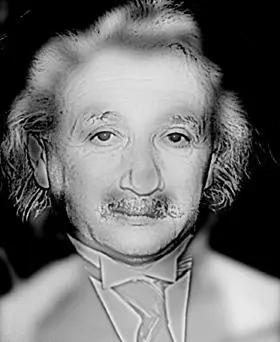
FIG. 23: Who do you see in this picture? © AUDE OLIVA.
Sceptics and believers may also differ in the activity of their dopamine systems. For example, imagine watching your TV when the antenna is not plugged in. The fuzzy snow on the screen is like visual noise. If you were to put a very faint image of a face against such a background, believers would be much more likely to say that a face was present compared to sceptics, who require more evidence of a face. Sceptics more often reject the presence of a target when it is really there. That’s because sceptics and believers have different thresholds. To test this, Brugger and his colleagues asked sceptics and believers to detect words and faces presented on a computer screen among lots of visual noise. The researchers then administered the drug levadopa to raise dopamine levels in both groups. The sceptics now saw patterns, but the believers were more conservative. The dopamine changed the setting on the filter for those in these two groups. Changing levels of the neurotransmitter had altered each participant’s perception. 44
The research into the brain mechanisms of the supersense is intriguing but hardly surprising. We know that reality can be easily distorted by changing brain chemistry. Hallucinogenic drugs induce fantasy states in which all sorts of supernatural beliefs can operate. That’s why mind-altering substances and rituals have been so important to religious ceremony. Whether through poisonous plants or trance-induced rapture, altering the brain alters reality.
An altered sense of reality may be the reason why psychotic mania has often been linked to creativity. The tendency to seek and perceive patterns where the rest of us see nothing may be part of the creative process. Some of the world’s most creative artists, writers, composers, and scientists have been associated with periods of mania, and many have had full-blown psychotic breakdowns. Listing some of them is like compiling a who’s who of the creative world: Van Gogh, Beethoven, Byron, Dickens, Coleridge, Hemingway, Keats, Twain, Woolf, and even Newton – all experienced episodes of mania. Creativity may be a benefit of the supersense, but the price we sometimes pay is potential mental illness.
However, we don’t have to suffer from psychiatric illness to assume that the supersense is operating in the world. Rather, sensing patterns and connections is part of the normal process, but we must also learn to ignore patterns and connections that may not really exist. Supernatural thinking may interfere with our ability to act rationally, as when we assume the presence or activity of unseen events in the world when they are not really there. To overcome this problem we need to exercise some form of mind control.
MIND CONTROL
The supersense may result from a mind designed to infer invisible structures in the world, but not all of us succumb to the idea that the supernatural is real. Many of us can ignore such intuitive reasoning. How can this be? Consider again some of the phenomena outlined in this book. Why does a child search over and over again for a fallen object directly below? Why do children have a problem understanding that things that look alive are not really so? Why are children’s intuitive theories about how vision works difficult to ignore? Why can we not ignore someone else’s gaze? Why might childish intuitive misconceptions lie dormant in the adult only to reappear later in life? Why do we fail to ignore silly thoughts? Why do psychotic patients detect all manner of significant patterns in the world? In all these situations, there is something about how the mind organizes and controls what we do and think. We need mind management to stop ourselves getting stuck in routines and thoughts.
Scientists interested in understanding how the mind works have increasingly become interested in the developing front part of the brain. In terms of sheer size, the frontal parts of the brain are enormously expanded in the human species. This explains why our foreheads are so much bigger in comparison to other primates and prehominid fossil skulls. Unlike our closest animal cousins, we stand out in our ability to plan and coordinate behaviour and thoughts in a flexibly adaptive way. We can anticipate events and imagine solutions. Our frontal brains being what they are, we could easily beat other monkeys and apes at rock, paper, and scissors.
One region of the frontal lobes has been a prime focus of interest: the dorsal lateral prefrontal cortex, or DLPC. The DLPC plays a major role in controlling a set of operations known as the executive functions of the brain, which include:
1.
Working memory: The ability to hold temporary thoughts in mind without necessarily committing them to memory.
2.
Planning: The ability to anticipate future events and organize a corresponding sequence to achieve goals.
3.
Inhibition: The ability to ignore distracting or irrelevant thoughts and actions.
4.
Evaluation: The ability to weigh up thoughts and actions in terms of desired goals. 45
Working memory does exactly what the term implies. 46It allows you to work out problems by holding on to information in a temporary memory store. You use working memory every time you have to remember a new telephone number or someone’s name at a party. Information in working memory is only briefly held in store. It’s a store that is fragile and limited. That’s why it can be very hard to remember very long telephone numbers unless you rehearse them by repeating them over and over. Working memory is like a temporary back of a mental envelope we use when we want to take note of something briefly.
Planning is how you achieve your goals. It allows you to imagine and build mental models to play out different scenarios in advance. For example, consider this brain-teaser: You have a fox, a chicken, and a bag of corn to transport across a river but you only have enough space in the boat for one item on each trip. How do you transport all three across the river without losing any items? Remember foxes eat chickens and chickens eat corn, so you can never leave any of these pairs alone on the bank. To solve this you need planning. 47You can imagine the consequence of the first trip, the second trip, and so on until you work out the solution. If you don’t know the answer to this one, it requires taking the chicken back and forth over the river more than once.
Inhibition is another important operation of the DLPC. We need inhibition to cancel inappropriate thoughts and actions. For example, quickly say out loud the colour of the ink – black, white, or grey – for the following words as fast as you possibly can. 48

This should be relatively easy. Let’s make it easier still.

Интервал:
Закладка:
Похожие книги на «Supersense»
Представляем Вашему вниманию похожие книги на «Supersense» списком для выбора. Мы отобрали схожую по названию и смыслу литературу в надежде предоставить читателям больше вариантов отыскать новые, интересные, ещё непрочитанные произведения.












Обсуждение, отзывы о книге «Supersense» и просто собственные мнения читателей. Оставьте ваши комментарии, напишите, что Вы думаете о произведении, его смысле или главных героях. Укажите что конкретно понравилось, а что нет, и почему Вы так считаете.