William Boyd - Sweet Caress
Здесь есть возможность читать онлайн «William Boyd - Sweet Caress» весь текст электронной книги совершенно бесплатно (целиком полную версию без сокращений). В некоторых случаях можно слушать аудио, скачать через торрент в формате fb2 и присутствует краткое содержание. Жанр: Современная проза, на английском языке. Описание произведения, (предисловие) а так же отзывы посетителей доступны на портале библиотеки ЛибКат.
- Название:Sweet Caress
- Автор:
- Жанр:
- Год:неизвестен
- ISBN:нет данных
- Рейтинг книги:4 / 5. Голосов: 1
-
Избранное:Добавить в избранное
- Отзывы:
-
Ваша оценка:
Sweet Caress: краткое содержание, описание и аннотация
Предлагаем к чтению аннотацию, описание, краткое содержание или предисловие (зависит от того, что написал сам автор книги «Sweet Caress»). Если вы не нашли необходимую информацию о книге — напишите в комментариях, мы постараемся отыскать её.
. But Amory is hungry for more and her search for life, love and artistic expression will take her to the demi monde of Berlin of the late ’20s, to New York of the ’30s, to the blackshirt riots in London, and to France in the Second World War, where she becomes one of the first women war photographers. Her desire for experience will lead Amory to further wars, to lovers, husbands and children as she continues to pursue her dreams and battle her demons.
In this enthralling story of a life fully lived, illustrated with “found” period photographs, William Boyd has created a sweeping panorama of some of the most defining moments of modern history, told through the camera lens of one unforgettable woman, Amory Clay. It is his greatest achievement to date.
Sweet Caress — читать онлайн бесплатно полную книгу (весь текст) целиком
Ниже представлен текст книги, разбитый по страницам. Система сохранения места последней прочитанной страницы, позволяет с удобством читать онлайн бесплатно книгу «Sweet Caress», без необходимости каждый раз заново искать на чём Вы остановились. Поставьте закладку, и сможете в любой момент перейти на страницу, на которой закончили чтение.
Интервал:
Закладка:
Cleve had been right, to that extent — the move away from New York and its attendant paranoias reinvigorated our encounters as they newly occurred, every six weeks or so. But I had changed in the interim — there was the Charbonneau quotient to consider now, unbeknownst to Cleve. I had one short, frustrated letter from Charbonneau — from Algiers, sent to me at the office. The line I recall was ‘I thought Washington was bad. I would cut off my right hand to be back there, now.’ Poor Charbonneau.
I remember accompanying Greville to Victoria station to see him off to Italy. He was going to join a convoy sailing from Portsmouth. He looked smart and raffish, wearing his dark war-correspondent’s uniform with its designated shoulder patches, and he had a fore-and-aft forage cap set on his head at a suitably rakish angle. He carried a musette bag slung over his shoulder with his camera equipment and other essentials in it. I was touched to see that his moustache was trimmed and dyed a hazelnut brown. He looked almost like his old self and I complimented him.
‘Actually, I had the uniform altered at my tailor’s,’ he said. ‘It was very ill-fitting.’
‘Well, you look very pukkah, Captain Reade-Hill, very much the dashing war correspondent. Just don’t do anything dashing.’
‘Cowardice is my middle name,’ he said, kissed me and whispered, ‘Bless you, darling.’
I remember that the most irritating consequence of my precipitate departure from New York was that I had to miss the publication of my first book, Absences (Frankel & Silverman, 1943). It appeared, to deafening press silence, two months after I returned to London. My publisher, Lewis Silverman, said he was sending me six copies. They never arrived, victim, I suppose, of erratic wartime postal services or of some U-boat attack. I asked Cleve to bring me over some copies on his trips to England but he always — typically — forgot. I finally managed to see a copy of Absences after the war, in 1946, three years late, by which time it was already long out of print. I wonder if this experience is unique in the history of publishing. It was a collector’s item, very rare, booksellers told me when I tried to track one down.
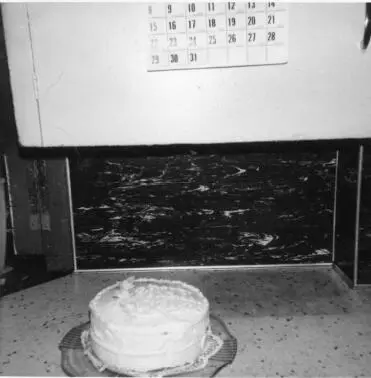
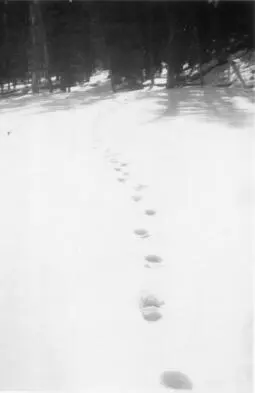
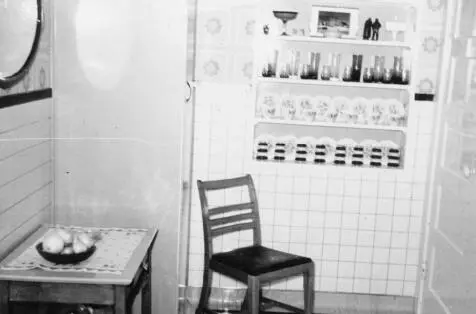
Images from Absences by Amory Clay (Frankel & Silverman, 1943).
3. D-DAY
CLEVE CAME OVER AT the end of May for a week. We spent two nights together at the Savoy in his suite with its splendid view of the brown, ever-changing river. On the morning of 4 June, after our second night together, we stayed in bed until noon, calling up room service to order toast and jam and a pot of tea that we spiked with bourbon. We made love again before we sauntered downstairs to the Grill for lunch.
The Grill was full of senior military and naval types along with a smattering of old regulars. If it hadn’t been for the uniforms — and the somewhat reduced menu — you would never have believed we were in our fifth year of the war. We amused ourselves listening to the conversation of two elderly, heavily made-up ladies of a certain age who were sitting behind us and whose patrician voices were ideally clear and carrying.
One said, ‘I’m going to live in Ireland after this war.’
The other, ‘I worry that Ireland will become over-smart.’
‘It’ll never be Kenya-type smart.’
‘I suppose not. . There are some nice houses.’
‘Nice houses and cheap and plentiful staff.’
‘Always an advantage. Why won’t you stay in London?’
‘London will be drab and dreary. I need change. I need heavenly dullness.’
Cleve leant over and whispered.
‘And these are the people our boys are dying for?’
‘Well, they’re not really representative of—’
Then I saw Charbonneau come into the Grill and stopped talking in mid-sentence. He was in his khaki uniform and was wearing his round gendarme-style hat that he swiftly removed. He was led to a table some distance away against the far wall. My mouth was dry and I felt suddenly faint. Cleve signalled to a waiter for more coffee.
‘Let’s just pay our bill, shall we?’ I said.
‘No, no,’ Cleve said. ‘I don’t want to miss the next chapter. Not for the world.’
On cue, the first old lady said, ‘Do you know, I think Gloria lacks feminine charm.’
Her companion said, ‘She doesn’t have a developed social instinct, that’s the problem.’
I heard no more because at that moment Charbonneau spotted me and our eyes met. For an awful moment I thought I was going to vomit as I saw him rise to his feet and cross the dining room towards us.
‘Hello,’ I managed to say, hoping there was sufficient surprise in my voice. ‘How are you?’
Cleve had switched his attention now. So I made the introduction.
‘Cleveland Finzi, this is — I’m so sorry, I’ve forgotten your name.’
‘Jean-Baptiste Charbonneau.’ He shook my hand, giving it a surreptitious squeeze, then Cleve’s.
‘I met Miss Clay in New York, she took my photograph.’
‘That’s right,’ Cleve said. ‘We ran a story on you, I remember. You wrote a novel, a bestseller.’
‘For a week or so,’ Charbonneau said, with appealing but untypical modesty. I could see he was enjoying himself, now.
‘What a coincidence,’ I said, more faintly than I meant. ‘And here we all are in the Savoy Grill.’
‘Very good to see you again,’ he said, giving me a little bow. ‘Nice to meet you, Mr Finzi,’ he said to Cleve and strolled back to his table.
‘Are you all right?’ Cleve asked.
‘Actually, I feel a bit sick,’ I said. ‘I think I’d better get back to the room.’
Back in the suite I kept up the charade. I went into the bathroom and retched and spat, ran water. It must have been something I ate, I said, better get home, see you tomorrow.
Cleve wanted to call a doctor — I said no, I’d be fine, I insisted. He made me sit down and drink a glass of fizzing Bromo-Seltzer that he had in his bag and I composed myself.
‘Is this good for nausea?’ I asked.
‘It’s good for anything.’
Half an hour later I walked out of Savoy Court on to the Strand to find Charbonneau waiting for me in a shop doorway, smoking a cigarette.
Back in Chelsea — in my new flat on the corner of Oakley Street and the King’s Road — I poured each of us a whisky and water while Charbonneau did his usual prospective-tenant act, opening drawers at random, peering into my small bedroom, flushing the WC.
‘That was him, wasn’t it?’ he said as I handed him his whisky.
‘What do you mean?’
‘Your American boyfriend. He’s the one.’
‘Boyfriend is the wrong word. He’s the man I’m in love with, yes.’
‘You don’t love him, it’s obvious.’
‘Wrong, Charbonneau, I do.’
‘I thought you loved me.’
‘Ha-ha. I’m very attached to you. I love Cleve.’
‘Nonsense. Deep down, au fond , you really love me.’
I closed my eyes. I wasn’t going to continue this conversation.
I had never thought of myself as promiscuous, or a ‘loose woman’, as my mother would have put it. I was thirty-six years old and had only made love with three men. It was hardly evidence of nymphomania, but, as I lay awake in bed beside the gently snoring Charbonneau, I found it hard to come to terms with the fact that I had slept with both my lovers in the last twenty-four hours — well under twenty-four hours, in fact. It didn’t feel like me, somehow — and yet it incontrovertibly was the case. What was happening? It hadn’t been planned, so that was some reassurance.
Читать дальшеИнтервал:
Закладка:
Похожие книги на «Sweet Caress»
Представляем Вашему вниманию похожие книги на «Sweet Caress» списком для выбора. Мы отобрали схожую по названию и смыслу литературу в надежде предоставить читателям больше вариантов отыскать новые, интересные, ещё непрочитанные произведения.







Обсуждение, отзывы о книге «Sweet Caress» и просто собственные мнения читателей. Оставьте ваши комментарии, напишите, что Вы думаете о произведении, его смысле или главных героях. Укажите что конкретно понравилось, а что нет, и почему Вы так считаете.