Laura Restrepo - Hot Sur
Здесь есть возможность читать онлайн «Laura Restrepo - Hot Sur» весь текст электронной книги совершенно бесплатно (целиком полную версию без сокращений). В некоторых случаях можно слушать аудио, скачать через торрент в формате fb2 и присутствует краткое содержание. Год выпуска: 2015, Издательство: AmazonCrossingEnglish, Жанр: Современная проза, на английском языке. Описание произведения, (предисловие) а так же отзывы посетителей доступны на портале библиотеки ЛибКат.
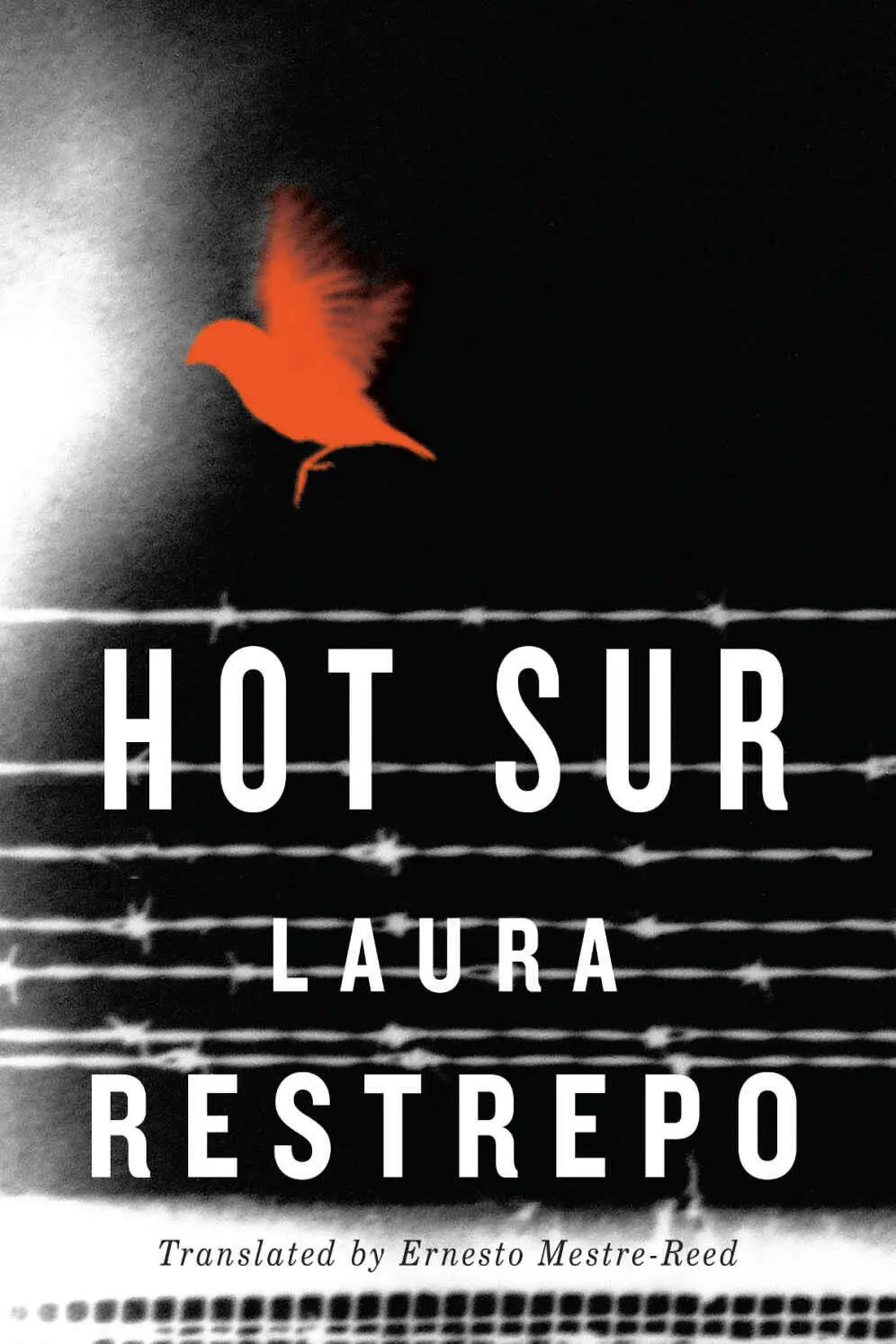
- Название:Hot Sur
- Автор:
- Издательство:AmazonCrossingEnglish
- Жанр:
- Год:2015
- ISBN:нет данных
- Рейтинг книги:5 / 5. Голосов: 1
-
Избранное:Добавить в избранное
- Отзывы:
-
Ваша оценка:
Hot Sur: краткое содержание, описание и аннотация
Предлагаем к чтению аннотацию, описание, краткое содержание или предисловие (зависит от того, что написал сам автор книги «Hot Sur»). Если вы не нашли необходимую информацию о книге — напишите в комментариях, мы постараемся отыскать её.
María Paz is a young Latin American woman who, like many others, has come to America chasing a dream. When she is accused of murdering her husband and sentenced to life behind bars, she must struggle to keep hope alive as she works to prove her innocence. But the dangers of prison are not her only obstacles: gaining freedom would mean facing an even greater horror lying in wait outside the prison gates, one that will stop at nothing to get her back. Can María Paz survive this double threat in a land where danger and desperation are always one step behind, and safety and happiness seem just out of reach?
Hot Sur — читать онлайн бесплатно полную книгу (весь текст) целиком
Ниже представлен текст книги, разбитый по страницам. Система сохранения места последней прочитанной страницы, позволяет с удобством читать онлайн бесплатно книгу «Hot Sur», без необходимости каждый раз заново искать на чём Вы остановились. Поставьте закладку, и сможете в любой момент перейти на страницу, на которой закончили чтение.
Интервал:
Закладка:
Bolivia, for her part, who had fought like a lioness to get to this reunion with her daughters, lived through that moment as if it were a personal victory, the end of a long journey, a kind of impossible goal that became reality through a monumental sustained effort. A victory, yes, but a Pyrrhic one, because her little girls were here, but where could she take them? Up to that point every time Bolivia was about to surrender, every time she was about to drop dead from exhaustion, or that she couldn’t take it anymore, every time that happened, she got a second wind with the mere thought that one day she was going to see us again, just as was happening at that moment at the arrival gate in JFK. Except that she did not imagine Violeta looking so strange and she couldn’t quite see me in that young woman with dark skin and too much hair, as if I was not her daughter but that I nevertheless brought back memories of the man who had impregnated her, who I learned from Socorro, because my mother would never talk to me about these things, was a sailor on a Peruvian fishing boat, half-native and half-black, who had arrived to the Pacific Colombian coast in pursuit of a school of tuna. He had partied with Bolivia for a whole week and then taken off after another school of tuna. And never returned. That was my father, and Bolivia thought of him when she saw me at the airport that day.
“You look like your father,” she told me that time, and never mentioned him again.
Bolivia had imagined the reunion with her daughters just as it was happening, except that in her dreams, we left the airport hand in hand, like in the movies, heading to a pretty house with plaid blankets and curtains and a bouquet of flowers on the table, a place where her two girls would marvel at things like the air-conditioning and the remote control. But she had no such things to offer us, and she couldn’t find the words to tell us what was happening. She just wanted us not to find out what was happening, and, putting on a face as if everything was alright, she hailed a cab having no idea where we might be going. While the driver loaded our luggage into the trunk, she thought, I have two minutes to figure out where we are going, one minute, half a minute. She covered me in hugs and kisses and tried to do the same with Violeta, who didn’t let her, and meanwhile the taxi driver insisted on directions and she didn’t know what to say.
“Where to, señora?”
“What’s that?”
“An address, lady, you haven’t given me an address. Where are you going?”
“Just go out here, I’ll tell you. Go straight here, I’ll tell you. Cross that street, take a right there,” Bolivia responded because she had to say something, to keep the car going, to stall while she thought of something, and meanwhile she prayed, help me, my dear, dear God, show me the light, tell me where I should take these girls to spend the night.
“Here,” she said finally in front of a hotel.
A dumpy hotel, a reeking hole in the wall, with dirty linen, stained carpets, cigarette burns on the furniture, and one window that looked out on a black wall. What did I think of all of this? I don’t remember; I was just tired. It must have already been a disappointment when we realized Bolivia didn’t have a car, but that shitty hotel definitely laid waste to any pretenses I may have acquired from living with the Navas. In any case, when Bolivia awoke the following day near dawn, I was ready; I had the suitcases packed and Violeta ready as well.
“Get dressed, Mom, we’re getting out of here,” I told Bolivia.
“But where, honey?”
“To America,” I said. “We haven’t gotten there yet.”
“But this is America, my pretty girl,” she said.
“Don’t lie to me, this is not America.”
Then she made a phone call and things got better quickly. Soon we were having breakfast in a big elegant apartment with a wine-red carpet and a white piano with a big-bellied man named Miguelito who spoke Spanish and asked us to call him Mike. Mike offered us corn arepas, black beans, white cheese, and café con leche. When I looked out the window I saw that many of the signs outside were in Spanish: Chalinas Bordadas, Pollos a la Brasa, Cigarillos Piel Roja, and Las Camelias. We had arrived. There with Miguelito, in that apartment in Spanish Harlem, we would spend our first few years in America.
And so, Mr. Rose, the time draws near. So off this goes, see if it gets to you, like a message in a bottle. I have a cramp in my hand from writing so fast, and it’s a little sad too, because it’s as if I am saying good-bye to you. Thank you for your company. Telling you all this has been a way to keep close, I should confess to you that lately you have been like that orange because you remind me that it is bright outside and that one day I’ll be there, outside, and that everything is going to pass, as all nightmares pass. It’s 11:40 according to the clock in the hallway. The countdown is about to run out. Visiting hours begin at 2:00. The inmates have to be ready in the visiting room by 1:30; at 11:45 they ring for lunch and I have to go even if I’m not hungry. So I have only five minutes to tell you these last things. If we’re going a line a minute, it would be a paragraph, at least a paragraph, a good one to finish our novel. If you ever see Violeta and recognize her, tell her that the first thing I’m going to do when they let me out is go get her. And tell her I will get out of here, whatever it takes, to be able to keep that promise. Tell her that in spite of everything, I love her. Tell her I’m sorry, to forgive me and wait for me, I’m going to come for her. And what else, my God, what else can I tell you, Mr. Rose, in the minute I have left. You make up a good ending for the novel. But make it beautiful. Please, you know I hate depressing endings. Invent something. You know about that, it’s your job. Don’t make me look bad with the readers; I don’t want them to pity me. Ciao, Mr. Rose, the bell for lunch just rang, it was truly great meeting you. Maybe we’ll see each other again one day, although I’m not holding my breath. It all depends on maktub, what has already been written. And now, for real, ciao.
7. Interview with Ian Rose
Rose was still in the shower when the buzzer rang and had to get out wet and in a towel to open the door for Pro Bono, who had arrived earlier than agreed upon at the studio on St. Mark’s. “Maybe ‘agreed upon’ is not the right term,” Rose tells me. They had not actually agreed to anything yet. Rose had been asleep when he answered the phone at about four or five in the morning and heard Pro Bono give an order through the fog of his sleep. “That’s his style, giving orders. I hadn’t agreed to anything,” Rose clarifies. Pro Bono had told him to get ready because they had to leave in an hour. “Anyway, I got up,” Rose tells me, “I guess to see what would happen. Soon I was opening the door for him, with a towel wrapped around my waist, and he, of course, was looking like a million bucks.”
Even at that early hour, Pro Bono was more gussied up than on the previous day: his shirt impeccable, white and crispy; a heavy Hermès silk tie; a dark flannel, custom-tailored suit with chalk pinstripes; a touch of classic and clean Equipage cologne; Cartier Panthere watch, wedding band on his left ring finger, and a ring with the family shield on the pinkie of the same hand. A bit too fancy for Rose’s taste. In that, just that, it was clear that the hump had made a dent in Pro Bono’s personality, which was otherwise overwhelming. It was as if he had to use everything in his exclusive closet and barricade himself behind big brands to make up for his deformity.
Rose let Pro Bono in, offered him tea and, like the day before, immediately felt intimidated by the man. Pro Bono was overbearing, at once irritable and paternal, or patronizing — Rose wasn’t sure what to call it. In any case, it was a combination Rose did not like to deal with.
Читать дальшеИнтервал:
Закладка:
Похожие книги на «Hot Sur»
Представляем Вашему вниманию похожие книги на «Hot Sur» списком для выбора. Мы отобрали схожую по названию и смыслу литературу в надежде предоставить читателям больше вариантов отыскать новые, интересные, ещё непрочитанные произведения.





Обсуждение, отзывы о книге «Hot Sur» и просто собственные мнения читателей. Оставьте ваши комментарии, напишите, что Вы думаете о произведении, его смысле или главных героях. Укажите что конкретно понравилось, а что нет, и почему Вы так считаете.