Laura Restrepo - Hot Sur
Здесь есть возможность читать онлайн «Laura Restrepo - Hot Sur» весь текст электронной книги совершенно бесплатно (целиком полную версию без сокращений). В некоторых случаях можно слушать аудио, скачать через торрент в формате fb2 и присутствует краткое содержание. Год выпуска: 2015, Издательство: AmazonCrossingEnglish, Жанр: Современная проза, на английском языке. Описание произведения, (предисловие) а так же отзывы посетителей доступны на портале библиотеки ЛибКат.
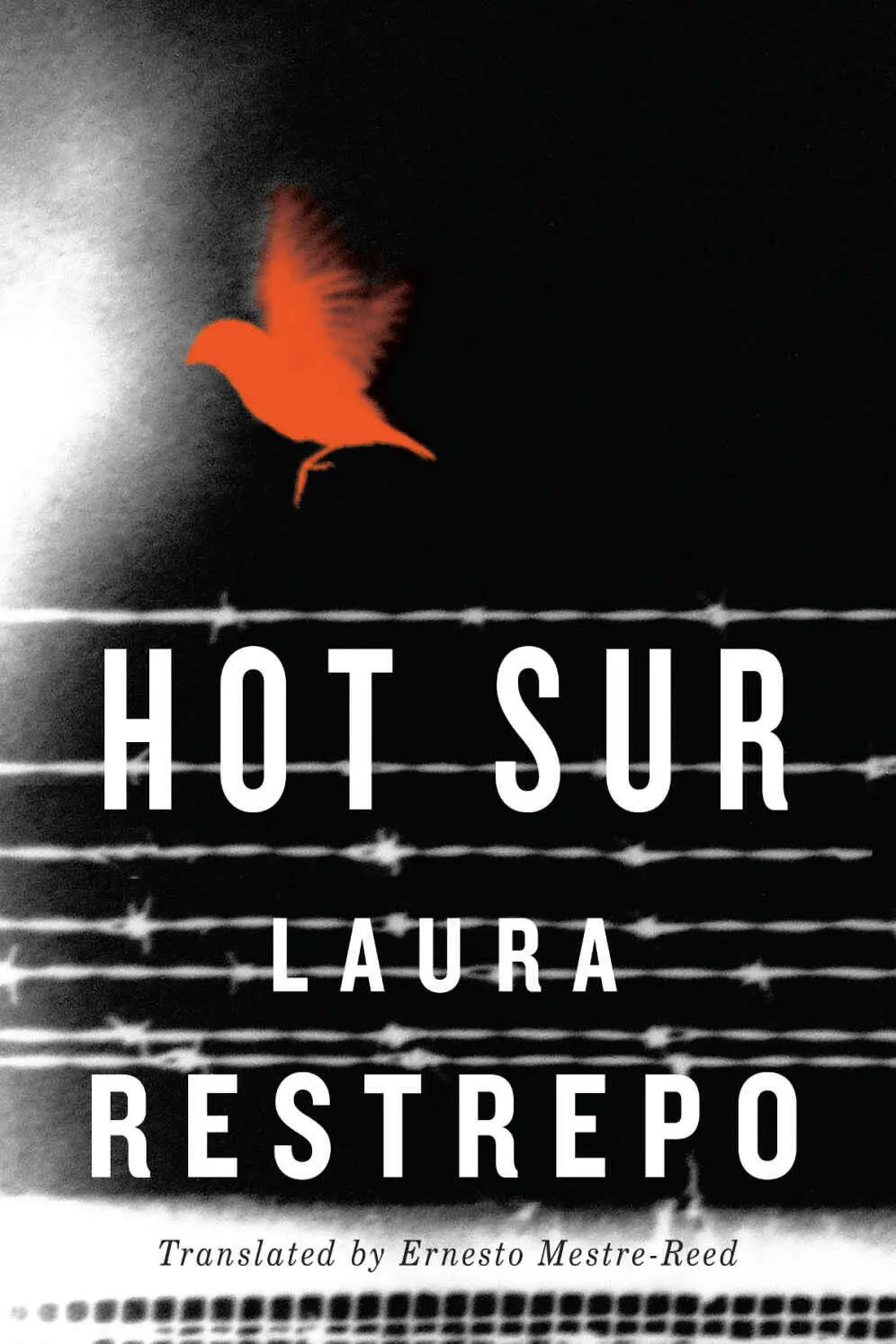
- Название:Hot Sur
- Автор:
- Издательство:AmazonCrossingEnglish
- Жанр:
- Год:2015
- ISBN:нет данных
- Рейтинг книги:5 / 5. Голосов: 1
-
Избранное:Добавить в избранное
- Отзывы:
-
Ваша оценка:
Hot Sur: краткое содержание, описание и аннотация
Предлагаем к чтению аннотацию, описание, краткое содержание или предисловие (зависит от того, что написал сам автор книги «Hot Sur»). Если вы не нашли необходимую информацию о книге — напишите в комментариях, мы постараемся отыскать её.
María Paz is a young Latin American woman who, like many others, has come to America chasing a dream. When she is accused of murdering her husband and sentenced to life behind bars, she must struggle to keep hope alive as she works to prove her innocence. But the dangers of prison are not her only obstacles: gaining freedom would mean facing an even greater horror lying in wait outside the prison gates, one that will stop at nothing to get her back. Can María Paz survive this double threat in a land where danger and desperation are always one step behind, and safety and happiness seem just out of reach?
Hot Sur — читать онлайн бесплатно полную книгу (весь текст) целиком
Ниже представлен текст книги, разбитый по страницам. Система сохранения места последней прочитанной страницы, позволяет с удобством читать онлайн бесплатно книгу «Hot Sur», без необходимости каждый раз заново искать на чём Вы остановились. Поставьте закладку, и сможете в любой момент перейти на страницу, на которой закончили чтение.
Интервал:
Закладка:
“It’s not primitive,” I corrected him. “It’s ancestral, which is different. So have some respect. I already explained to you that this is a soup that they have been making since before Columbus, that is, from the pre-Columbian cultures, which in many ways were more advanced than the Europeans.”
“Oh yeah,” he challenged me, “tell me a single thing in which you are more advanced than the Europeans, one thing, and it’s definitely not soup. In Europe, this thing that you prepared is something very poor peasants would eat in the winter when all other foods have run out and there are only potatoes left in the cellar.”
I could have argued that potatoes are originally from the Americas, that without the Americas, his peasants could not have eaten any potatoes, but I bit my tongue so as not to get him riled up. Although I could have also asked him if he thought his crude scraps of fermented cabbage were a feast for a king. But I stopped myself. The truth was that I always stopped myself so I wouldn’t provoke him. My Greg was a calm guy, almost lethargic, but when he got worked up, he’d let loose with the biggest threat. He used it often and without much thought, as if drawing a gun: he said he’d make them take away my green card, because it was only thanks to him that they had given it to me. That kind of blackmail intimidated me. I grew meek, lowered my head, and even allowed him to say that my Colombian stew was disgusting, because in the end that’s what he really meant, that it disgusted him. I tell you, Mr. Rose, Greg was a calm person, but there were things that set him off, and the topic of food was one of them. I don’t know why food makes us so sensitive. Perhaps because it’s what we have inside, in our guts, and also what we shit, that is, what runs through us from our mouths to our assholes, what goes inside the top hole and comes out the bottom hole, what we are, to put it plainly.
Don’t worry, Mr. Rose, don’t think I’m going off on tangents again because I’m taking my time telling you these things; on the contrary, it’s a way of getting directly to the matter you are probably waiting to hear, the reason I ended up in prison in the USA. You might think that the kapustnica has nothing to do with that, but it does. It has everything to do with it; it is almost the heart of the matter. I know that you don’t know why I was imprisoned, I know because during the first class you asked us our names and nothing else; you said that what we had done or failed to do was exclusively a matter between us and the law. That’s what you said, and added that it was none of your beeswax and that we didn’t have to explain anything to you. And I’m almost getting to the matter. We’re on the right track, but let me talk about Hero a little bit first, the dog that went with us everywhere; when we were not at home, he was at work with my husband. He was crippled like Christina of that novel. His hind legs ruined like her legs, because apparently he had been used to detect plastic explosives in Alaska, where there are still independence fighters who set off bombs. And the independence fighters blew off Hero’s hind legs, so because of the accident, he got around on a little cart that Greg himself built for him, careful to make it as light as possible and attach to him so that it wouldn’t scratch off his hair anywhere. Hero’s martyred parts fit snugly in the cart that he pulled with his front legs as if nothing, and I never saw a dog more agile, more full of joy, or more excited fetching a ball, even if we threw it a hundred times. All in all, he was a dog like any other, normal size, I imagine, before they turned him into half a dog, with a coat that was black and yellow with a little white near his snout, and we adored him. The Association for the Protection of Retired Police Dogs had decorated him for canine services to the homeland and turned him over for adoption to good-guy Greg, who kept the name the dog had had in Alaska, although I always thought that we should change it. I wasn’t convinced that our Hero had fought on the side of the good guys. I suspected that the fighters for Alaskan independence had some just claims, like the brothers of my Puerto Rican friend Alissette who fought for the cause of Puerto Rico Libre. And anyway, I preferred a name without so much history for Hero, such as Tim or Jack, or maybe Lucero, the name of the Navas’ toy poodle.
For twelve hours every day, from eight in the morning till eight at night, Greg and Hero were stationed at the entrance of the building where we worked, checking bags, asking for documentation, giving passes, always very cordial and easygoing, Greg and his little dog. The little dog and the cart. And I, who had worn myself out with some tormented and unpleasant love affairs earlier, told myself, María Paz, muchacha , it’s time to think about things a little differently. This Slovak is no Adonis, nor is he a real American, but it would be enough that he is as loyal as his dog. Who was Greg really? For me, always an enigma. A good cop? But how good, I never knew. He swore that he wasn’t a racist, but he was. He’d see a white woman with a black man and claim that she must be a prostitute. And if he saw a black man driving an expensive car, he said it was likely stolen.
And yet, he married me, a dark-skinned Latina. In church, in a wedding that was lacking nothing. There was a priest and altar boys, Madonna lilies, white roses, a cake with three tiers, various canapés, a hot and cold buffet that included lobster, a bride’s dress and a veil with a crown of orange blossoms, and even a cubic zirconia ring that looked like a diamond. Because that’s how Greg had wanted it. I had never been very religious, but he was so Catholic that he even hung a crucifix over our marriage bed. He paid for everything with part of his pension funds, the church, the reception, the honeymoon in Hawaii, and even bought a royal-blue tuxedo with a bow tie and a tight-fitting, wine-colored cummerbund to hide his belly, if you know what I mean. The wedding dress also came out of Greg’s pocket, and my sister, Violeta, who was to be the maid of honor, her dress, and even the bridesmaids, four of my coworkers, their dresses. Because Bolivia didn’t live to see it, I had asked Violeta to be my maid of honor. But in the end she didn’t do it. At the last moment, she decided not to come to the wedding, and left us holding a long, almond-colored shantung dress that we had had made for her to pair with mine, which wasn’t shantung but embroidered and also almond-colored. But Violeta’s case is a whole other chapter and requires its own explanations, so it’d be best if I talk about her later; just keep in mind from this point that she’s the heart of the story. For now, I’ll only say that I’d have rather been married in a more simple ceremony, definitely a more private one. Don’t think that I was feeling like one of Charlie’s Angels strolling on the beaches of Hawaii with an old fatso like Greg.
Our relationship began according to the law because that’s the way he wanted it. And it suited me, after all, because after so much anguish and effort I was finally going to become an American citizen. Put yourself in my shoes. From the moment that my mother passed away, I was the only person who cared for Violeta, and they could deport me at any moment. Now do you understand why I almost fell to my knees the night Greg and I met at Applebee’s to go to the movies afterward, and he pulled a black velvet box out of his pocket, with white felt on the inside, like a miniature coffin, and in it was the cubic zirconia set in white gold? It wasn’t from Tiffany’s, Mr. Rose, as Holly Golightly would have wanted it, but for me it was as if it were. Always generous, my poor Greg, he had his savings. At home, we never lacked food or services, and after we were married, we always paid the rent ahead of time. Not that it was much. They’d have had some gall to charge us more, given the depressed neighborhood and the depressing building. We’re talking about one of those “white flight” zones. It had been a long time since anybody saw a white face around there. My Greg was like a museum piece amid so much brown and black, mestizo and mulatto. The truth was that even though Greg was the white one, he always felt like a fly in a puddle of milk, and he couldn’t wait for the day we would leave. He was just waiting for the rest of his pension to kick in so we could get the fuck out of there to that town of poor white folk where he had his house, where the fly in the milk would be me. What I’m trying to tell you was that my neighborhood was in a seriously bad state. A few years before, suffice it to say, the owner of our building had tried to burn it down to collect insurance and would have gotten his way had the firemen not put out the fire in time. To this day, no one lives on the first floor, the walls still blackened. But my apartment is different. Freshly painted, cozy, with all the necessary appliances, blinds in good condition, and a white rug. I always kept my apartment gleaming. Or as Bolivia would say, like a silver cup. And Greg lent a hand, with his toolbox always ready to fix anything. The last thing he had been able to do, my poor old man, was to widen the barbecue on the so-called roof terrace so that we could fit more burgers and corn on the cob on it, a nice detail on his part. A rather useless detail, though, because we never really invited anyone, except Sleepy Joe, who invited himself. But that we even had a roof terrace with a barbecue — tell me if that’s not the “American way”? The terrace also had a splendid view and with binoculars we could even see the Empire State Building. But what you saw with the naked eye was our neighborhood, not a great sight, as I said, a rather depressed area, but at least we had a barbecue. Although we never got to try the new larger version.
Читать дальшеИнтервал:
Закладка:
Похожие книги на «Hot Sur»
Представляем Вашему вниманию похожие книги на «Hot Sur» списком для выбора. Мы отобрали схожую по названию и смыслу литературу в надежде предоставить читателям больше вариантов отыскать новые, интересные, ещё непрочитанные произведения.






Обсуждение, отзывы о книге «Hot Sur» и просто собственные мнения читателей. Оставьте ваши комментарии, напишите, что Вы думаете о произведении, его смысле или главных героях. Укажите что конкретно понравилось, а что нет, и почему Вы так считаете.