Kingsley Amis - Dear Illusion - Selected Stories
Здесь есть возможность читать онлайн «Kingsley Amis - Dear Illusion - Selected Stories» весь текст электронной книги совершенно бесплатно (целиком полную версию без сокращений). В некоторых случаях можно слушать аудио, скачать через торрент в формате fb2 и присутствует краткое содержание. Год выпуска: 2015, Издательство: New York Review of Books, Жанр: Современная проза, на английском языке. Описание произведения, (предисловие) а так же отзывы посетителей доступны на портале библиотеки ЛибКат.
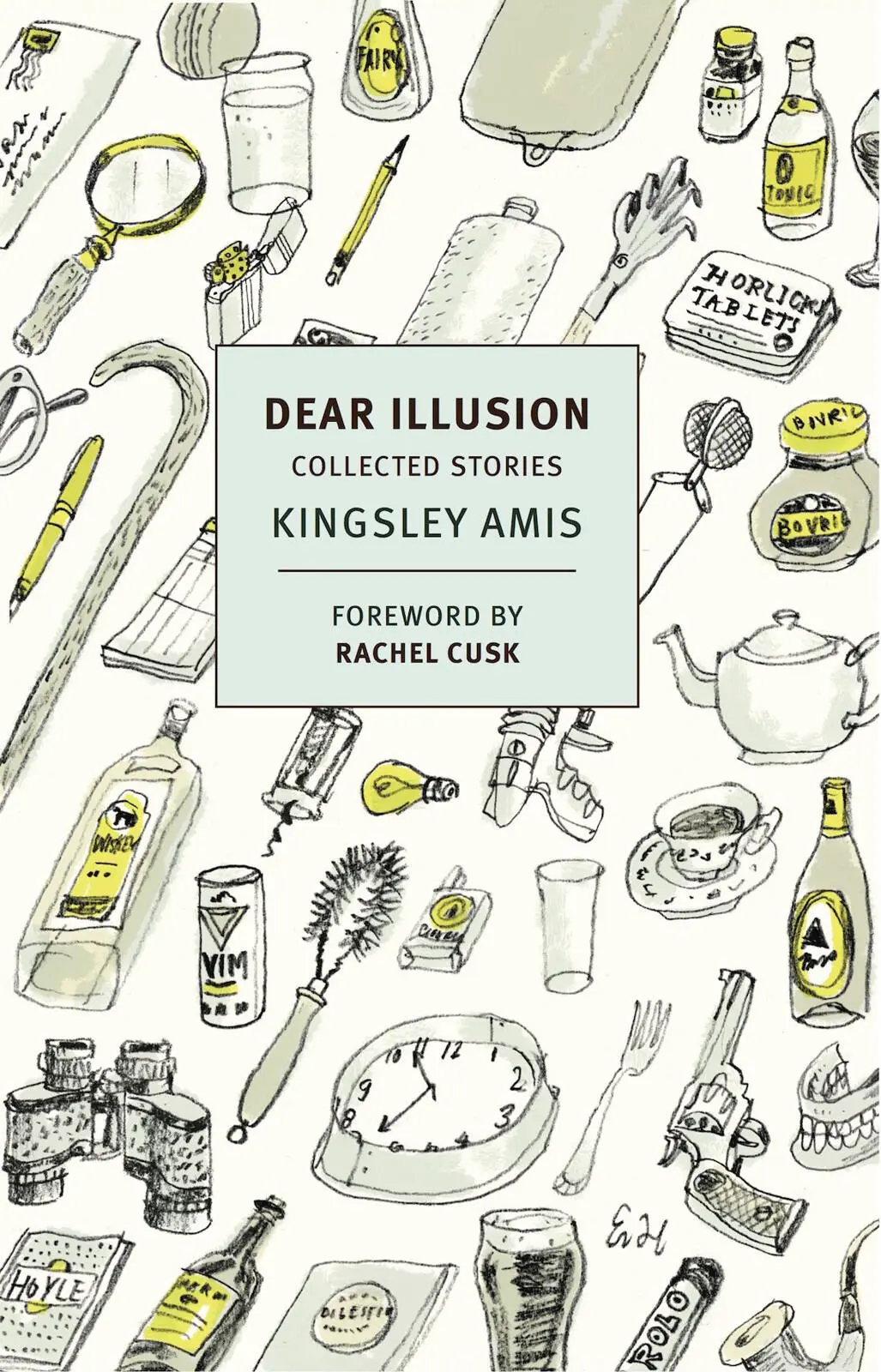
- Название:Dear Illusion: Selected Stories
- Автор:
- Издательство:New York Review of Books
- Жанр:
- Год:2015
- ISBN:нет данных
- Рейтинг книги:4 / 5. Голосов: 1
-
Избранное:Добавить в избранное
- Отзывы:
-
Ваша оценка:
Dear Illusion: Selected Stories: краткое содержание, описание и аннотация
Предлагаем к чтению аннотацию, описание, краткое содержание или предисловие (зависит от того, что написал сам автор книги «Dear Illusion: Selected Stories»). Если вы не нашли необходимую информацию о книге — напишите в комментариях, мы постараемся отыскать её.
Dear Illusion: Selected Stories — читать онлайн бесплатно полную книгу (весь текст) целиком
Ниже представлен текст книги, разбитый по страницам. Система сохранения места последней прочитанной страницы, позволяет с удобством читать онлайн бесплатно книгу «Dear Illusion: Selected Stories», без необходимости каждый раз заново искать на чём Вы остановились. Поставьте закладку, и сможете в любой момент перейти на страницу, на которой закончили чтение.
Интервал:
Закладка:
Lucy waited without result. She was again about to leave when she saw the door of the shed open and Procope emerge. After locking up once more, he gave a somewhat abbreviated repeat of his all-round scrutiny, then moved to the front of his cottage, which was out of her view, and presumably went in at the front door. When another ten minutes had passed without incident, she left her observation post, went to reassure Boris, who stood placidly tethered to a handy tree, and walked down the grassy slope towards Procope’s abode, expecting any moment a challenging shout at best. None came. Still nothing happened when she reached the shed and peered in through a small window.
The interior was dark, and her own reflection kept hampering her attempts to see inside, but quite soon she found a vantage point that gave her a limited view. It was not so limited that she failed to make out part of a shallow trench dug in the earth floor of the shed at one end. So that was the hole young Tommy had seen: a trench. But what was a trench doing in a shed? Was it a trench?
Lucy’s heart had begun to beat fast. Trying not to think, only to act, she hurried back to Boris and rode in a sort of semicircle along the slope, down and back till she was approaching along the lane from the village. At Procope’s gate she dismounted, having done just enough thinking to run up an elementary story about finding herself in the district with time to spare and paying a call on the off chance that he would be at home.
The front door of the cottage had an old-fashioned bell pull that set up a tuneless jangling somewhere inside. Nothing happened for so long that Lucy had almost made to ring again when the door was flung open to reveal Colonel Procope.
The declining sun clearly illuminated a look of eager welcome on his face which very soon gave place to puzzlement, consternation, anger if not more. ‘What do you want?’ he demanded. ‘What are you doing here?’
She had her back to the light; she was far from his mind; her hair was hidden; he had never done more than glance at her. These points occurred to her later; for the moment she was aware only that he had not recognized her. It seemed to her suddenly important to remain unrecognized. ‘I’m sorry, sir,’ she said, trying to look as well as sound rustic and gawky, ‘but I wondered if my horse could have a drink of water.’
‘Certainly not! Get out!’ He was shouting and glaring, his fierce eyes doubly strange under the brown thatch of hair. ‘If you don’t, if you’re not gone by the time I finish talking’ — his voice rose to something like a scream and a fleck of saliva hit her cheek — ‘I promise you I’ll set my dogs on you and I won’t be calling them off! ’
There was no need on Lucy’s part for any mimicry of someone badly disconcerted and frightened. She was back in the saddle, and had cantered a hundred yards towards the village, before she had time to reflect that any available dogs of the sort implied would assuredly have made a tremendous noise at the first sound of an unexpected visitor. Later still it occurred to her that no horse needed to be taken in search of water with a whole river a bare hundred yards away, but that was not going to matter now.
She arrived back at the post office in time to get some change and was soon on the telephone to Edward’s college, to the porter there who advised her to ring the old mill house, then to Edward himself who listened to her account of events without asking any questions, except where he would find her on his arrival in something under the hour. Lucy went to the saloon bar of the designated pub on the far side of the village green, which was nice enough but not as nice as Mr Littlejohn’s, and very slowly drank a half-pint of shandy (heavy on the lemonade).
Bit by bit her excitement ebbed away and with it all pretence of certainty, all her former sense of having happened to catch Colonel Procope on the point of committing some fearful atrocity. He had responded with surely disproportionate anger to a stranger’s innocent intrusion, for such it had been to his knowledge, and had perhaps shown something of the same earlier to young Tommy. There were a dozen possible explanations for that. He was secretive about his shed, inside which he had dug a trench, and that trench might to a fevered fancy like her own — she admitted it now to herself — have been a grave. And it might have been an unknown number of other things besides. He, the colonel, had fabricated eight lines in the general style of a two-hundred-year-old poem to send a message to a friend who quite likely had been a spy. What had Edward called the basis for that notion? Surmise, perhaps leaving a ruder word unspoken. What he would call her more recent notions Lucy dreaded to think.
Her heart sank further when at last he arrived. She knew immediately from the way he looked round the bar, spotted her, came over, greeted her with a touch of solicitude, that he had not taken her tale seriously. He had turned up for merely avuncular reasons, to give her moral support and to calm her down. His manner was studiedly non-committal when she acted on his request to go over things again.
‘So according to you,’ said Edward after listening to her, ‘you surprised the colonel just as his friend Green, having received and acted on his message, was about to walk in, be killed and be buried in the garden shed. Well now, why would the colonel want to kill his old mate after so elaborately persuading him to come all this way?’
‘I don’t know,’ said Lucy, adding stoutly, ‘but that doesn’t mean there couldn’t be a reason.’
‘True, as far as it goes. How, do you think, would the colonel have known so exactly when Green was due after his long and difficult journey? And how might he have induced Green to call on him?’
‘He’s on the telephone.’
‘True again. If Green was indeed going to appear, he might do so at almost any hour of any day out of, let’s say a hundred.’
‘Yes.’
‘But you happened to come along and poke your nose in at the precise time he was expected.’
Lucy said forcefully, ‘That’s right, perhaps I did, and it’s no argument against the manifestation of an unlikely coincidence to notice that such a manifestation, though perfectly possible, is unlikely.’
‘True a third time. I think. Now I’m going to have a large glass of whisky. What about you? Would you like something of the sort yourself?’
‘No, thank you.’ She was slightly astonished. ‘What, what for?’
‘To strengthen you against a coming ordeal, or what may very well turn out to be one. We’re off back to the colonel’s place to see what we can catch him at.’
‘Oh, are we? Wouldn’t it make more sense to wait till dark?’
‘He’ll be on his guard then, and I want to see the ground in the light. The sooner we’re there the better.’
When Edward had returned from the counter with his whisky, she said, ‘Have you told, you know, your friends in the company about any of this?’
He hesitated briefly. ‘No.’
‘Because you don’t want to look ridiculous. As ridiculous as you think my story is.’
Dropping all lightness from his manner, and focusing his attention on her in a way he had never done before, he took her hands in a loose but strong grip. ‘I think it only just conceivable that your story has any substance in it at all. And that’s how you feel yourself, isn’t it? But I’d be a fool if I didn’t follow it up. And I’d be worse than a fool if I didn’t do something to repay the trust you showed in me when you asked me to help you.’
She was not sure she understood all the meaning behind his words, but she caught his tone immediately and responded to it. ‘I’m ready whenever you say.’
Читать дальшеИнтервал:
Закладка:
Похожие книги на «Dear Illusion: Selected Stories»
Представляем Вашему вниманию похожие книги на «Dear Illusion: Selected Stories» списком для выбора. Мы отобрали схожую по названию и смыслу литературу в надежде предоставить читателям больше вариантов отыскать новые, интересные, ещё непрочитанные произведения.









Обсуждение, отзывы о книге «Dear Illusion: Selected Stories» и просто собственные мнения читателей. Оставьте ваши комментарии, напишите, что Вы думаете о произведении, его смысле или главных героях. Укажите что конкретно понравилось, а что нет, и почему Вы так считаете.