Kingsley Amis - Dear Illusion - Selected Stories
Здесь есть возможность читать онлайн «Kingsley Amis - Dear Illusion - Selected Stories» весь текст электронной книги совершенно бесплатно (целиком полную версию без сокращений). В некоторых случаях можно слушать аудио, скачать через торрент в формате fb2 и присутствует краткое содержание. Год выпуска: 2015, Издательство: New York Review of Books, Жанр: Современная проза, на английском языке. Описание произведения, (предисловие) а так же отзывы посетителей доступны на портале библиотеки ЛибКат.
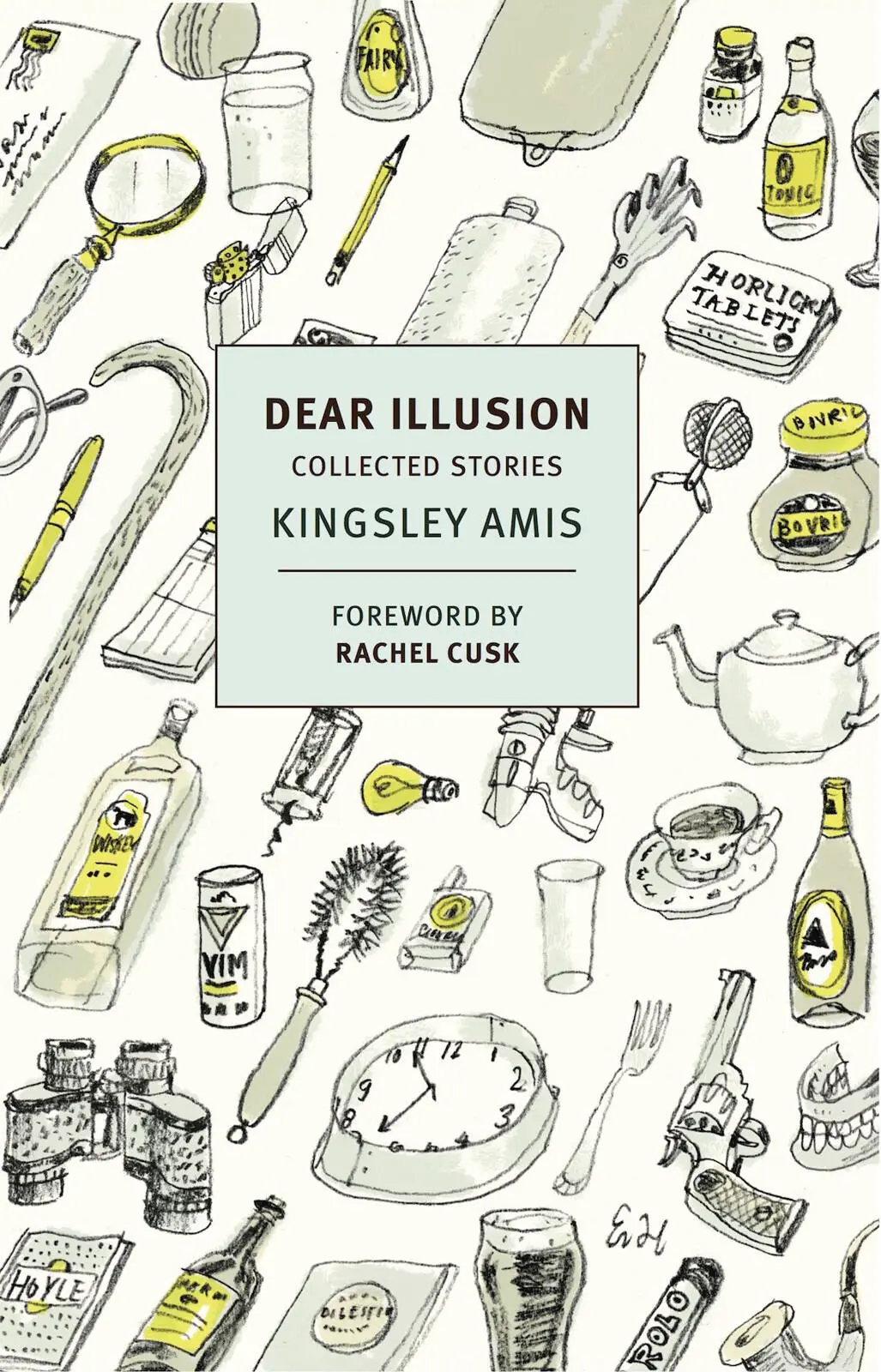
- Название:Dear Illusion: Selected Stories
- Автор:
- Издательство:New York Review of Books
- Жанр:
- Год:2015
- ISBN:нет данных
- Рейтинг книги:4 / 5. Голосов: 1
-
Избранное:Добавить в избранное
- Отзывы:
-
Ваша оценка:
Dear Illusion: Selected Stories: краткое содержание, описание и аннотация
Предлагаем к чтению аннотацию, описание, краткое содержание или предисловие (зависит от того, что написал сам автор книги «Dear Illusion: Selected Stories»). Если вы не нашли необходимую информацию о книге — напишите в комментариях, мы постараемся отыскать её.
Dear Illusion: Selected Stories — читать онлайн бесплатно полную книгу (весь текст) целиком
Ниже представлен текст книги, разбитый по страницам. Система сохранения места последней прочитанной страницы, позволяет с удобством читать онлайн бесплатно книгу «Dear Illusion: Selected Stories», без необходимости каждый раз заново искать на чём Вы остановились. Поставьте закладку, и сможете в любой момент перейти на страницу, на которой закончили чтение.
Интервал:
Закладка:
The date keyed into the TALISKER was 15 July 2003, selected on the reasoning that after celebrating Bastille Day the day before many Frenchmen would be in a state of reduced curiosity and vigilance when Simpson turned up in their midst. As it happened nobody saw him arrive in a secluded hollow in the hills above Beaune. At once aware of the great surrounding silence, he checked his position and surveyed his route.
It was 4 p.m. and the sun was shining. The special vineyards lay grouped round a central research station seven kilometres to the south-west. He had plenty of time to make his way to that station and, in the character of a visiting oenologist from New South Wales, fix himself a brief tour of the vineyards. If unable to secure cuttings or in any other difficulty he was to conceal himself and operate after dark.
His journey would be made on foot. Temporal Regulations strongly disfavoured the use of futural transport and, after an encounter with a subway escalator in 2062, he had been happy to abide by them. With a last check of map and compass (stereomap and lumen-compass, naturally) he set off in good spirits down the grassy slopes. Once or twice he took a deep breath. The air was strikingly pure, even for such a very remote spot as this appeared, though the bird population was plentiful and busy enough.
Simpson was a claret man and had often visited the Bordeaux villages and vineyards, and if he had known those of Burgundy even one-quarter as well he might have started to ask himself questions sooner than he did. As it was he went happily on until a glance at the map showed he should be near the main Beaune — Pommard road — no, wait: should have crossed it a hundred metres back. There was no such road on the ground, no road at all anywhere that he could see, though he had passed close to more than one earth track. What was to be seen of the work of man? From higher up he had spotted a couple of churches, a large house with towers at each end, the roofs of a small village, a windmill. From here a rutted path led past a crude wooden hut and out of sight. Poor crops of some unfamiliar cereal — millet, perhaps, or rye — covered part of the hillside. Nothing else.
He had decided that he must have crossed that road after all, that the mud-slide he remembered picking his way over had surely buried a long section of it, when he heard voices approaching round the bend of the path he was standing on. Without hesitation he ran for the shelter of a low bank topped with bushes and peered out from there. He could not have said what had induced him to hide.
In a moment a farm-cart of sorts drawn by a skinny horse rattled and jolted into view. A lank-haired fellow of about thirty held the reins and plied a whip, an older man sat beside him, another man and a woman lolled in the body of the cart among a load of swedes or other root-crop. The four were calling out roughly to one another in what Simpson, with his goodish but limited French, identified as an uncouth local dialect. All were deeply tanned, none wore anything much better than rags, and a strong animal odour drifted across as they went by. The impression they gave of brutal debasement was overpowering.
Before they were out of sight a dreadful suspicion from the back of Simpson’s mind had hardened into certainty. Twice in 1991 the world had come near to war, first over the Khvoy incident, then again during the siege of Durban. The third crisis must have come and this time not gone away. What he had just been looking at was a group of the survivors, the pitiful remnants of humanity after the great catastrophe. But was such thoroughgoing degeneration possible in ten years or less? Had the TALISKER taken him further into the future than intended? Firmly he thrust away such futile guessing-games and concentrated his mind first on the Temporal Regulation requiring every mission to be carried out to the fullest extent possible, and then on what could still be in it for him. After a short rest and ten mg of paracynomyl he was on his way to the research station, or whatever might remain of it.
Nothing remained of it — at least, nothing he could discern under the thicket of brambles and briers that covered the site — but there were remnants of the surrounding vineyards, if the sickly stunted plants now growing there were truly such. But part of his task was to take cuttings and he proceeded to do so. Absorbed in this, he failed to heed the approach of the watchman. There was a struggle; he took a blow on the head and perhaps lost consciousness for a time. Anyhow he remembered nothing clearly till he was sitting on the bare stone floor of a large antiquated kitchen with an upper servant of some kind, as it might have been a steward, demanding to know who he was. (These and some later inferences were reached by Simpson or one or other of his audience as he told his tale.)
As soon as the steward saw Simpson’s credentials his manner changed from irate suspicion to caution if not respect. He bustled off, returning with a man in his fifties who could be positively identified from his dress and tonsure as an ecclesiastic, a monk. But any hopes Simpson might have had of understanding treatment from a man of learning were soon dashed. The cleric studied the typewritten documents briefly and uneasily, darting similar glances at Simpson and his no doubt strange-seeming get-up. Finally he thrust the papers back at him, snapped an order to the steward in his odd sibilant patois and unceremoniously withdrew.
It was not much, but it was toleration. Simpson was placed near one end of a long oak table, brought water in response to his mimings and left free to take stock of his surroundings. Light came from a few stubby candles and a vast open fire above which joints of meat sizzled. The air was hot, smoky and heavy with cooking and other smells. Hams and other preserved eatables hung from the ceiling. There was a great coming and going of attendants with serving-dishes and general carry-on until the main business of getting the meal up to the monks’ dining-hall was accomplished. At this stage of the game the steward, now seen as a likeable character in a fine embroidered jacket, no doubt a relic of happier times, settled himself next to Simpson and genially indicated that he should help himself to food and drink.
There was no shortage of either: mutton, cold fowl, sausage, coarse bread, butter, cheese, fresh berries, beer, red wine, all set out at once and indiscriminately. As he had begun to guess with the songbirds, Simpson saw while he piled his plate that whatever had assailed humanity had not affected other forms of life.
Or had it? He was hungry and the ambient smells were so heavy that his jaws had closed on a lump of mutton before he was aware that it was putrid, turning rotten. The steward saw his distress, nodded cheerfully and passed him a crock of salt. Wary of giving offence, Simpson managed a couple of nauseating mouthfuls. The fowl was a little better, if only because the gamey reek seemed less incongruous; the seasoning of the sausage burnt his tongue. The fruit was sour, the cheese quite frightening. Pushing aside the rancid butter he tried the bread, but it was full of gritty residues. The watery beer at least offset some of the salt, until after a few swallows its mawkish flavour became too much. It was out of a pure sense of mission that he accepted a pot of wine.
No use trying for the nose in this place. He took a sip, then more. Often since that evening in the bowels of Whitehall Simpson has tried to describe that wine of which perhaps 50 ml passed down his throat. It was not exactly that it was unlike any other wine he had ever tasted, nor yet that it was finer, nobler: it was greater in sheer size. If a Château Haut Brion at the top of its form could be compared with a fragrance of Cathay, then what he drank now was all the riches of the East. He lowered the cup and gazed at the steward, who took it from him with a grimace of apology and stirred into it watered honey and a spoonful of some herbal infusion. With admirable fortitude he sampled the result, and had some difficulty describing that too, though some of the phrases he used were most evocative.
Читать дальшеИнтервал:
Закладка:
Похожие книги на «Dear Illusion: Selected Stories»
Представляем Вашему вниманию похожие книги на «Dear Illusion: Selected Stories» списком для выбора. Мы отобрали схожую по названию и смыслу литературу в надежде предоставить читателям больше вариантов отыскать новые, интересные, ещё непрочитанные произведения.









Обсуждение, отзывы о книге «Dear Illusion: Selected Stories» и просто собственные мнения читателей. Оставьте ваши комментарии, напишите, что Вы думаете о произведении, его смысле или главных героях. Укажите что конкретно понравилось, а что нет, и почему Вы так считаете.