John Gardner - Nickel Mountain
Здесь есть возможность читать онлайн «John Gardner - Nickel Mountain» весь текст электронной книги совершенно бесплатно (целиком полную версию без сокращений). В некоторых случаях можно слушать аудио, скачать через торрент в формате fb2 и присутствует краткое содержание. Год выпуска: 2010, Издательство: Open Road Media, Жанр: Современная проза, на английском языке. Описание произведения, (предисловие) а так же отзывы посетителей доступны на портале библиотеки ЛибКат.
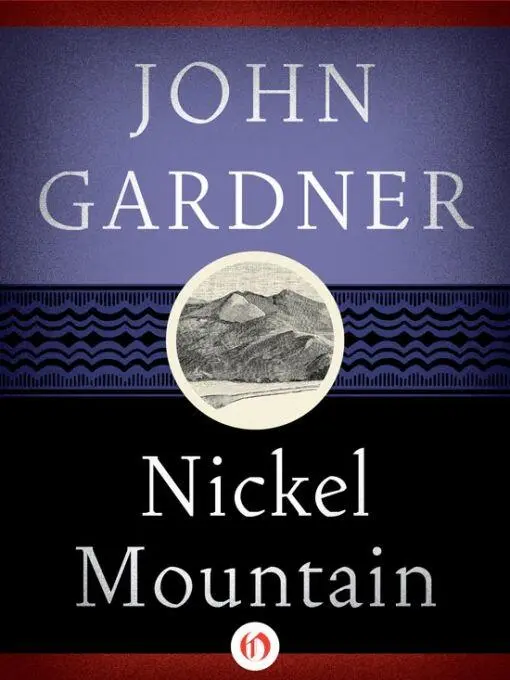
- Название:Nickel Mountain
- Автор:
- Издательство:Open Road Media
- Жанр:
- Год:2010
- ISBN:нет данных
- Рейтинг книги:5 / 5. Голосов: 1
-
Избранное:Добавить в избранное
- Отзывы:
-
Ваша оценка:
Nickel Mountain: краткое содержание, описание и аннотация
Предлагаем к чтению аннотацию, описание, краткое содержание или предисловие (зависит от того, что написал сам автор книги «Nickel Mountain»). Если вы не нашли необходимую информацию о книге — напишите в комментариях, мы постараемся отыскать её.
is an uncommon love story: when at 42, the obese, anxious and gentle Henry Soames marries seventeen-year-old Callie Wells — who is pregnant with the child of a local boy — it is much more than years which define the gulf between them. But the beauty of this novel is the gradual revelation of the bond that develops as this unlikely couple experiences courtship and marriage, the birth of a son, isolation, forgiveness, work, and death in a small Catskill community in the 1950s. The plot turns on tragic events — they might be accidents or they might be acts of will — involving a cast of rural eccentrics that includes a lonely amputee veteran, a religious hysteric (thought by some to be the devil himself) and an itinerant "Goat Lady." Questions of guilt, innocence, and even murder are eclipsed by deeds of compassion, humility, and redemption, and ultimately by Henry Soames' quiet discovery of grace.
Novelist William H. Gass, a friend and colleague of the author, has written an introduction that shines new light on the work and career of the much praised but often misunderstood John Gardner.
Nickel Mountain — читать онлайн бесплатно полную книгу (весь текст) целиком
Ниже представлен текст книги, разбитый по страницам. Система сохранения места последней прочитанной страницы, позволяет с удобством читать онлайн бесплатно книгу «Nickel Mountain», без необходимости каждый раз заново искать на чём Вы остановились. Поставьте закладку, и сможете в любой момент перейти на страницу, на которой закончили чтение.
Интервал:
Закладка:
2
Simon Bale had no friends. He was not only an idealist but an ascetic as well, both by conviction and by temperament, and the death of his wife (she died early the following morning) meant the end of all ordinary contact with humanity — or would have except for Henry Soames.
Simon was at her bedside when she died. He’d gone there at once (abandoning his desk to old Chester Kittle, who after ten minutes’ wine-befogged consideration locked the door and went to bed) and he’d sat there all night long wringing his hands and praying and weeping, in his heart knowing her lost already because of the bandages covering most of her head and because of, worse, the tubes taped to her body and rising, at the foot of the bed, to a glass bottle hanging upside down. When the doctor told him she was dead, Simon was through for now with his weeping, though not through with his grief, and he merely nodded and stood up and went out, none of them knew where. He stood on the front steps of the hospital for a long time, his hat dangling from the end of his right arm (it was spring, and the trees were green with new leaves) and then like a man in a daze he wandered across the lawn in the general direction of where his car was parked. He wandered up and down the sidewalk, still quiet and empty at six in the morning, passing and repassing the car, maybe unwilling to leave the place, maybe simply in a mental fog, unable to recognize his car when he saw it. He stopped right beside the car, at last, and stared at it for a long time, his face as white and soft as bread dough, his mouth collapsed like the mouth of a dime-store goldfish, and finally he went over to it and got in and drove back to the hotel. He let himself in by the door at the side and went to the first empty room he found and stretched out on the bed and slept. For hours he slept like a dead man. Then he dreamed his wife was alive, sewed up from one end to the other with green thread, and tranquilly glad to see him, and he woke up. It was late afternoon.
He didn’t notice he was hungry and unshaven. He drove to the remains of his house, where everything he owned was now smoke and ashes, including his money, since Simon had never trusted banks, and he stood beside what was left of the snow fence as he’d stood this morning in front of the hospital, looking at the place as the others did — curiosity seekers, neighbors, farmers who’d happened along on their way into town to the movies or the Silver Slipper. Finally somebody recognized him and they all gathered around him to console him and ask him questions and, in general, torment him, all of which he met with a lunatic, apologetic-looking smile that made people wonder (not for the first time) if he’d set it himself. Now and then he’d bring out a stammered word that only those nearest to him caught (“Forgive,” he was saying, “Lord forgive”) and then, suddenly, he sank to his knees and fainted. They called the police. But it was not there that the troopers found him; they found him at Henry Soames’.
It was still early, a little after eight. Henry’s little boy Jimmy was in bed; Henry’s wife was in the diner taking care of the last of the supper customers, and Henry stood in the living room in the house jutting out behind the diner, the room almost dark, only the floorlamp in the corner turned on, Simon Bale in the armchair below it, staring at the carpet as if in a daze. Standing enormous and solemn at the living room window, Henry looked out past the end of the diner at the highway and the woods beyond. He could see, past where the woods dropped away, the crests of the mountains on the far side of the valley. It was a time of day he especially liked. The mountains looked closer when the light was dimming from the sky and the clouds were red, and sounds were clearer now than they were at other times — milking machine compressors in the valley, cows mooing, a rooster’s call, a semi coming down the hill to the right with its lights on. It was as if one had slipped back into the comfortable world pictured in old engravings — in old geography books, say, or old books of maps in a law office. (The world would seem small and close when dark came, too — sounds would seem to come from close at hand and the mountains ten miles away seemed almost on top of you — but in the dark he would not feel himself a part of it; the trees and hills were like something alive, not threatening, exactly, because Henry had known them all his life, but not friendly, either: hostile, but not in any hurry, conscious that time was on their side: they would bury him, for all his size and for all his undeniable harmlessness, and even his own troublesome, alien kind would soon forget him, and the mountains would bury them too.) In his present mood, watching sunset come on, he felt at one with the blue-treed mountains, and at one, equally, with the man in the dimness behind him. He saw again in his mind the charred boards, ashes, dirty bubbles of melted glass, and he recalled the intense acrid smell that had filled the air for a mile around. Poor devil, he thought. He had never known Simon Bale, had hardly seen him before, but at a time like this that was hardly important. A man did what he could.
Perhaps it was the way the light slanted in, or the way the long silver truck rolled past and went out of his hearing: Something came to him. He knew as if by inspiration how it was that a man like Bale saw the world. For an instant he too saw it: dark trees, a luminous sky, three swallows flying, all portentous. Henry half-turned, covering his mouth with his hand, and studied the man. The brown shoelace on Simon’s black right shoe (directly in the floorlamp’s beam) had been broken and knotted together again in twenty places.
Then the troopers came. Henry wouldn’t hear of their talking to Simon until the following day, after he’d rested a little and pulled himself together. They might have insisted, but Doc Cathey came in while they were talking and took one look at Simon Bale and said, “This man’s in shock,” and, soon after, the troopers left. Henry put Simon in the bedroom off the kitchen, and Doc Cathey stayed with him a while, fussing and muttering to himself, and then Doc came out and closed the door and they sat at the kitchen table drinking coffee. Callie was with them by now.
“What in hell do they want to be pestering him for, in his condition?” Henry said. Putting the question in words made him feel an indignation he hadn’t felt until this moment.
“Because they think somebody set the fire on purpose,” Doc said, “and most likely they’re right.”
“But what would Simon know about it?” Callie said. She asked it a little too calmly, with too much detachment. Henry didn’t notice it, but Doc Cathey did.
“He’d know if he set it himself,” Doc said, and he laughed, as sharp as acid.
“That’s crazy,” Henry said. His hands started shaking. He said, “His wife died in that fire. It’s right in the paper.”
“You don’t know these people,” Doc Cathey said. “I do. You watch.”
Henry leaned over the table toward him, and his face went dark red. “You’re a vicious old fool,” he said. “I could—” But he couldn’t think what it was he could do, or rather he knew all too well what he could do — he could knock Doc Cathey through a wall — and his realization of how angry he was checked him.
Doc Cathey clamped his mouth shut and got hold of himself. “We’ll see,” he said. “Don’t you go havin’ a heart attack over him.”
It was then that Callie Soames stood up, and both of them looked at her. “I don’t want him in my house,” she said. “I want him out, tonight.”
Henry went as red as before. He fumbled for the pills in the bottle in his shirt pocket, and he took one out and went over to the sink for water. He stood motionless for a long time after he’d drunk, leaning on the sink, and his wife and old Doc Cathey were as quiet as rocks. Henry said, “He’s staying.”
Читать дальшеИнтервал:
Закладка:
Похожие книги на «Nickel Mountain»
Представляем Вашему вниманию похожие книги на «Nickel Mountain» списком для выбора. Мы отобрали схожую по названию и смыслу литературу в надежде предоставить читателям больше вариантов отыскать новые, интересные, ещё непрочитанные произведения.



Обсуждение, отзывы о книге «Nickel Mountain» и просто собственные мнения читателей. Оставьте ваши комментарии, напишите, что Вы думаете о произведении, его смысле или главных героях. Укажите что конкретно понравилось, а что нет, и почему Вы так считаете.