John Gardner - Stillness & Shadows
Здесь есть возможность читать онлайн «John Gardner - Stillness & Shadows» весь текст электронной книги совершенно бесплатно (целиком полную версию без сокращений). В некоторых случаях можно слушать аудио, скачать через торрент в формате fb2 и присутствует краткое содержание. Год выпуска: 2010, Издательство: Open Road Media, Жанр: Современная проза, на английском языке. Описание произведения, (предисловие) а так же отзывы посетителей доступны на портале библиотеки ЛибКат.
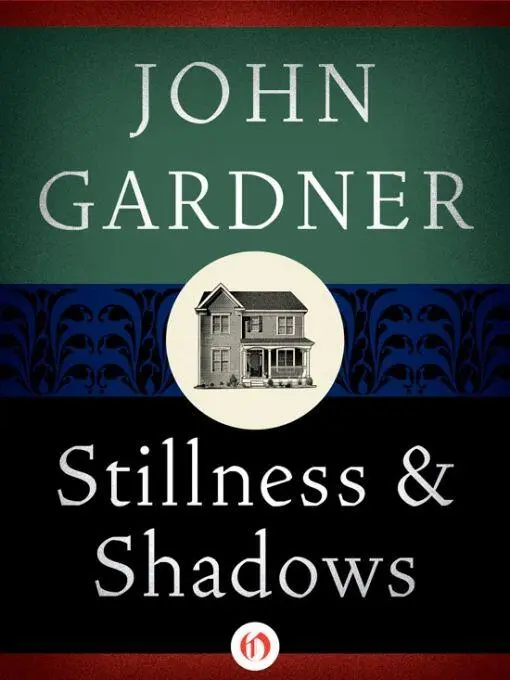
- Название:Stillness & Shadows
- Автор:
- Издательство:Open Road Media
- Жанр:
- Год:2010
- ISBN:нет данных
- Рейтинг книги:5 / 5. Голосов: 1
-
Избранное:Добавить в избранное
- Отзывы:
-
Ваша оценка:
Stillness & Shadows: краткое содержание, описание и аннотация
Предлагаем к чтению аннотацию, описание, краткое содержание или предисловие (зависит от того, что написал сам автор книги «Stillness & Shadows»). Если вы не нашли необходимую информацию о книге — напишите в комментариях, мы постараемся отыскать её.
Inspired by therapy sessions Gardner experienced with his first wife, Stillness is an insightful portrait of one couple’s struggle for fulfillment in a tumultuous world.
Private detective Gerald Craine is pursuing an unknown murderer. At the same time, he himself is the target of an unknown person’s pursuit. Stumbling through an alcohol-soaked haze, Craine desperately seeks meaning and understanding in a world fraught with fragmented narratives.
Shadows: John Gardner’s friend Nicholas Delbanco has supplemented this unfinished novel with seven sections from Gardner’s original manuscript that provide critical insight into Gardner’s approach to developing the novel and its characters, giving a rare glimpse inside the creative process of one of the twentieth century’s most inventive writers.
This ebook features a new illustrated biography of John Gardner, including original letters, rare photos, and never-before-seen documents from the Gardner family and the University of Rochester Archives.
Stillness & Shadows — читать онлайн бесплатно полную книгу (весь текст) целиком
Ниже представлен текст книги, разбитый по страницам. Система сохранения места последней прочитанной страницы, позволяет с удобством читать онлайн бесплатно книгу «Stillness & Shadows», без необходимости каждый раз заново искать на чём Вы остановились. Поставьте закладку, и сможете в любой момент перейти на страницу, на которой закончили чтение.
Интервал:
Закладка:
Royce, who had sharp eyes, gave a laugh like an explosion. “It’s her ,” he said. “She’s put on a Goddamn phony beard.”
“You gotta be kidding,” Hannah said. She leaned closer to the window and her faced moved toward righteous indignation. “Damn if you ain’t right,” she said. She looked at Craine.
Craine showed no surprise. The truth clicked in his mind as if he’d known it from the start.
Royce laughed again, harder this time. “Jesus Christ if that don’t beat hell!” he said, and slapped his knee. With the coffee cup in one hand, he towed Meakins toward the window with the other. “Lookee that,” he said. He doubled up with laughter, balancing the cup, never spilling a drop, so that the whole performance looked fraudulent, ugly. Meakins merely looked, troubled and sorrowful, then glanced at Royce with distaste, then over at Craine, who was watching Royce’s antics with the look of a man from a distant planet. Not even Hannah smiled. Royce wound himself down, still pretending it was funny. He was aware by now that his amusement wasn’t catching. He went back to his chair, still shaking his head, laughing as if just beginning to get control, balancing the coffee, then sat against the wall, whipped out his pistol, left-handed, and raised it to his temple as if to shoot himself.
Strange, strange man, Craine mused, cold of eye as a surgeon. Somehow it made him think of something he’d read about, a word — in some African language — that meant only itself, no outside referent. I must remember to think about that , Craine thought. He knew he would never remember.
At last Craine said, “I’ll tell you what I’ve got in mind, Emmit.” He paused, startled by a new idea, an idea that brightened in his mind slowly, tantalizing. He squinted again, unconsciously touching the gun at his armpit. The three of them were watching him as if they believed he’d gone crazier — which he had, he understood.
Falsely casual, smoothing down his dyed-black hair, Craine crossed to the door of the coat closet and took, from the shelf above where the coats hung, a curious black object. He held it up, smiling, for them to see. It was a gift from some friend, some practical joker. He could remember the face, piglike; the name was gone.
What Craine held up for his associates’ inspection was a single-piece moustache, beard, and wig. It was a ridiculous, outrageous object, the fur of some animal, perhaps a black bear, and when you put it against your face it scraped like hell’s torment, dry as blowing sand. He pulled it on and, with some difficulty, fastened the metal catch on the black elastic strap.
“I’ll tell you what I have in mind,” he said in an artificial voice, high, almost womanish, turning his head from side to side like a creature on the late late late show. Hannah laughed, uneasy.
Craine put the back of his hand to his mouth, or rather to his fur, remembering the bottle of Scotch on his desk, and after a moment’s reflection he went over to it, screwed on the bottlecap, and screwed the bottle down into his overcoat pocket. It passed through the pocket and went on down into the lining and bumped against his leg. He let it be; it would ride.
Royce, still seated, stared at him over the rim of his cup. He said, “What the fuck you doin, Craine?”
Craine smiled behind the false moustache and beard. He pulled on his hat and tipped the brim down.
Royce and Meakins looked at Hannah. She wrinkled her face up, thoughtful. “That poor girl,” she said. She picked up the letter from the top of his desk and held it out to him, shaking it a little. “What if it’s all true, what she wrote in here? Craine, I don’t b’lieve you ought to do this.”
But Craine’s mind was not available for debate. He jerked his head toward the door. Royce pursed his lips, thoughtful, then got up and crossed to it.
Two
This was Craine’s plan:
Disguised, but not unrecognizably so — at least not to anyone who’d seen before that miserable slouch, that trailing, mud-spattered, buttonless overcoat — Craine would slink out into the street, by the Baptist Book Store entrance, carrying in his arm an immense black Bible. He couldn’t say himself what the Bible was for — he hadn’t been to church in forty years, though as a child in the care of his maiden aunt Harriet he’d sung in the Methodist church choir and had been, indeed, more religious than he now remembered — but something would come to him; the Bible would somehow or another prove handy; all master craftsmanship is partly a matter of setting up favorable conditions for fortunate accident. Anyway a ponderous, preacherly Bible suited Craine’s present disposition, his fury at this latest crude injury of a world inexcusably unworthy of man’s noblest efforts, a flatulent wind in the face of a brave boy’s willingness to think hard, take risks. The proverbial camel’s back was broken, and the straw that had broken it was the witless duplicity of E. Glass’s letter, the TV vulgarity of her five-hundred-dollar check, the bottomless injustice of her wish to do him harm, to say nothing of the wanton irreverence of that damned false beard. (“You want an adventure, Ms. Glass?” said Craine. “You’ve come to the right wolf’s door!”) Therefore Craine, dispassionate professional no longer, mere shadow no more, an avenging angel with the fire of Jehovah in his bloodshot, bleary eyes, would step forth with terrible choler onto Main Street, Sodom-gonorrhea — he smiled like a dragon — and Royce would watch as he crossed to the post office, went in, perhaps, came out again, turned right toward the half-abandoned railroad depot with its domes and porches and old-fashioned signs — the only half-dignified signs left in town — CARBONDALE ( O dreadsound of doom! thought Craine — dale of carbon, coal valley, hell’s pit!) — Craine would walk along, and as soon as their bearded lady began to follow, Royce would fall in behind, at a distance, and Craine would slink on, singing to himself, muttering to strangers like an old drunken lunatic going on his senseless diurnal rounds — the Ben Franklin Store, the Singer Store, Denham’s Tobacco Shop, wherever whim or heaven’s sweet influence took him to spread the fear of God, so to speak. When they’d played with her a while, given her a taste of the pleasures of the hunt, Royce and Craine would sandwich the lady and be done with it.
The woman at the counter, someone even prissier than the regular people, stood horribly wincing — at the whiskey stink, presumably, or perhaps at the curious stream of Craine’s muttering — but she accepted the money Craine’s jittering hand held out to her; and though her soft red mouth opened, she made no objection as Craine drew the Bible from the counter, one covered in gilt and limp white plastic, with the words Holy Bible squared off, literally, by gilded lilies — the only large Bible the clerk had in stock. The gilt and white cover had a queer effect on him, as if he’d seen it before, perhaps done all of this before. The Muzak was going, toothless and soulless, not religious music—“unless maybe,” Craine muttered, staring gimlet-eyed at the woman behind the counter, “the music fat farting old Satan listens to, sitting buck naked with his feet wide apart on his desk at Hell Incorporated, heh heh.” The woman’s eyebrows lifted. “God bless you,” Craine said, emphatically malicious, profoundly bowing, and with the tip of his pipe he scratched under the beard, revealing that the beard was fake. The woman only stared, horribly wincing, perspiration on her bucked-out upper lip, as Craine backed away, carefully turned left, supporting himself on the flimsy display rack of lumpy religious cards, and made for the door. “Hypocrite! Moron!” Craine snarled past his shoulder. The woman slightly jumped. Craine opened the door — with such difficulty that Royce was on the point of coming forward to assist him with it — and stepped down onto the sidewalk, the whiskey bottle banging against his knee. A cold gust of wind made his face sting.
Читать дальшеИнтервал:
Закладка:
Похожие книги на «Stillness & Shadows»
Представляем Вашему вниманию похожие книги на «Stillness & Shadows» списком для выбора. Мы отобрали схожую по названию и смыслу литературу в надежде предоставить читателям больше вариантов отыскать новые, интересные, ещё непрочитанные произведения.

Обсуждение, отзывы о книге «Stillness & Shadows» и просто собственные мнения читателей. Оставьте ваши комментарии, напишите, что Вы думаете о произведении, его смысле или главных героях. Укажите что конкретно понравилось, а что нет, и почему Вы так считаете.