John Gardner - Stillness & Shadows
Здесь есть возможность читать онлайн «John Gardner - Stillness & Shadows» весь текст электронной книги совершенно бесплатно (целиком полную версию без сокращений). В некоторых случаях можно слушать аудио, скачать через торрент в формате fb2 и присутствует краткое содержание. Год выпуска: 2010, Издательство: Open Road Media, Жанр: Современная проза, на английском языке. Описание произведения, (предисловие) а так же отзывы посетителей доступны на портале библиотеки ЛибКат.
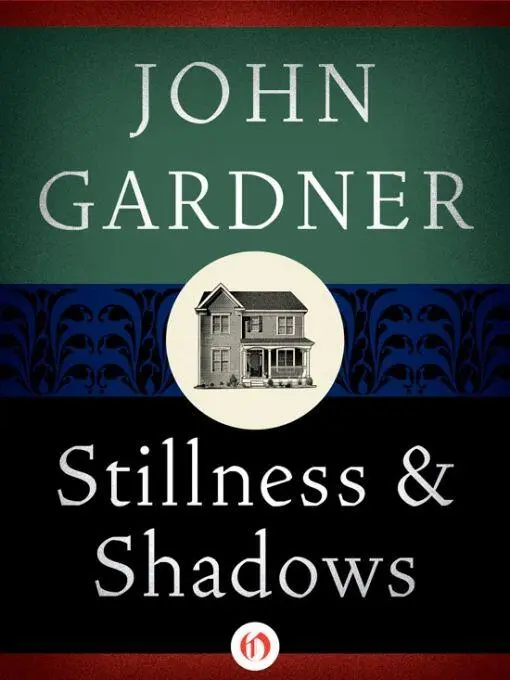
- Название:Stillness & Shadows
- Автор:
- Издательство:Open Road Media
- Жанр:
- Год:2010
- ISBN:нет данных
- Рейтинг книги:5 / 5. Голосов: 1
-
Избранное:Добавить в избранное
- Отзывы:
-
Ваша оценка:
Stillness & Shadows: краткое содержание, описание и аннотация
Предлагаем к чтению аннотацию, описание, краткое содержание или предисловие (зависит от того, что написал сам автор книги «Stillness & Shadows»). Если вы не нашли необходимую информацию о книге — напишите в комментариях, мы постараемся отыскать её.
Inspired by therapy sessions Gardner experienced with his first wife, Stillness is an insightful portrait of one couple’s struggle for fulfillment in a tumultuous world.
Private detective Gerald Craine is pursuing an unknown murderer. At the same time, he himself is the target of an unknown person’s pursuit. Stumbling through an alcohol-soaked haze, Craine desperately seeks meaning and understanding in a world fraught with fragmented narratives.
Shadows: John Gardner’s friend Nicholas Delbanco has supplemented this unfinished novel with seven sections from Gardner’s original manuscript that provide critical insight into Gardner’s approach to developing the novel and its characters, giving a rare glimpse inside the creative process of one of the twentieth century’s most inventive writers.
This ebook features a new illustrated biography of John Gardner, including original letters, rare photos, and never-before-seen documents from the Gardner family and the University of Rochester Archives.
Stillness & Shadows — читать онлайн бесплатно полную книгу (весь текст) целиком
Ниже представлен текст книги, разбитый по страницам. Система сохранения места последней прочитанной страницы, позволяет с удобством читать онлайн бесплатно книгу «Stillness & Shadows», без необходимости каждый раз заново искать на чём Вы остановились. Поставьте закладку, и сможете в любой момент перейти на страницу, на которой закончили чтение.
Интервал:
Закладка:
For fifteen minutes he stood at his dresser, wearing only his underwear — he had the lights on now, the shades not pulled — sorting through paper scraps from his pockets and the dresser drawers, laying them out like puzzle pieces, lifting them one after another and squinting, trying to read them, but to no avail; his eyes refused to focus. He worked in increasing desperation, growing angry or frightened, he could hardly say which. All at once he found himself listening to something. Perhaps he’d been listening for a long time. It was a creaking sound, rhythmical and urgent — some machine, he thought at first, something to do with torture. Then the truth broke through: Ira Katz’s bedsprings. He reached out, automatically, and turned out the lights. In the darkness that leaped up around him the sound seemed much louder. He groped his way back to the bed and lay down as before. The sound went on and on. They were still at it, banging away like demons, when Craine’s stiff muscles relaxed and he sank into sleep.
He slept quietly for a time, though the creaking continued and the walls were full of scraping and gnawings, the scamperings of mice. One poked his head out from the hole in the corner, a hole too small for notice, almost hidden by books, then came cautiously into the room, stopped in the light from the window, and stood listening. Soon the second one came, sister to the first, this one from the closet, darted out onto the carpet and paused, nose tipped upward, whiskers atremble, watching Craine’s bed. Craine slept on, and the mice moved quickly to his trench coat and squirmed into the left-side pocket, where there were crumbs. Now Craine’s eyes began to move under the lids. “Turn under!” he shouted, and the mice in the trench coat froze, hearts slamming, heads down, ears cocked. His voice diminished to a mutter, and they returned to their business, hurrying, still listening for danger.
In an unknown language which Craine was for some reason able to understand, Carnac was explaining, with brightly glowing eyes, that the room where they were locked with the five dead women — their throats had been slit — was a mystery novel; all the walls were words. There were paths across the floor in a pattern like Parcheesi, and above them, out of reach, was a hanged man, slowly turning. Emmit Royce, Craine’s assistant, wearing only his leather jacket, was crawling slowly, on all fours, from one to another of the dead women, spreading the legs of each in turn, then raising them by the hips and inserting himself. He moved mechanically, sweating, as if someone were forcing him. Craine, though the whole thing annoyed him, distracting him from his problems, did nothing to interfere. All reality, Carnac was urgently explaining — looking past his shoulder in terrible fear — was a cliché; that was why they must speak new languages. Someone was watching from the shadows in the corner of the room. “There,” Craine said, and pointed.
Suddenly he was awake. The night was quiet, though he’d almost have sworn that a second ago, before he was awake, he’d heard something — perhaps the door at the foot of the stairs outside his room, possibly a voice. Garbage men? he wondered. There were brown plastic garbage bags at the foot of the stairs. But it was still pitch-dark, and the garbage men never came in for them anyway; they waited for the bags to be moved out onto the sidewalk on the proper days — Mondays and Thursdays. He tried to think what day it was now, but his mind was a blank. He stared at the ceiling, fragments of the dream coming back to him again — so vivid he was tempted to look at his hands to see if he had blood on them. For an instant it seemed to him that he could smell the blood, but then, the next instant, he was uncertain. A car started up on the street below — right in front of the hotel, it seemed to him — and he thought of going to the window to look out. But his legs and arms were heavy, and the car was now far down the block. He let it go. At last he closed his eyes again and, after a time, went back to sleep. Again he lay perfectly still for a while, before his eyes began to move below the lids.
He dreamed he was a child of three, preaching aboard a Mississippi riverboat — a grand old sidewheeler of white and gold, with a Negro orchestra and staterooms of glowing black and crimson. His father and mother stood encouraging him and laughing, his mother’s curls shiny, his father a trim, scientific-looking man, neatly bearded like a pharaoh, the whole crowd admiring their plump child’s stern, slightly pouted lower lip, the ferocious pokes of his finger. “Praise the Lord!” cried a huge old man in gray, with a tie clasp of rapidly changing numbers. He had a huge, loose jowl and heavy eye bags. His laughter seemed malicious. There were streamers, champagne bottles, a peculiar scent in the air that he couldn’t quite place.
Craine was preaching in the way he’d seen his grandfather do — a worldly, vain man, as ministers go, but a showman, and learned; he could read both Greek and Hebrew. In the dream Craine saw himself exploding golden curls; he was looking across the room into a mirror, perhaps. His heart skipped, delighted and baffled at receiving such attention. Why the harmless dream had the effect of a nightmare was not yet clear — the images had nothing to do with the emotion, or so it seemed — but Craine whimpered in his sleep, snatching out frantically at the sheets. In the dream his parents and the rest of the passengers were laughing like children and raising their glasses. A drunkard appeared in the doorway, holding out a very old letter with earth and stains on it, but no one noticed. A woman stood half in shadow behind him. Now the orchestra began to play, some noble old hymn or patriotic piece, and a few of the passengers began singing. More and more joined in, music sweeping around as the lights from the slowly turning mirror-globe swept across the walls of the ballroom — image of the universe from the still, dead center (so he reflected, studying the dream as he dreamed it). His mother wore black. Hastily, by some woman with a face that appeared to be a skull, blue-white as mist, he was whisked away to bed.
Craine awoke early, as usual, his eyelids heavy, his body lead-gray — only his hands, neck, and face were red — as tired as he’d been when he went to bed last night. He was filled with a sense that something of the greatest importance had happened, as if he’d made some terrible discovery and then forgotten. He rose irritably, full of inexplicable dread, and reached out, shaking, to the bedpost, the chair back, the wall, then the door frame as he moved into the bathroom, where he poured a little Scotch into his glass and checked the mirror to see if his skin had a yellow tinge — if it was there, he couldn’t see it — then sat for half an hour on his cracked wooden toilet seat. On his bony knees he held his thick, discolored book, The Mystery of Sanskrit . “Tomes,” he muttered, “—tombs,” and grimaced as if someone else had said it. He sucked at his teeth. All around him in the bathroom lay stacks of old hardbacks, paperbacks, magazines. He had no girly magazines. Fifty-some years of existence had taught him, so he often claimed, that on inspection no woman holds up. Show him Cleopatra, show him Helen of Troy, he’d see through her. He’d discern around her mouth a faint hint of crabbyness or weakness, stubbornness, sullenness, or vanity; a certain tenseness around the eyes that showed a slight inclination to take notice of pain and make intolerable small demands; he’d make out that her hands, too quick and strong, suggested a habit of impatience. He understood that his complaint was against humanness itself, even life itself. He knew the antique identification of womanhood and the World, Mother Eve and the Apple, symbol of our bruised, thin-skinned planet. Though he watched fearfully for that tinge of yellow, Craine had lost his taste for the planet.
Читать дальшеИнтервал:
Закладка:
Похожие книги на «Stillness & Shadows»
Представляем Вашему вниманию похожие книги на «Stillness & Shadows» списком для выбора. Мы отобрали схожую по названию и смыслу литературу в надежде предоставить читателям больше вариантов отыскать новые, интересные, ещё непрочитанные произведения.






Обсуждение, отзывы о книге «Stillness & Shadows» и просто собственные мнения читателей. Оставьте ваши комментарии, напишите, что Вы думаете о произведении, его смысле или главных героях. Укажите что конкретно понравилось, а что нет, и почему Вы так считаете.