Rattawant Lapcharoensap - Sightseeing - Stories
Здесь есть возможность читать онлайн «Rattawant Lapcharoensap - Sightseeing - Stories» весь текст электронной книги совершенно бесплатно (целиком полную версию без сокращений). В некоторых случаях можно слушать аудио, скачать через торрент в формате fb2 и присутствует краткое содержание. Год выпуска: 2004, Издательство: Grove Press, Жанр: Современная проза, на английском языке. Описание произведения, (предисловие) а так же отзывы посетителей доступны на портале библиотеки ЛибКат.
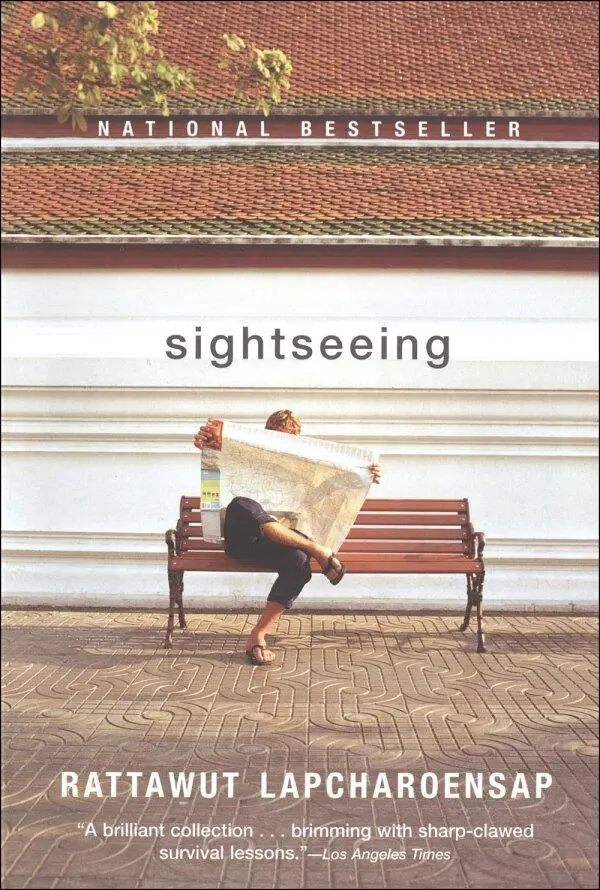
- Название:Sightseeing: Stories
- Автор:
- Издательство:Grove Press
- Жанр:
- Год:2004
- ISBN:нет данных
- Рейтинг книги:4 / 5. Голосов: 1
-
Избранное:Добавить в избранное
- Отзывы:
-
Ваша оценка:
Sightseeing: Stories: краткое содержание, описание и аннотация
Предлагаем к чтению аннотацию, описание, краткое содержание или предисловие (зависит от того, что написал сам автор книги «Sightseeing: Stories»). Если вы не нашли необходимую информацию о книге — напишите в комментариях, мы постараемся отыскать её.
is a masterful story collection by an award-winning young author. Set in contemporary Thailand, these are generous, radiant tales of family bonds, youthful romance, generational conflicts and cultural shiftings beneath the glossy surface of a warm, Edenic setting. Written with exceptional acuity, grace and sophistication, the stories present a nation far removed from its exoticized stereotypes. In the prize-winning opening story "Farangs," the son of a beachside motel owner commits the cardinal sin of falling for a pretty American tourist. In the novella, "Cockfighter," a young girl witnesses her proud father's valiant but foolhardy battle against a local delinquent whose family has a vicious stranglehold on the villagers. Through his vivid assemblage of parents and children, natives and transients, ardent lovers and sworn enemies, Lapcharoensap dares us to look with new eyes at the circumstances that shape our views and the prejudices that form our blind spots. Gorgeous and lush, painful and candid,
is an extraordinary reading experience, one that powerfully reveals that when it comes to how we respond to pain, anger, hurt, and love, no place is too far from home.
Sightseeing: Stories — читать онлайн бесплатно полную книгу (весь текст) целиком
Ниже представлен текст книги, разбитый по страницам. Система сохранения места последней прочитанной страницы, позволяет с удобством читать онлайн бесплатно книгу «Sightseeing: Stories», без необходимости каждый раз заново искать на чём Вы остановились. Поставьте закладку, и сможете в любой момент перейти на страницу, на которой закончили чтение.
Интервал:
Закладка:
Papa emerged from the chicken house with the fourteen remaining cocks. We watched him through the kitchen window. He chased them with a different kind of gait that morning. It wasn’t the calm, quiet routine we were used to seeing, but a grunting, punishing one. He cursed. He kicked at the dirt. He ran the chickens with what seemed to me like fury, as if the chickens had offended him somehow. Some of the chickens eyed him cautiously, alarmed by his new persona. The sun’s red orb rose high above our property; thick beads of perspiration glistened on Papa’s forehead.
“Just look at him,” Mama said, collecting the bowls, moving to the sink. “Just look at your father, Ladda.” I sat there blinking at her. “He’s scared,” she continued. She turned on the spigot, the water plashing against the bowls. “Your father’s terrified.”
I went to my room to change for school. Papa put the cocks back in their coops. I watched him carry them one by one to the chicken house, his body slumped and heaving from the run, from their weight. He walked back to the house and soon I could hear him changing into his factory uniform on the other side of the wall. He was still cursing under his breath. He slammed the dresser drawers. I thought I heard him kick something. The sink hissed and clanked in the kitchen, tin utensils ratcheting in the basin. I heard Mama drop a bowl, heard it shatter against the kitchen floor, followed shortly by the swish and tinkle of her sweeping.
And then it was quiet. Mama finished with the dishes. Papa settled down. I inspected myself in the mirror, made sure my uniform was tucked in properly, that the bra’s obscene trimmings didn’t stand out against the linen. And then, still standing before the mirror, I listened to the sudden silence in our house. I wondered what Papa was doing alone in that room; I listened for any sign of him on the other side of the wall. I wondered, too, what Mama was thinking in the kitchen now. Outside, the brown puppy had left the ditch, the pile already picked over by the larger strays before him.
Mama said Papa was terrified and I wondered if she might be right. I’d never thought of Papa as a terrified man. When he told me that he, Wichian, wasn’t going to be scared, I had believed him; those bruises on his face seemed to verify my conviction. But now — in that confounding pause, staring at my own image reflected strangely in the mirror — I began to have my doubts, for I never thought Papa would ever come home with nine dead chickens, never thought he’d lose eleven thousand. I never thought Little Jui and that Filipino boy would beat my father at his own game. And I knew that Papa did not anticipate this either. Things might’ve been better had he come home instead with a thousand more bruises.
The house came back to life again. Papa slammed the door. He walked out to the Mazda. Mama turned on the radio in the kitchen. I went to get my bicycle. As I stood in the yard strapping my schoolbag to the bike’s gridiron backseat, Papa started the truck engine. He backed the Mazda out, gravel crunching noisily. I waved to my father: a morning ritual of ours. But Papa throttled the engine and sped off to the factory, tires squealing, the truck disappearing into a thin veil of dust.
That almost broke me. I wanted to end the entire thing right then and there. I wanted to go into that chicken house and wring the neck of every goddamn cock sleeping in its coop. But instead I just got on my bike and pedaled off to school.
IX
Later that day, my friend Noon and I decided to stop for an iced coffee in town. I didn’t want to be with Noon, but I didn’t want to go home, either. I didn’t want to be there when Miss Mayuree came to collect the bras. I despised Miss Mayuree — her gold-capped teeth glinting in that beak of a maw, her painted face, her sour gardenia perfume. But above all I hated seeing Mama bow and stoop before her — hated that submissiveness, that feigned gratitude for a paycheck. It made me wonder about our dignity. So when Noon eased up beside me on her bike after school and said, “Hey, stranger, haven’t seen you in a while,” I just shrugged and said, “‘Hey, stranger’ yourself.”
We’d known each other since we were girls. Noon was the lottery vendor’s daughter. Her older sister, Charunee, had notoriously gone to Bangkok and come home calling herself Charlie, like she hadn’t only changed into a man, she’d also become a farang. When we were younger, before her sister decided to become a man, I’d often take Noon home on hot days and we’d scream and prance around the yard while Papa let the chickens loose and Mama pelted us with long jets of water from the hose. We no longer had that kind of friendship, however. Shortly after her sister returned from Bangkok, we both began to go through our own metamorphoses — Noon becoming a lithe, beautiful creature while I grew plump and ordinary in comparison. She gave the boys instant hard-ons; I ignored them altogether. She began to seem vapid and whorish with her relentlessly dollish ways. It was as if, with her sister going to the other side, she’d decided she needed to be twice the woman the rest of us were. For my part, I must have seemed tragic to Noon, with my pale, moonlike face and crispy, uninteresting hair; my indifference to beauty; my thick ankles; my bookishness.
We took our iced coffees to a park bench. That’s when we saw Little Jui and Ramon, the Filipino boy, sitting on the sidewalk in front of Old Man Sorachai’s teashop. A group of men stood around them in an attentive semicircle. Little Jui gestured dramatically with his hands, occasionally patting the Filipino boy on the back. From what I could tell, Little Jui was narrating his triumphs from the night before; the men responded intermittently with peals of laughter. The Filipino boy stared coolly ahead, tapping his feet arrhythmically against the sidewalk. He smiled every so often, his teeth straight and white and shining in the sun. It seemed impossible that this lanky foreign boy with perfect teeth could humiliate my father. But there he was — the new champion, the boy who’d made my father curse and my mother scream, the boy who’d slaughtered nine of Papa’s chickens, the boy who’d won Little Jui’s money back. I turned away quickly when he caught me staring at him, but not before — to my chagrin — he beamed a toothy smile in my direction.
“Oh my God don’t look,” Noon whispered, bending her head toward me. I could detect the scent of jasmine perfume on the nape of her skinny neck. “That Filipino boy is staring at you.”
“It’s not me he’s staring at,” I said, laughing. “It’s not me he’s checking out.”
“He is!” Noon insisted, giggling, sipping her coffee. “He’s staring at you.”
“When did you get this way?” I said. “Don’t you think about anything besides penis?”
“Don’t be such a killjoy,” Noon replied curtly. She looked at the boys flailing around on the new basketball courts Big Jui had recently built for the town. For every superficial civic deed Big Jui did — a basketball court, new bulbs for the town’s streetlights, sidewalks repaved, mailboxes on every third scorner — the townspeople agreed to endure his less philanthropic activities. Mama said it was like being massaged with one hand while getting punched with the other.
“He was, you know,” Noon continued, smiling idiotically again. “That boy was staring at you. Swear on my grandmama’s grave.”
“Okay. Shut up about it. And leave your grandmama out of this.”
“He’s kind of handsome, actually. He’s cute, Ladda.” Noon licked her lips, smiled in Ramon’s direction. “Nice muscles. Good teeth. Sexy lips.”
“He’s yours then,” I said, slurping the last of my coffee noisily, tossing it into the garbage can beside us. “Doesn’t surprise me that you haven’t heard, Noon. You’re so oblivious. You’re so fucking stupid. That boy caused my family a lot of misery.”
Читать дальшеИнтервал:
Закладка:
Похожие книги на «Sightseeing: Stories»
Представляем Вашему вниманию похожие книги на «Sightseeing: Stories» списком для выбора. Мы отобрали схожую по названию и смыслу литературу в надежде предоставить читателям больше вариантов отыскать новые, интересные, ещё непрочитанные произведения.










Обсуждение, отзывы о книге «Sightseeing: Stories» и просто собственные мнения читателей. Оставьте ваши комментарии, напишите, что Вы думаете о произведении, его смысле или главных героях. Укажите что конкретно понравилось, а что нет, и почему Вы так считаете.