Miljenko Jergovic - The Walnut Mansion
Здесь есть возможность читать онлайн «Miljenko Jergovic - The Walnut Mansion» весь текст электронной книги совершенно бесплатно (целиком полную версию без сокращений). В некоторых случаях можно слушать аудио, скачать через торрент в формате fb2 и присутствует краткое содержание. Год выпуска: 2015, Издательство: Yale University Press, Жанр: Современная проза, на английском языке. Описание произведения, (предисловие) а так же отзывы посетителей доступны на портале библиотеки ЛибКат.
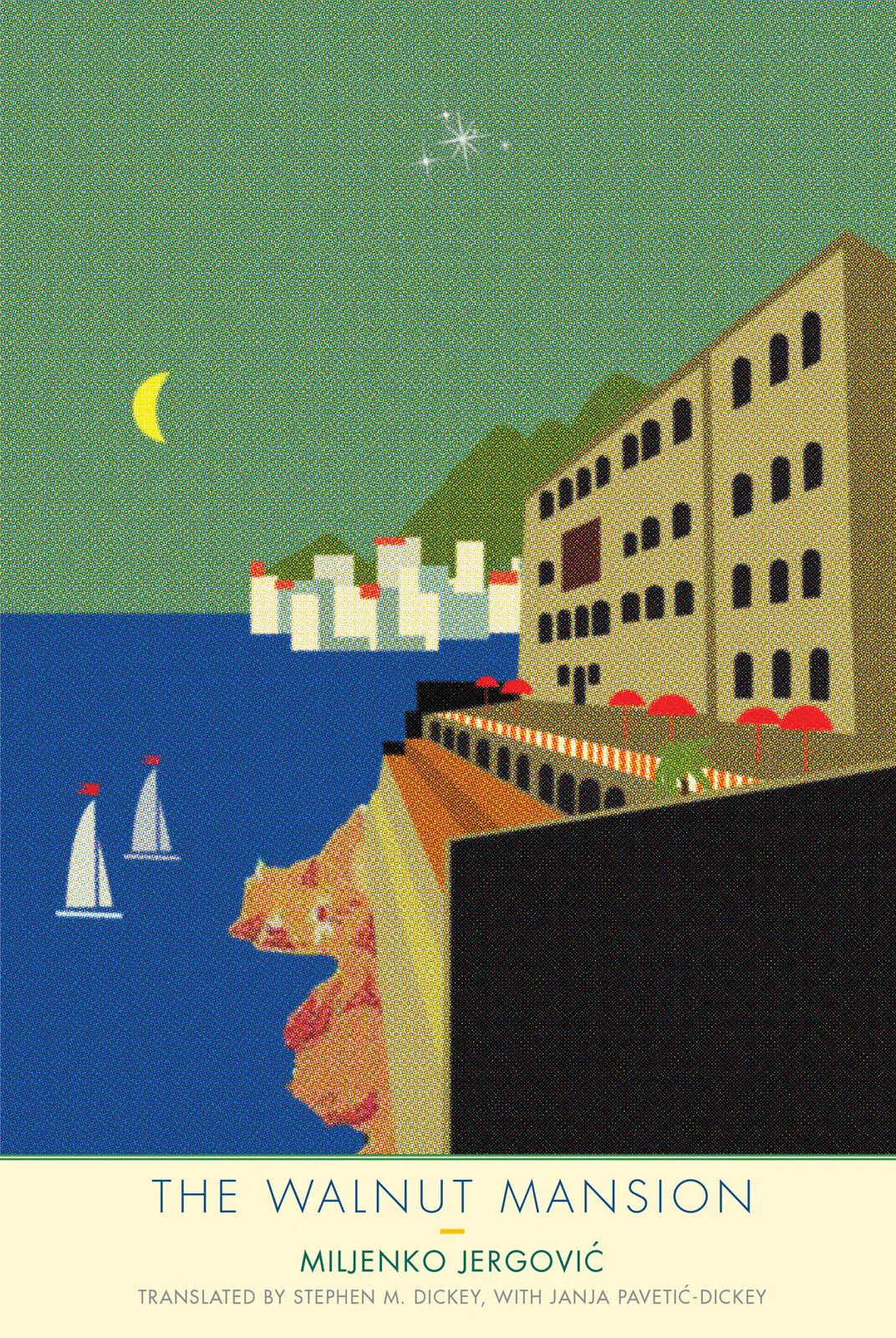
- Название:The Walnut Mansion
- Автор:
- Издательство:Yale University Press
- Жанр:
- Год:2015
- ISBN:нет данных
- Рейтинг книги:3 / 5. Голосов: 1
-
Избранное:Добавить в избранное
- Отзывы:
-
Ваша оценка:
The Walnut Mansion: краткое содержание, описание и аннотация
Предлагаем к чтению аннотацию, описание, краткое содержание или предисловие (зависит от того, что написал сам автор книги «The Walnut Mansion»). Если вы не нашли необходимую информацию о книге — напишите в комментариях, мы постараемся отыскать её.
What is it to live a life whose circumstances are driven by history? Jergovic investigates the experiences of a compelling heroine, Regina Delavale, and her many family members and neighbors. Telling Regina’s story in reverse chronology, the author proceeds from her final days in 2002 to her birth in 1905, encountering along the way such traumas as atrocities committed by Nazi Ustashe Croats and the death of Tito. Lyrically written and unhesitatingly told,
may be read as an allegory of the tragedy of Yugoslavia’s tormented twentieth century.
The Walnut Mansion — читать онлайн бесплатно полную книгу (весь текст) целиком
Ниже представлен текст книги, разбитый по страницам. Система сохранения места последней прочитанной страницы, позволяет с удобством читать онлайн бесплатно книгу «The Walnut Mansion», без необходимости каждый раз заново искать на чём Вы остановились. Поставьте закладку, и сможете в любой момент перейти на страницу, на которой закончили чтение.
Интервал:
Закладка:
The market district was softly abuzz with talk, and the Muslim men watched what they said in front of their Catholic and Orthodox neighbors for the first time in a long while because they felt that this opera was a serious thing, on account of which you could lose your life or be sent to do hard labor, though none of these people from the three groups had ever in their lives set foot in the National Theater.
But the Catholics in the market district, who were in the minority (there might be one or two among the clockmakers, cobblers, and tailors) were damned if they weren’t getting ready to go to their first opera. And they weren’t hush-hush about it but called out from their storefronts that they were going to buy tickets, the next day if possible.
No one knew whether they were fooling around or really meant it, nor did anyone ask, because it’s better not to open your mouth about things you’d rather not get asked about. But it was quite possible that a few of them bought tickets and set off that evening for Ivan Zajc’s opera Nikola šubić Zrinski.
By half past six there was a large crowd of people in front of the National Theater. While some looked as if they’d gone to the opera — tall old men with railroaders’ mustaches, leading their little old ladies under the arm who’d just taken their heads out from under hair driers and whose coiffures shone blue with dye like foaming groundswells — the majority of them didn’t look as if they were going to the theater.
Guys with big heads scowled like villains in partisan movies and kept looking back and forth over the crowd, just as if they had cameras instead of eyes and were shooting film. Students came from provincial universities, in mended navy blue or black suits, the kind people buy once in their lives in Kakanj or Doboj for funerals and weddings. They kept to themselves in a few groups and cast glances full of spite at the fatheads. There were also paupers from the Sarajevo basin and Stup, in muddy rubber galoshes; some milkmaids from Ilijaš; and two or three old women in threadbare, stained suits wearing too much makeup and hats. One of them wore a large silver cross around her neck and every so often pulled it out of her blouse because it kept falling in.
The atmosphere, at least from the point of view of someone not from Sarajevo, was as in one of De Sica’s films, but for anyone who was born there or knew the city, it was a place to be avoided. Namely, there was a feeling of danger that you recognized even if you’d never experienced it and had no idea what it actually meant. And the majority of the people had no experience with such danger because years would pass — ten, fifteen, or twenty years — before something similar would happen again. Although the older generations, those from the market district and the city center, knew well that such things always come, like earthquakes, fires, and blizzards. They were impossible to avoid, but you should try to get as far away from them as possible because they were surely going to do someone in, and someone would surely get carried away by his crazy head or crazier heart, let his tongue wag, and the result would be something that would keep the city in fear for years or in the conviction that they were the worst people on earth because a quiet life meant less to them than five minutes of insanity.
And then, of course, what could be expected and what must have been known by whoever decided to stage Nikola šubić Zrinski in Sarajevo? A group of students, there might have been seven or eight of them, formed a circle, joined arms, and sang the aria To Battle, To Battle. They sang as loudly as they could and sang fairly well, except that they turned Zajc’s hymn into something of their own that had echoes of Vlašić, Zvijezda, and Vranica, the howling of wolves and the yell of someone falling into an abyss on the far side of a mountain. Their voices knew nothing of the romantic longing in the songs of the market district; their longing was stronger, harder, and more menacing. Mountain despair and the tragedy of the villages whence they’d come: villages that had lived or died by the sword. And they would probably do both! Slaughter is always forgiven in these parts but never forgotten. And every forgiveness has its expiration date. Some are forgiven for ten, others for fifty or a hundred years, but no one remembers anything, any crime, ever having been forgiven for all time.
If an opera buff had been in front of the National Theater in Sarajevo in 1969 and heard those highlanders singing To Battle, To Battle, he’d have said that Zajc’s aria had never sounded better. Instead of a provincial imitation based on a European model from the nineteenth century, the voice of the people had made itself heard. That wild Balkan folklore that deserved its own Béla Bartók but never got him. But such a figure would have listened to those students who’d decided to die and made some musicological observations. In a few seconds people began to move away from the circle of singers; soon no one was within fifty meters of them, and then, when the area had been emptied, the fatheads scowled, there were certainly thirty of them, and moved in on the singers, surrounded them, and simply swallowed them up.
People swore that they didn’t see them being taken away, and there wasn’t any reason not to believe them because they tried not to see anything, but two days later in the Belgrade Večernje novosti there was an article about a “nationalist incident in front of the National Theater in Sarajevo.” The people didn’t need newspapers because they already knew everything. The premiere was staged without disturbance, with an applause that lasted just long enough for no one to look suspicious.
At the time of the incident Gabriel was setting the stage, and Dijana was in the theater buffet talking to Katarina Katzer, a promising young ballerina to whom she sometimes would complain about life in Sarajevo and with whom she found understanding because Katarina, surely for some other reasons about which one doesn’t speak in polite society, didn’t think this was the nicest place on earth either. To the end of the performance, not one of them had any idea what was going on in front of the theater.
The next day at nine in the morning a black Citroen stopped in front of Gabriel’s house. Two inspectors in civilian dress got out, went in, and took Gabriel away for an interview at the State Security Service. And in no less than the offices of the secret police that dealt with cases of counterrevolutionary and hostile activity. Dijana wanted to go with him.
“Comrade, no one has asked to see you; when they do, we’ll come for you too!” said one of them, a stout blond guy, rebuffing her.
She stayed behind in the house and waited until she completely lost her nerve and went looking for someone to spend time with until Gabriel came back. She called Goga and Musa, but they didn’t answer, and then she walked over to Katarina’s place, told her what had happened, and Katarina didn’t think it was strange at all, as if she’d expected such things to start happening there as well, and went back home with Dijana to wait for Gabriel.
“I have no idea what happened outside the theater,” he told Inspector Jere Vidošević, a dark-skinned man with a Stalinesque mustache, before the man asked him anything.
“How do you know that’s why we called you?” he said and gave him a dirty look, writing something down at the same time.
“I don’t know, but I suppose that’s why. Why would you call me in otherwise?” Gabriel asked. He still wasn’t too worried.
“To have a talk, like citizens talk with official services. Conscientious citizens. Those who have nothing to hide. Right? Why would an honest man worry when we call him in? That would be just like me going into the theater and worrying whether someone was going to kill me with one of those, whaddya call ’em, fake pistols. But hey, Mack, a pistol can be real. You and I both know that,” Jere said full of affectation, as if he were acting the part of Kočić’s David štrpac.
Читать дальшеИнтервал:
Закладка:
Похожие книги на «The Walnut Mansion»
Представляем Вашему вниманию похожие книги на «The Walnut Mansion» списком для выбора. Мы отобрали схожую по названию и смыслу литературу в надежде предоставить читателям больше вариантов отыскать новые, интересные, ещё непрочитанные произведения.







Обсуждение, отзывы о книге «The Walnut Mansion» и просто собственные мнения читателей. Оставьте ваши комментарии, напишите, что Вы думаете о произведении, его смысле или главных героях. Укажите что конкретно понравилось, а что нет, и почему Вы так считаете.