Miljenko Jergovic - The Walnut Mansion
Здесь есть возможность читать онлайн «Miljenko Jergovic - The Walnut Mansion» весь текст электронной книги совершенно бесплатно (целиком полную версию без сокращений). В некоторых случаях можно слушать аудио, скачать через торрент в формате fb2 и присутствует краткое содержание. Год выпуска: 2015, Издательство: Yale University Press, Жанр: Современная проза, на английском языке. Описание произведения, (предисловие) а так же отзывы посетителей доступны на портале библиотеки ЛибКат.
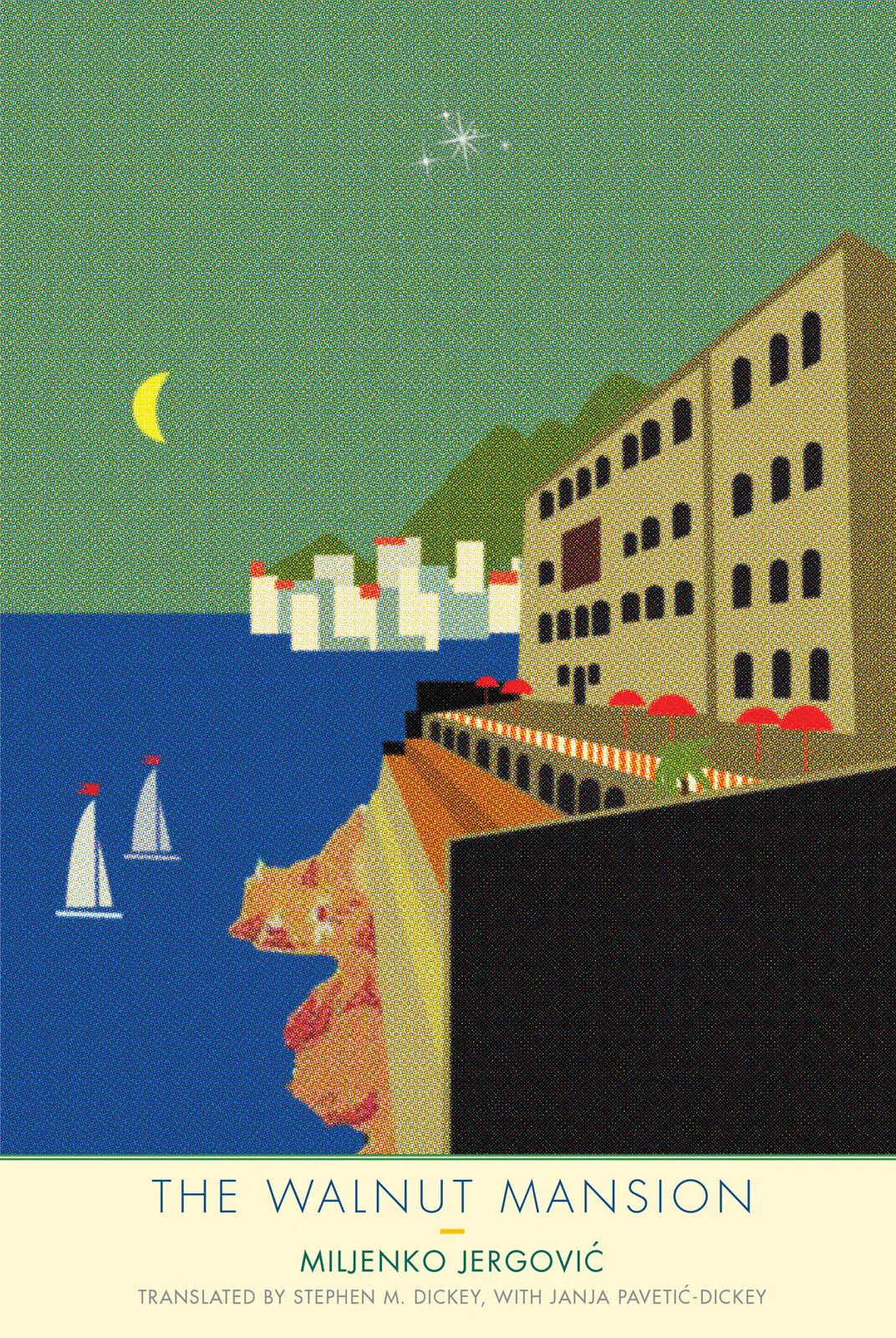
- Название:The Walnut Mansion
- Автор:
- Издательство:Yale University Press
- Жанр:
- Год:2015
- ISBN:нет данных
- Рейтинг книги:3 / 5. Голосов: 1
-
Избранное:Добавить в избранное
- Отзывы:
-
Ваша оценка:
The Walnut Mansion: краткое содержание, описание и аннотация
Предлагаем к чтению аннотацию, описание, краткое содержание или предисловие (зависит от того, что написал сам автор книги «The Walnut Mansion»). Если вы не нашли необходимую информацию о книге — напишите в комментариях, мы постараемся отыскать её.
What is it to live a life whose circumstances are driven by history? Jergovic investigates the experiences of a compelling heroine, Regina Delavale, and her many family members and neighbors. Telling Regina’s story in reverse chronology, the author proceeds from her final days in 2002 to her birth in 1905, encountering along the way such traumas as atrocities committed by Nazi Ustashe Croats and the death of Tito. Lyrically written and unhesitatingly told,
may be read as an allegory of the tragedy of Yugoslavia’s tormented twentieth century.
The Walnut Mansion — читать онлайн бесплатно полную книгу (весь текст) целиком
Ниже представлен текст книги, разбитый по страницам. Система сохранения места последней прочитанной страницы, позволяет с удобством читать онлайн бесплатно книгу «The Walnut Mansion», без необходимости каждый раз заново искать на чём Вы остановились. Поставьте закладку, и сможете в любой момент перейти на страницу, на которой закончили чтение.
Интервал:
Закладка:
Just when darkness began to settle on the camp, the stamp of horses’ hooves was heard.
Whispers spread through the crowd: “Here they are. .! The caravan drivers. .! The caravan!”
The man from Konavle winced— it couldn’t be possible that the Trebinje beys had let the caravan through! And his group of men ducked somewhat in fear. Or it only seemed so. Sreten Kozomara stuffed his register into his bosom. He wouldn’t need it any more today. But instead of the caravan, only four horsemen came around the bend.
“Where are the goods. .?”
“There aren’t any!”. .
“But this is only the advance party!”
“And this idiot’s been telling us that the Turks plundered the caravan. .”
“We could have committed a sin!”
“Can anyone see the caravan?”
The horsemen’s hats were pulled down over their brows; one could see that they had come from afar. No one from Dubrovnik had ever seen such hats or the kind they appeared to be at that distance.
“In my day they wore fezzes,” Niko said.
“Ha, not even Turks from Foča are what they used to be!” said Dominko Pujdin, cheerful that everything was now going the way it should. But his cheer was short-lived, lasting only as long as it took for the horsemen to come close enough for them to see that the men in the hats had no faces. When they came closer, they could only see the horsemen’s eyes in slits in black hoods. They looked like heralds of the plague in church illuminations.
“Sit down on the ground!” ordered the rider of a black horse. He rode out into the crowd a little to scare the people. His horse neighed and reared up; its horseshoes rang on the rocks, and four army rifles with bayonets attached flashed. The mass of people fell down on the ground, groaning, sighing, and blurting out appeals to God and the Blessed Virgin. The guard of the man from Konavle disappeared into the field of bowed heads. He alone remained standing, confused and upright, with his pistol in his belt and his arms spread wide as if he were going to catch a piglet running around in a yard.
“What’s wrong with you, Prince Marko?! Can’t you hear?!” said the leader of the horsemen as he rode up to him. “Would you like Alija Đerzelez to ask you nicely or to skin you alive? Sit down when I tell you to!”
If tears were worth anything, the man from Konavle would have wept his whole life away at that moment. He would have flowed away like a stream and disappeared in the grass and between the rocks, never to be seen again. He hesitated for a moment, though he didn’t know why, and then sat down in the grass, cautiously, as if the ground were full of sharp needles, whereupon he vanished forever from all heroic tales.
That happened on the far end of the clearing, so Niko might not have heard every word, but what he did hear seemed familiar. As did the tattered shoes of untanned leather on the horsemen’s feet. He’d heard that voice once before; he knew it well, too well to be mistaken. He bent down and crouched a little more, pressing his head between his knees to be as inconspicuous as possible. He took three of his four ducats out of his pocket and pressed them into the ground. Dominko Pujdin trembled beside him and glanced around as if he were going to jump up and try to flee. There was a deathly silence, broken only by someone’s sobs.
The two men on sorrel horses kept riding in a circle around the mass of people, while the fourth, the one who’d ridden up last and was obviously the least skilled on a horse, tried to dismount from his enormous mare. But each time it shifted, and he would sit back down.
“Jump down already! You’re not jumping on a girl!” taunted one of the outlaws riding the sorrel horses, whereupon the fourth one simply fell off the mare and slammed onto the ground like the carcass of a calf taken off a meat hook. His hat flew off and his hood almost fell off as well. Someone giggled, but the man quickly jumped up, and then it could be seen that he was unhealthily obese. He put on his hat and spoke:
“Listen to me good because lives are at stake. And they’re yours, not ours! What you’re going to do is come over here one by one, empty your pockets into this sack and then go over to the other end and sit down again. Do you hear? If it turns out that anyone didn’t put everything in, if he hides gold or money, he’ll get a bullet in the forehead. Got it?”
There instantly arose a wailing, shouts, simultaneous curses and pleas, murmurs and yells, a cacophony that could probably be matched only by that at the lower gates of Purgatory. The leader fired into the air, and the black horse leaped. Evidently it wasn’t used to gunfire.
“Use your heads, people! We’re offering to let you go back to your wives and children alive and well!”
No one wanted to go first. They shoved one another, those in the rear savagely kicking those in front of them in the back, until the man with the bag finally grabbed the first one by the collar and pulled him to himself.
“Don’t, for the love of God!” cried the victim, Stjepo Mašklinica, a cobbler with twelve children, one of the few God-fearing men who went to Mass twice a day and gave alms even when they didn’t have enough to eat.
“Well, brother, you got it wrong; I don’t love any God,” the fat one with the sack retorted and opened up the sack. Stjepo looked at him the way that St. Sebastian looked at the bowmen, thrust his hand into his pocket, and pulled a neatly folded white handkerchief out of it. In it was a ducat with Napoleon’s image on it. Stjepo kissed the ducat and dropped it into the sack. The fat man roared with laughter:
“And you pulled this whole stunt to trick me?”
The cobbler had to take off his coat; the fat man searched him thoroughly and tore away the thin lining of his coat but found nothing. He hurled the coat into the mass of people. Then Stjepo had to take off his pants and his shoes, and finally he had to unwrap his footcloths. The fat man searched through everything and threw all of it into the people but didn’t find anything.
“You mean you thought you were going to buy something from the caravan drivers with a single ducat?”
Barefoot and wearing nothing but his shirt, which covered his private parts, Stjepo Mašklinica stood there and almost felt guilty. He’d been motivated by the same things as the others, both avarice and the lure of fancy things. Poor Stjepo didn’t know what he might buy from the caravan drivers. He’d gone like the others, hidden like the others, and lied to everyone about where he was going. He sat his bare backside down on the grass and tried to cover himself with his shirttails.
The fat man pulled the next one out of the crowd. That one was a little richer, but he tried to hide two rings in his socks and as a punishment he hit him in the head with the butt of his rifle. The first time he only groaned, and then he did it again and split his forehead. Blood started flowing. People saw that this was no joke.
“The next one who tries to cheat will have to pick his brains out of the grass!” the leader called out. He was on his black horse a little to one side, watching and simultaneously keeping control of the mass of people and checking what the fat man was doing.
Niko recognized three of the four robbers. The leader on the black horse was French Hat with the little head; Horse Face was riding around them on a sorrel horse, and Fatso, who’d seemed to be their leader when they were in his cellar, was the one with the sack. The fourth rider didn’t interest him, and he wouldn’t have been able to recognize him because he still hadn’t spoken or done anything to give himself away. Niko still couldn’t figure out what the point of their daily visits had been. They’d spent hours in his cellar, and that had to have had some connection to what was happening. Had they been trying to find something out from him? If they had, he hadn’t noticed. He’d been absentminded and afraid; he’d believed that all he had to do was put up with them and they would go. And they did go, but they came back. He would have knocked them on their asses if it weren’t for what had happened the day before. . He thought of Regina, who was now playing under the kitchen table while Kata was kneading bran bread. Her little house was underneath that table; she cleaned it and made order in it, looked after the children, waited for the husband to come home from work, and tied the grandfather’s shoes because he could bend down only with difficulty.
Читать дальшеИнтервал:
Закладка:
Похожие книги на «The Walnut Mansion»
Представляем Вашему вниманию похожие книги на «The Walnut Mansion» списком для выбора. Мы отобрали схожую по названию и смыслу литературу в надежде предоставить читателям больше вариантов отыскать новые, интересные, ещё непрочитанные произведения.






Обсуждение, отзывы о книге «The Walnut Mansion» и просто собственные мнения читателей. Оставьте ваши комментарии, напишите, что Вы думаете о произведении, его смысле или главных героях. Укажите что конкретно понравилось, а что нет, и почему Вы так считаете.