Charles Lewinsky - Melnitz
Здесь есть возможность читать онлайн «Charles Lewinsky - Melnitz» весь текст электронной книги совершенно бесплатно (целиком полную версию без сокращений). В некоторых случаях можно слушать аудио, скачать через торрент в формате fb2 и присутствует краткое содержание. Год выпуска: 2015, Издательство: Atlantic Books, Жанр: Современная проза, на английском языке. Описание произведения, (предисловие) а так же отзывы посетителей доступны на портале библиотеки ЛибКат.
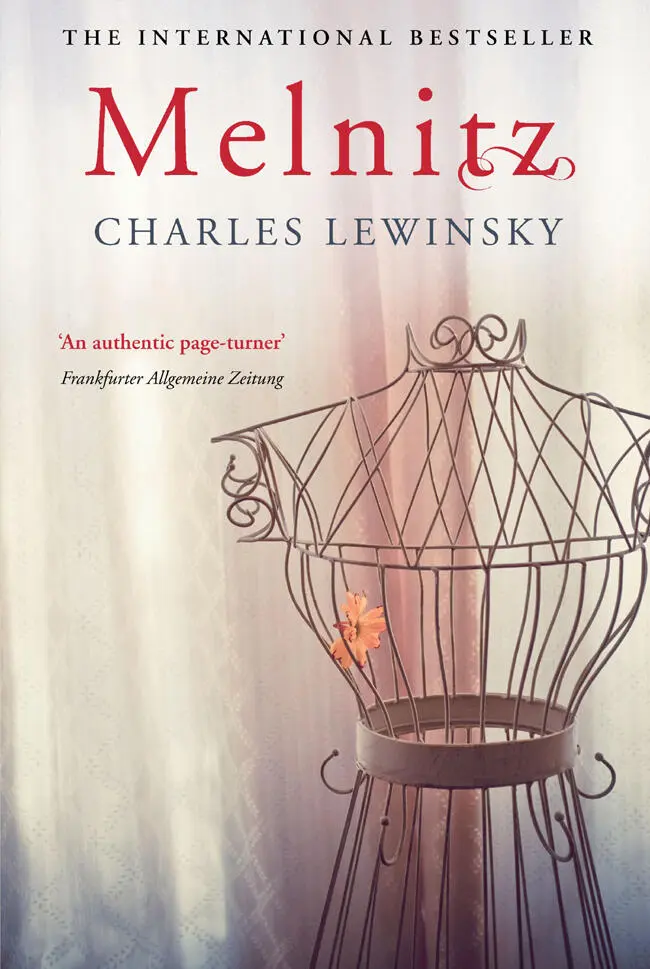
- Название:Melnitz
- Автор:
- Издательство:Atlantic Books
- Жанр:
- Год:2015
- ISBN:нет данных
- Рейтинг книги:4 / 5. Голосов: 1
-
Избранное:Добавить в избранное
- Отзывы:
-
Ваша оценка:
Melnitz: краткое содержание, описание и аннотация
Предлагаем к чтению аннотацию, описание, краткое содержание или предисловие (зависит от того, что написал сам автор книги «Melnitz»). Если вы не нашли необходимую информацию о книге — напишите в комментариях, мы постараемся отыскать её.
Melnitz — читать онлайн бесплатно полную книгу (весь текст) целиком
Ниже представлен текст книги, разбитый по страницам. Система сохранения места последней прочитанной страницы, позволяет с удобством читать онлайн бесплатно книгу «Melnitz», без необходимости каждый раз заново искать на чём Вы остановились. Поставьте закладку, и сможете в любой момент перейти на страницу, на которой закончили чтение.
Интервал:
Закладка:
In the darkness he often went walking arm in arm with Herr Grün. They got on very well. They silently recited old texts — ‘Guten Tag, Herr Grün!’, ‘Guten Tag, Herr Blau!’ — or marched in uniform boots down the narrow alleys of the old town and startled the people with the songs in their heads.
He lived in the cemeteries, in the Steinkluppe, in the Binz, in the Friesenberg, and scratched the numbers of the years into the stones with his fingernails. ‘It was yesterday,’ he said, ‘Yesterday, yesterday, yesterday.’
Every time he died, he came back.
At every funeral he spoke the kaddish, and at every wedding he crushed the glass, at every bris he held the child on his lap and at every bar mitzvah he was the first to fill the cup. ‘L’chaim!’ he cried, ‘To life!’ Where three spoke the table prayer, he was the fourth, where ten met for the minyan he was there as the eleventh. When they danced with the Torah roll, once a year, he was the first dancer and the last, and when fasting was done, he rubbed his belly and said, ‘You call that going hungry? That’s nothing.’
Every time he died, he came back.
He also visited Désirée, in her shop, where people met to get hold of kosher butter, kosher biscuits and kosher gossip. He brought her bonbons, old-fashioned bonbons that smelled of almonds and rosewater, they played games with them on the counter, and the winner was allowed to stop remembering for a whole night.
He knew all the secrets and revealed them even to those who didn’t want to know.
He looked in on Arthur and Rosa, who had become a happily married couple without having been a real one. They now lived on Morgartenstrasse, in the big flat that had once belonged to Mimi and Pinchas and after that to Désirée, and when they sat in the evening as married couples do, Uncle Melnitz sat between them, put one arm around Arthur and one around Rosa and became a part of it.
The children weren’t children any more, certainly not Irma, who turned the heads of all the young men in the community with her distinctive squint, but Uncle Melnitz still knelt by their beds and whispered fairy-tales to them all night, stories in which bad things happened until everyone called for Goliath. But Goliath didn’t come. Then, when they woke up screaming, he moved on, bolstering himself with a deep swig from the locked crystal bottle in the Tantalus. He could drink from it without opening it; he had learned so much in his life.
Every time he died, he came back.
He didn’t come alone. This time he had brought reinforcements. One on his own can’t tell so many stories.
The whole city was full of them.
The whole country.
The whole world.
They live in attics, in ocean-crossing chests that had missed setting off in time. They hid in the cellars, under piles of rags that had once been festive costumes. They met in every corner. They sat in the empty Gotthard mail coach outside the National Museum, they travelled without horses to the end of the world. In the station they chalked numbers on the freight wagons. In the junk shop on Neugasse they looked for objects that had once belonged to them, and didn’t want them when they found them. At Sprüngli they scraped cream cakes from tin plates. On the terrace of the meat market they lined up as if on parade; only sometimes one of them jumped into the Limmat and was allowed to drown.
They were everywhere.
They sat in all the trees, a swarm of black birds, playing chess with each other. Melnitz had carved the pieces out of bones; he could name the origins of every beaten peasant, his country and his family. He knew everything and wouldn’t let anyone forget it.
‘Enjoy your lives,’ he said. ‘You’ve been lucky, here in Switzerland.’
Every time he died, he came back.
Acknowledgements
For their help with research I wish to thank the historian Ursulina Wyss and the helpful ladies in the ICZ Library. My wonderful daughter Tamar Lewinsky corrected the Hebrew and Yiddish expressions and wrote the glossary.
The translator wishes to thank Pro Helvetia and the Max Geilinger Foundation for their generous award in funding the translation, and the staff at Looren Translation House, as well as John Stevens, Nina-Anne Kaye and the Guggenheim family of Zurich for their help and hospitality.
Glossary
Most Yiddish expressions come from the Hebrew. The pronunciation varies according to the origins of the speaker.
adir hu
‘mighty is He’, start of a song from the Pesach Haggadah
aliya
‘ascent’. Immigration to Palestine/Israel
almemor
platform for reading from the Torah
amod no’ach!
at ease! (military language)
arba kanfes
‘four corners’; undershirt with tassels
Ashkenazi
refers to the rites, customs, texts and Hebrew pronunciation of western, central and eastern European Jews
badchen
a wedding entertainer
balebos
master of the house, owner
bar mitzvah
‘son of the commandment’; ceremony of maturity for boys reaching their 13th year
beheimes
livestock, cow
bekovedik
respectable
bentch
bless; say the mealtime prayer
bentch gomel
give thanks after a danger survived
berchesm.
plaited Sabbath bread, usually covered with poppy-seed
bishge
serving girl, maid
B’nai B’rith
‘Sons of the Covenant’, name of an international Jewish charitable organisation
bocherpl. bochrim
Talmud student, pupil
boruch Hashem
God be praised
Bovo Basro
‘the last gate’; name of a Talmudic tractate
Bris, bris milah
circumcision
bronfen
spirits
bundel
stuffed cow’s stomach
Chai
life; in numerology: eighteen
chaluzpl. chaluzim
pioneer
Chanukah
eight-day festival commemorating the reconsecration of the Temple after the Maccabean revolt
Charoset
mixture of apples, nuts, wine and cinnamon. One of the symbolic meals eaten at Pesach
chassene
wedding
chaverpl. chaverim
colleague, friend, comrade
chazer-treyf
‘pig-treyf’, a strong way of describing things impure according to the dietary rules
cheder
‘room’, Jewish school in which only religious subjects are taught
chevra
society, association
chevra kadisha
a burial society
chochem
a wise man, an intelligent person (also ironic)
chochmepl. chochmes
wisdom, cleverness (also ironically)
Chol HaMoed
half-holidays between the first and last two days of Pesach and the feast of tabernacles, on which the prohibition on work is largely suspended
chossenm.
bridegroom
chumash
Pentateuch, the
chuppah
wedding baldaquin; wedding
droosh
sermon
Echod mi yodea
‘Who knows one’, the beginning of a counting song from the Pesach Haggadah (q.v.)
eretz
literally ‘country’; Palestine/Israel
Читать дальшеИнтервал:
Закладка:
Похожие книги на «Melnitz»
Представляем Вашему вниманию похожие книги на «Melnitz» списком для выбора. Мы отобрали схожую по названию и смыслу литературу в надежде предоставить читателям больше вариантов отыскать новые, интересные, ещё непрочитанные произведения.






Обсуждение, отзывы о книге «Melnitz» и просто собственные мнения читателей. Оставьте ваши комментарии, напишите, что Вы думаете о произведении, его смысле или главных героях. Укажите что конкретно понравилось, а что нет, и почему Вы так считаете.