Arnon Grunberg - The Jewish Messiah
Здесь есть возможность читать онлайн «Arnon Grunberg - The Jewish Messiah» весь текст электронной книги совершенно бесплатно (целиком полную версию без сокращений). В некоторых случаях можно слушать аудио, скачать через торрент в формате fb2 и присутствует краткое содержание. Год выпуска: 2008, Издательство: Penguin Group US, Жанр: Современная проза, на английском языке. Описание произведения, (предисловие) а так же отзывы посетителей доступны на портале библиотеки ЛибКат.
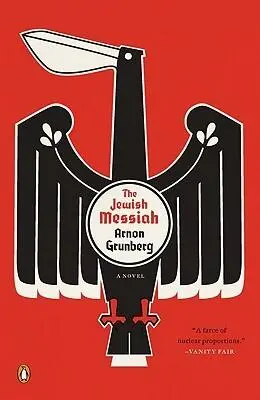
- Название:The Jewish Messiah
- Автор:
- Издательство:Penguin Group US
- Жанр:
- Год:2008
- ISBN:нет данных
- Рейтинг книги:4 / 5. Голосов: 1
-
Избранное:Добавить в избранное
- Отзывы:
-
Ваша оценка:
The Jewish Messiah: краткое содержание, описание и аннотация
Предлагаем к чтению аннотацию, описание, краткое содержание или предисловие (зависит от того, что написал сам автор книги «The Jewish Messiah»). Если вы не нашли необходимую информацию о книге — напишите в комментариях, мы постараемся отыскать её.
) Arnon Grunberg is one of the most subtly outrageous provocateurs in world literature.
, which chronicles the evolution of one Xavier Radek from malcontent grandson of a former SS officer, to Jewish convert, to co- translator of Hitler's
into Yiddish, to Israeli politician and Israel's most unlikely prime minister, is his most outrageous work yet. Taking on the most well-guarded pieties and taboos of our age,
is both a great love story and a grotesque farce that forces a profound reckoning with the limits of human guilt, cruelty, and suffering. It is without question Arnon Grunberg's masterpiece.
The Jewish Messiah — читать онлайн бесплатно полную книгу (весь текст) целиком
Ниже представлен текст книги, разбитый по страницам. Система сохранения места последней прочитанной страницы, позволяет с удобством читать онлайн бесплатно книгу «The Jewish Messiah», без необходимости каждый раз заново искать на чём Вы остановились. Поставьте закладку, и сможете в любой момент перейти на страницу, на которой закончили чтение.
Интервал:
Закладка:
Between gobs of spit, they asked Awromele questions and whispered to him encouragingly. “We’re your friends. Now that you’ve met us, you’ll never have to be lonely again.”
The tallest boy was particularly adept in his attempts to soothe Awromele. “We will always be one of your warmest memories.” He had soothed so many people, he knew how it went. He was standing close to Awromele’s head.
When they were finished spitting, when spitting had lost its charm the way a new love ultimately loses her charm and becomes as horrifying as the one before, the tallest boy took a few steps back. Then he ran up and kicked Awromele in the ear as hard as he could, as though Awromele’s head were a football.
Awromele was too late to raise his arm and protect the side of his head. Blood came dripping out of his right ear.
“Our friendship is everlasting,” the tallest one said solemnly. “Nothing can detract from that friendship. From now on, we belong together. You enjoy our protection.” It was important to reassure people. They needed that, in whatsoever state they found themselves, come rain or shine. Reassurance.
The tallest boy swung his foot back again and kicked as though taking the definitive penalty shot in an important match. But this time Awromele protected his ear with his hand, so the tall boy’s shoe hit the hand instead of the ear.
A bone in his hand broke. Unnoticed. In passing.
“A good conversation is a two-way street,” the tallest one said. “We communicate with our feet. Do you understand? Can you hear us?” He saw the blood dripping from Awromele’s ear and wondered whether the boy could still hear him. Maybe the ear was clogged with blood. He wasn’t a specialist when it came to ears, so he began speaking slowly and clearly: “Kierkegaard said that the surest way to say nothing was not to be silent but to speak. That’s why we talk with our feet. We’re afraid of saying nothing. What do our mouths have to offer you? Empty promises, the devil’s whispers. Our feet offer you true friendship. Don’t say no to the friendship of our feet.”
The boy whose voice was still changing whispered, “Yeah, Kierkegaard.” As if it were goat cheese from the Bern highlands, available only a few months a year.
The other boys, too, said quietly, “Kierkegaard.” They giggled.
A boy’s bone isn’t hard to break, especially when one is being a bit playful. It starts off as a game and, whoops, there goes the bone. The language of feet is a wonderful, albeit rudimentary, thing.
The other boys could not stand by idly; they kicked Awromele in the ribs, the legs, the stomach, the head, but with less conviction than the tall boy. They did it hurriedly, as though they actually wanted it to be over soon.
Awromele’s body rocked like a ship on the high seas whose captain has lost control of the rudder. But he had stopped screaming. His left hand had swollen like a balloon.
Then the boys stopped. They spat one last time, but the magic was over. Finally, they threw dirt on Awromele’s body, though they didn’t go on with that for long. The ground was too wet — they didn’t want to get dirt under their nails.
“We’ll be going now,” the tallest boy said. He looked for the last time at his new friend, lying still on the ground. “Loneliness is nothing to be ashamed of,” he said quietly. “But from today on, you’ll never be lonely again. Wherever you go, you’ll always think of us, you’ll never forget us. We will be your best friends, even if you never see us again. We will always be with you.” Saying these words made him feel good. He brushed a few strands of wet hair from his forehead.
“Man is a social animal,” the tallest boy said to his friends as he searched for his lighter. “Life is all about communicating. It doesn’t matter what part of your body you use to communicate, as long as there’s communication going on. We need each other, we can’t go off sneaking through the jungle alone.” He breathed deeply, in relief. He had found his lighter, a gift associated with some fond memories.
The boys walked away. When they got back to one of the paths, they all lit their cigarettes. They were filled with wistfulness. A gentle rain was falling.
AWROMELE’S BODY WAS lying beside the mandarin-orange peels. It didn’t move. He had his arms crossed over his face. Blood was dripping from his ear. The ear and the hand hurt. The rest felt numb.
After a minute or two, when he was sure that the boys were gone, he took his arms away from his face.
There were scrapes all over his body. His body looked like one big scrape.
“Xavier,” he shouted hoarsely. But there was no reply.
“Xavier,” he shouted again. Nothing.
Darkness was falling slowly.
“Xavier,” Awromele screamed, as loud as he could, but the screaming hurt his ribs.
“Come out. Where are you?”
Xavier couldn’t come out, for at that moment he was running through the streets of Basel as though he were being chased, as though they were coming after him to blacken his other eye as well.
When he got to his house, he stopped, searched for his keys with shaky hands, opened the door, and ran upstairs, without saying hello to his mother.
Xavier took off all his clothes, avoiding the mirror, and took a hot shower. Only when the water was pouring over him and he stared at his own body did he think about Awromele. How had lain there in the park, under the tree, his pants down around his knees.
“Awromele,” Xavier cried then, “Awromele.” But the sound of the water drowned out his words.
In the kitchen, his mother was breading a schnitzel.
Without a Flashlight
ONCE AWROMELE REALIZEDthat Xavier was no longer there, that he hadn’t hidden behind a tree, he could have struggled to his feet and dragged himself home. But the only protest he could think of against the treatment he’d been given, against the friendship the boys’ feet had offered him, was not to get up, to remain lying there where he lay.
Awromele rolled onto his side and pulled his legs up. The movement caused him pain. He didn’t dare look at his left hand. He didn’t dare look at anything. He felt bad enough already.
Every once in a while he screamed, but his cries were no longer high and penetrating, not like when Xavier had been lying between his legs. It was a powerless hollering, to which the passersby paid no heed.
While Xavier was warming up in the shower, examining his body, and coming to the conclusion that he would not be able to use his blackened eye for a while — he didn’t dare dab at his eyebrow again, it had felt like sponge cake — he thought about Awromele. His dearest, that’s what he should call him: of all the Jews Xavier would comfort, Awromele was the one dearest to him.
A comforter is not supposed to run away; a comforter should protect. If he had been able to think clearly, he would definitely have stayed in the park, he would have thrown himself on Awromele like a bodyguard on his president. But he had not thought clearly, and now it was too late.
Maybe, Xavier thought, maybe the boys only wanted to talk to Awromele; maybe I was the one they were after. Maybe they just offered him a cigarette and asked him a few questions about the Day of Atonement. Jews were no longer in fashion, but you always had young people who didn’t quite keep up with fashion. Yet this thought, too, failed to ease his mind.
Xavier had run away, that’s what he had done, run away just as he had brought Awromele into his life: on impulse, without thinking about the consequences. But if he had let himself be kicked to death, the Jews would someday have no comforter. He had saved his own skin in order to protect them later, twice over.
Читать дальшеИнтервал:
Закладка:
Похожие книги на «The Jewish Messiah»
Представляем Вашему вниманию похожие книги на «The Jewish Messiah» списком для выбора. Мы отобрали схожую по названию и смыслу литературу в надежде предоставить читателям больше вариантов отыскать новые, интересные, ещё непрочитанные произведения.






Обсуждение, отзывы о книге «The Jewish Messiah» и просто собственные мнения читателей. Оставьте ваши комментарии, напишите, что Вы думаете о произведении, его смысле или главных героях. Укажите что конкретно понравилось, а что нет, и почему Вы так считаете.